Falcon’s fight: A metaphor for global crisis

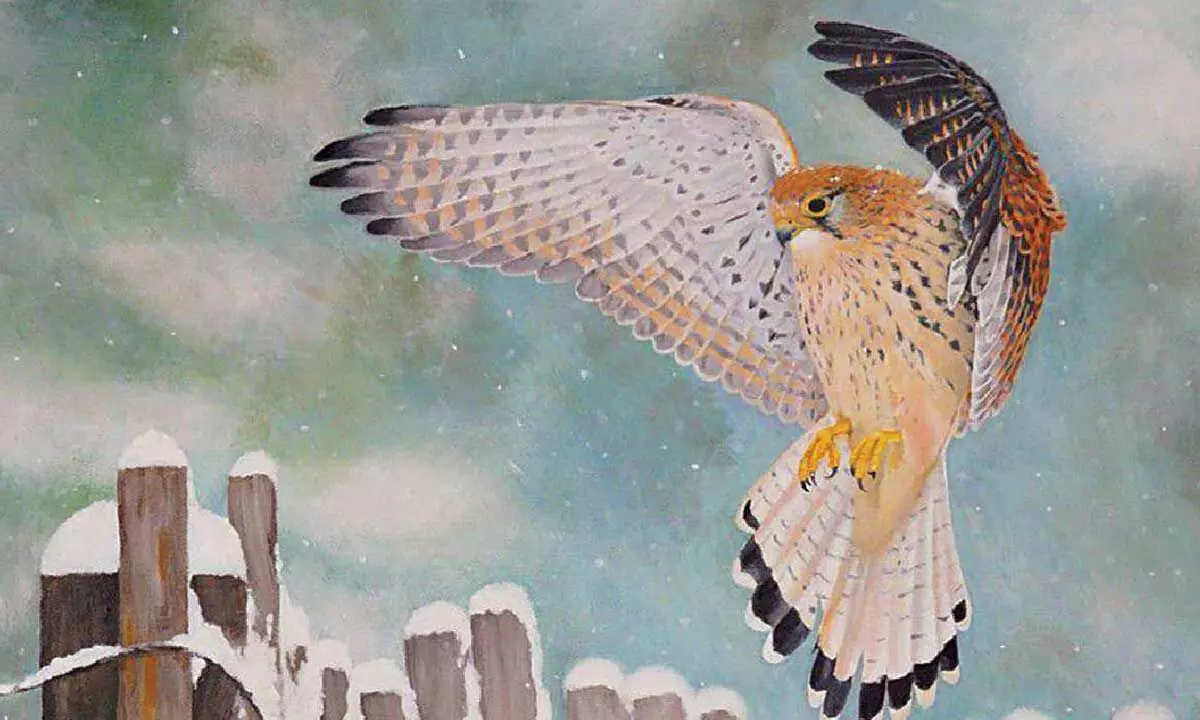
ects shaping modern society and the challenges threatening collective harmony W. B. Yeats’ famous verse from ‘The Second Coming’ portrays a scenario where order collapses as the falcon (an emblem of power, liberty, and initiative) has ventured far from its controller—the falconer—resulting in its disregard. This breakdown in communication represents a divide between rulers and the ruled, ideals and deeds, and core and margins. Within the global context, this line can be understood in multiple interrelated aspects:
Breakdown in Communication between Citizens and Institutions
The modern world is characterized by technological and societal transformations. People—young individuals—frequently sense that traditional establishments, such as government agencies, political authorities, or educational institutions, do not listen to them. Yet, the world remains clueless about numerous problems. The threat of biological war is knocking on the minds of people who are haplessly anticipating future dangers. Like a falcon flying distant from its falconer, the desires of the people occasionally surge far beyond the reactions of those in power. This causes a lack of trust in leadership, demonstrations demanding representation, and an expanding divide between citizen demands and government actions. This widening gap is endless, thus dividing the people across the globe.
Decline of Values in the Era of Modernity
The global cultural environment is transforming more rapidly than previous generations ever anticipated. The falcon here stands for the generation rising into digital globalised realms; the falconer symbolises cultural heritage attempting to retain them. This leads to a clash between tradition versus modernity, family control versus liberty, and inherited principles versus global ways of life. When young people stop listening to guidance, it sparks social unease, identity struggles, and gaps between generations.
Fragmentation of Social Harmony
Yeats’ phrase also suggests growing disorder when the core cannot maintain stability. In the world, societal peace is frequently disrupted by unrest, caste disputes, regional identity struggles, and misinformation causing division among communities. The falcon (the public) moves away from the core, symbolised by unity, tolerance, and constitutional principles. When individuals cease to heed the ideals that unite society, division intensifies. A divided world always falls into the disintegration of values and ideals.
Political Polarisation and Loss of Balanced Discourse
The modern world also experiences political division. Various factions—parties, media networks, and ideological factions—function within isolated echo chambers. When individuals (falcons) are exposed exclusively to opinions that reflect their convictions, they stop heeding the guidance of thoughtful leadership (the falconer). This undermines discourse and fosters a setting where radical perspectives prevail.
Ecological Disconnect
The passage also highlights humanity’s separation from the natural world. In India and the world, urban growth, industrial expansion, and climate-driven catastrophes illustrate the outcomes of neglecting ecological signals. The falcon (aspiration) soars freely, disregarding the falconer (nature), leading to environmental disruption.
In the world, the phrase “The falcon cannot hear the falconer” serves as a strong symbol of separation, diminished authority, and failure in communication across various relationships—between the citizen and government, youth and customs, community and unity, as well as humans and the environment. The ongoing war reflects this spirit in destructive capacities. It warns that when guidance is ignored and the moral centre is lost, chaos can replace order. The line serves as a reminder for the world to rebuild bridges of dialogue, trust, and shared values to ensure that the centre continues to hold. The world is moving into disorder, despair, and disappointment, as echoed strongly by T. S. Eliot in his book ‘The Wasteland’.
(The author has 44 books to his credit in English Literature)