Bharat’s indigenous dogs take centre stage at Republic Day Parade 2026

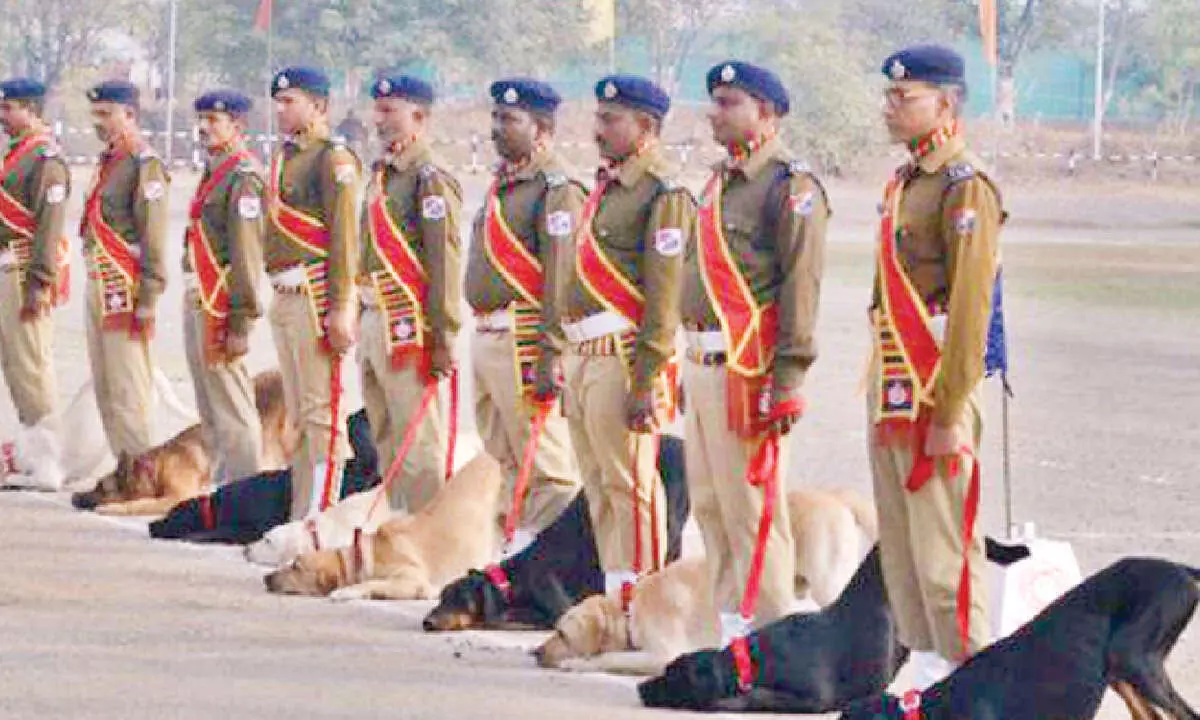
By foregrounding native dog breeds, the Republic Day Parade 2026 made a quiet and powerful cultural statement connecting heritage, ecology, and ancient bond with animals.
When the Republic Day Parade 2026 unfolded on Kartavya Path, it offered the familiar spectacle of military might, cultural tableaux, and marching contingents. Yet one segment stood out for its understated symbolism: the presence of Bharatiya indigenous dog breeds. In a nation where pedigree imports have long dominated urban imagination, the moment marked a subtle reset by placing the spotlight on dogs that evolved alongside the civilisation itself.
This was more than a nod to biodiversity. It was recognition of a living heritage that has guarded villages, walked trade routes, protected livestock, and shared human spaces for millennia.
A Heritage Shaped by Land and Life
Bharat’s indigenous dogs are products of geography, climate, and human need. Unlike imported breeds, these dogs were never bred for appearance alone. They were shaped by functions like hunting, guarding, herding, and companionship across deserts, plains, coasts, and mountains.
Breeds such as the Mudhol (Caravan) Hound from the Deccan plateau, the Rajapalayam and Chippiparai from Tamil Nadu, the Himalayan Gaddi dog, and the pan-Indian Pariah dog represent distinct ecological zones and cultural contexts. Their physical traits of lean frames, heat tolerance, sharp senses, and strong immunity are adaptations refined over centuries.
Veterinarians and animal behaviourists often point out that indigenous dogs require fewer medical interventions and cope better with the country’s conditions. In an age increasingly conscious of sustainability, these breeds embody low-resource resilience.
Companions, Not Commodities
The relationship between humans and dogs in ancient Bharat was markedly different from modern pet culture. Dogs were not ornamental possessions. They were companions in survival.
In agrarian and pastoral societies, dogs guarded crops and herds. In trading communities, they protected caravans. In villages, they served as sentinels at night and playmates by day. This coexistence was informal yet deeply bonded with shared thresholds, courtyards, and responsibilities.
Ancient literature reflects this ethos. In the Mahabharata, Yudhishthira’s refusal to enter heaven without his dog remains one of the epic’s most striking moral moments. The episode elevates loyalty and compassion above reward, suggesting that righteousness is incomplete without empathy for the voiceless.
Dogs also appear in spiritual symbolism. Associated with Bhairava, the fierce guardian aspect of Shiva, the dog represents vigilance and protection. Here, the animal is integral to cosmic order.
The Republic Day Message
Against this backdrop, the inclusion of indigenous dogs in the Republic Day Parade gains layered meaning.
First, it expands the definition of national heritage. Heritage is often reduced to monuments, manuscripts, and textiles. By showcasing living animal lineages, the parade acknowledged that culture also breathes, moves, and evolves.
Second, it aligns with Bharat’s broader sustainability narrative. Indigenous breeds are inherently climate-appropriate. At a time when awareness is growing about the ethical implications of breeding and abandoning unsuitable foreign dogs, the parade sent a corrective signal.
Third, it carried an unspoken social message. For decades, “desi dogs” have been associated with neglect or pity. Seeing them walk with dignity alongside national symbols reframed public perception from stray to survivor, from ignored to honoured.
A Contemporary Relevance
The timing of this recognition is significant. Younger Bharat are increasingly questioning inherited ideas of status, consumption, and identity. There is renewed interest in roots, local knowledge, and ethical living. Indigenous dogs fit naturally into this shift.
They challenge the idea that value comes from import or pedigree. They demonstrate that intelligence, loyalty, and emotional sensitivity are exclusive to foreign breeds. And they remind urban Bharat of a forgotten truth: coexistence once came before ownership.
Animal welfare organisations away from the adoption and protection of indigenous dogs, though having advantage of their adaptability and temperament. Institutional recognition, such as that seen in the Republic Day Parade, strengthens efforts by shaping public attitude at scale.
Beyond Symbolism
Symbolism, however, must translate into sustained action. Conservation of indigenous breeds requires documentation, responsible breeding practices, and integration into roles they historically fulfilled—security, disaster response, and rural livelihoods.
Equally important is education. Reframing indigenous dogs as assets rather than afterthoughts can reduce abandonment and encourage ethical adoption. The parade has opened that conversation; it now needs momentum.
Walking with the Past into the Future
When indigenous dogs took their place on Kartavya Path in 2026, they did more than march. They carried with them stories of ancient companionship, ecological wisdom, and shared survival.
In recognising them, Bharat has acknowledged a simple but profound idea: progress does not always mean leaving the past behind. Sometimes, it means walking forward with it on four quiet, resilient paws.
(The writer is a creative Economy Expert)