Bharat is the land of explorers

Rediscovering the lost wisdom of living in harmony with nature
From the snowy peaks of the Himalayas to the sun-soaked shores of Kanyakumari, from the dense forests of the Northeast to the arid deserts of Rajasthan. The people of Bharat have always been explorers, innovators, and masters of adaptation. Unlike many civilizations that concentrated in one region or depended on external conquests for survival, the Bharatiya civilization expanded and evolved within its diverse landscapes, shaping an unparalleled model of sustainable living long before the term “sustainability” was coined.
From the Rishis of the Himalayas to the sailors of the Indian Ocean, from forest dwellers to desert survivors, Bharat’s story is not of survival but of symphony which is a balance between man, nature, and spirit. Other civilizations explored to acquire; Bharat explored to awaken.
The world is rediscovering sustainable living; Bharat only needs to remember it. The explorers of ancient Bharat had one compass called Dharma, the path of harmony. If we align our modern compass back to that axis, Bharat can once again become the Viswaguru, the teacher, the explorer, and the guide for a sustainable world.
Exploration Within the Homeland
Ancient Bharatvasis were never confined by geography. The subcontinent’s vastness was a living laboratory for exploration and innovation. Communities evolved uniquely in each ecological zone by creating micro-cultures while maintaining a shared civilizational ethos.
•In the Himalayas, tribes like the Bhotiyas and Monpas developed architecture that could withstand snow and seismic shifts. They crafted yak wool garments, fermented foods, and herbal medicines suited to high altitudes.
•In the Plains, from the Indus-Saraswati basin to the Ganges delta, advanced irrigation systems, city planning, and granaries defined prosperity. The drainage systems of Mohenjo-daro and Harappa remain unmatched in ancient urban engineering.
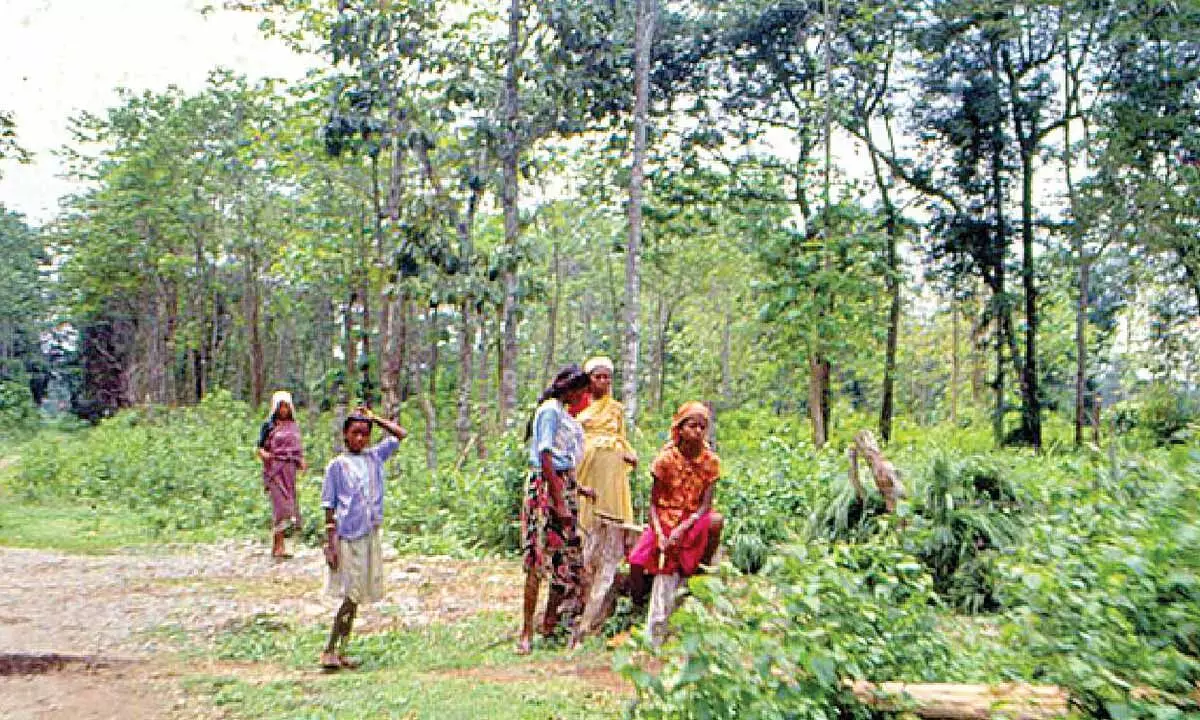
•In Forest Regions, Adivasi communities learned to live symbiotically with nature, practicing shifting cultivation, using herbal healing, and crafting tools from bamboo and wood without harming the ecosystem.
•In Coastal Bharat, maritime communities like the Cholas, Cheras, and Odiyas built sturdy ships, mastered navigation, and traded across the Indian Ocean centuries before Western nations dreamt of seafaring.
•In the Deserts, nomadic tribes of Rajasthan and Kutch devised intricate water-harvesting systems like baoris (stepwells) and tanka (underground reservoirs), proving that survival in scarcity is possible through ingenuity.
This adaptability reflected a deep ecological intelligence of understanding that humans are a part of the natural rhythm, not its masters. Surprisingly as the knowledge of adapting to nature is lost, migration has increased.
Bharat as Viswaguru
When we compare Bharat’s self-sufficient exploration with other civilizations, a striking difference emerges. Civilizations such as those in Mesopotamia, Egypt, Greece, and Rome flourished, no doubt, but they were confined to narrow geographies of river valleys or coastal strips. Once their resources depleted or the climate shifted, they collapsed or migrated.
In contrast, Bharat thrived without exhausting her environment. She expanded knowledge instead of territory. While others looked outward for conquests, Bharat looked inward for consciousness.
The Chinese, Greek, and Persian travelers who came Bharat from Xuanzang and Faxian to Megasthenes, recorded a civilization that balanced spiritual depth with material prosperity. They came to learn Ayurveda, mathematics, astronomy, and architecture.
•The Nalanda and Takshashila universities were global centers of learning, attracting seekers from across Asia and the Mediterranean.
•navigation skills of the Chola and Kalinga sailors were emulated in Southeast Asia; even the word “navigation” comes from the Sanskrit navgati.
•The concept of zero, the decimal system, Ayurvedic medicine, metallurgy (like the rust-free Iron Pillar of Udaipur (now in Delhi), and textile artistry all originated here and traveled outward.
Bharat was Viswaguru by sharing knowledge and wisdom born from sustainable living at different times.
Why Bharatvasis Migrate Today?
The irony of our times is painful: the descendants of explorers who mastered every climate are now migrating abroad in search of “better life conditions.” Why? Because we have lost the knowledge of living in tune with our homeland.
Urbanization and industrialization have replaced traditional wisdom with unsustainable comforts. We have forgotten how our ancestors created livelihoods within natural limits, they built homes that breathed, grew crops aligned with seasons, consumed food suited to their region, and celebrated festivals that synchronized human life with cosmic cycles.
Migration today is not exploration, it is escape. It reflects a psychological and cultural displacement. We no longer see our rivers as sacred lifelines, our forests as temples, or our soil as mother. The knowledge systems that once taught us to adapt from Vastu Shastra to Ayurveda, from Agnihotra to Panchangam which have been reduced to rituals rather than lived sciences.
This alienation from our land creates a crisis of identity. We seek comfort elsewhere because we no longer know how to be comfortable in our own home.
When a new generation of Bharatvasis learns again to explore their environment, their roots, and their inner potential. Migration will no longer be a necessity. It will return to being what it once was. Why don’t we start a journey of learning and sharing?
(The writer is a Creative Economy Expert)