




AlUla turns night sky into storybook with the Odysseus asterism
In Short
Inspired by Homer’s poem, this image of ten stars represents the ten year journey of Odysseus, following the Trojan War, offering a unique chance to experience the epic under some of the world’s clearest dark skies.

Share :
AlUla turns night sky into storybook with the Odysseus asterism
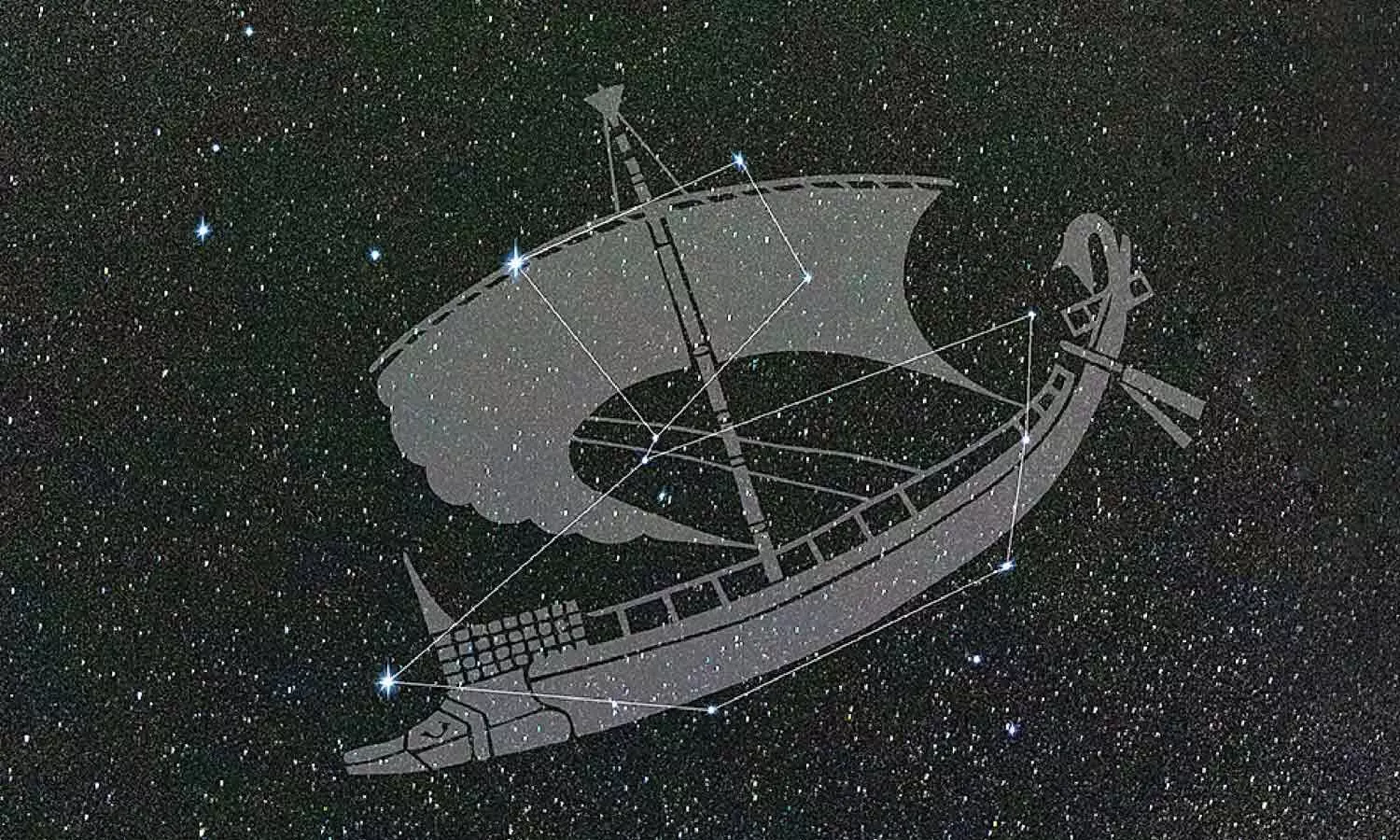
In the vast desert landscapes of AlUla, Saudi Arabia, the night sky is transformed into a storybook with an interpretive Odysseus asterism. The ancient destination has unveiled an interpretive Odysseus asterism which sees ten of its stars transformed into a celestial representation of the legendary Greek hero sailing aboard his ship.
Inspired by Homer’s poem, this image of ten stars represents the ten year journey of Odysseus, following the Trojan War, offering a unique chance to experience the epic under some of the world’s clearest dark skies. The 88 officially recognized constellations were established by the International Astronomical Union, but an asterism is an informal grouping of stars.
Throughout history such formations have been used by a variety of cultures for navigation, storytelling and cultural expression. AlUla’s creation follows that tradition by linking ancient mythology to modern astrotourism.
The location of the Odysseus asterism has been chosen with Homer’s narrative in mind. It is in a part of the sky which features Boötes (a celestial figure which plays a key role in Odysseus’ voyage in The Odyssey) plus Hercules and the Corona Borealis which both tie back to Greek mythology.
AlUla’s skies provide a chance to see the asterism which is visible across the Northern Hemisphere in the summer months and until September, with the best time to view it being shortly after sunset, when the stars can be seen. Groups can go on guided stargazing experiences arranged by local operators and resorts, which combine astronomy with mythology, navigation techniques and cultural storytelling.
Astrophotographer Saeed Baghdadi praised AlUla’s ability to combine pristine skies with cultural heritage. He noted that astrophotography can bring people together with stories that transcend generations, while AlUla’s dark skies provide a perfect opportunity to experience that connection.
As naturally dark skies become harder to come by due to light pollution, AlUla is offering visitors a chance to reconnect with humanity’s long standing relationship with the stars. The AlUla Dark Sky landscape covers an area of more than 6,000 square kilometres of internationally recognised Dark Sky Parks including AlGharameel Nature Reserve, Sharaan National Park and Wadi Nakhlah Nature Reserve.
AlUla’s vision reaches beyond the Odysseus formation, with the future opening of AlUla Manara (designed by Heatherwick Studio) set to see the ancient destination become a major global player in astronomy. Set within one of the world’s largest Dark Sky Parks, the facility will offer immersive experiences alongside scientific research and education.
Looking up to see mythology placed among the stars, AlUla stargazing offers visitors more than just an astronomical experience, as they are able to reconnect with an ancient story but in a contemporary way - with the desert as the setting, the stars as the characters and the night sky as the canvas.


