A confluence of devotion and divinity

The Maha Kumbh 2025 is a once-in-a-lifetime event.
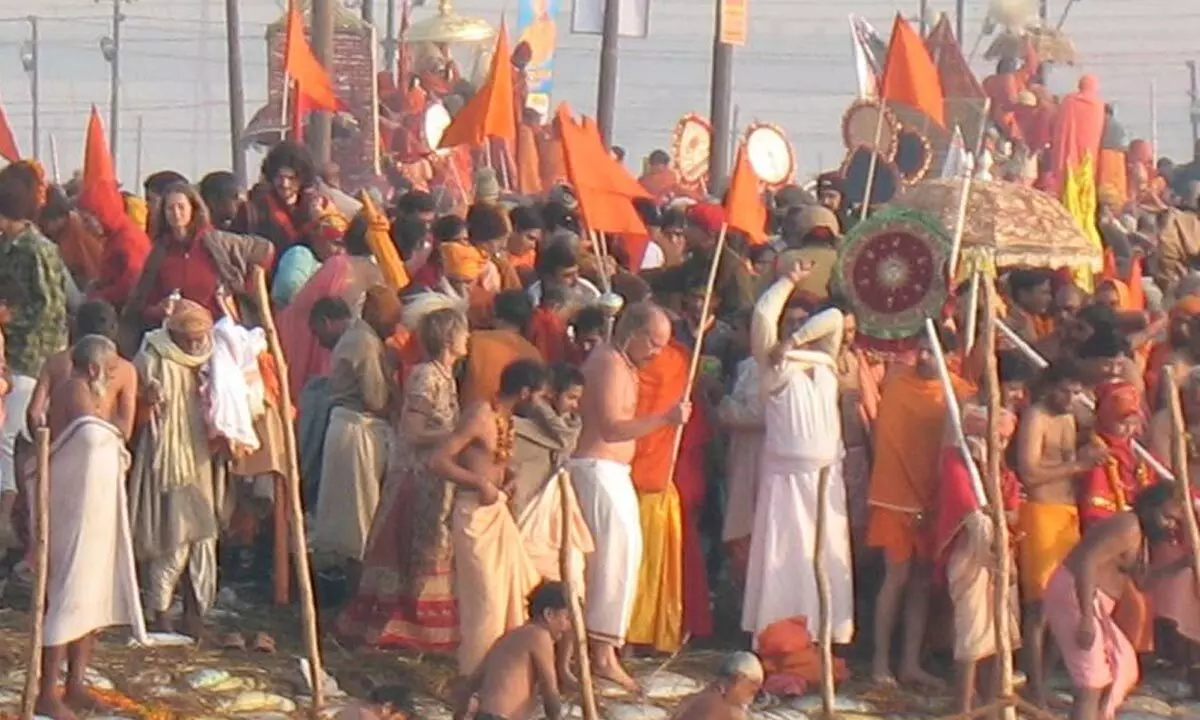
The Maha Kumbh 2025 is a once-in-a-lifetime event. The next one is slated only after 144 years. None of us will be around to attend it unless we turn into sadhus with mysterious powers and endless lifecycles. Jokes apart, every day, millions of people take a holy dip in the Triveni Sangam (the confluence of Ganga, Yamuna and the mythical Saraswati rivers) at Prayagraj, making it the world’s largest human gathering. News channels are abuzz with relentless reporting in a high-pitched frenzy; the print media is dedicating major space and ink to the Kumbh news; Instagrammers are churning out videos of the enigmatic Naga Sadhus and the intimidating Aghoris; even some reels created with the spookiest visuals are grabbing eyeballs. The emphasis is now more on the ‘happening’ part as against the religious discourses of saints. But there are many scientific, traditional and civilizational aspects attached to Kumbh and above all, it is the people and their unwavering faith, which is at its core.
From the Puranas to the Present
According to Hindu scriptures, Devas and Asuras churned the “Ocean of Milk” for 12 days (equivalent to 12 human years), yielding nectar (Amrit) in a Kumbh (pot). As Dhanwantari was carrying the pot, drops of Amrit fell on earth sanctifying Prayagraj, Haridwar, Ujjain, and Nashik, and these holy places host Kumbh Mela in rotation: Ardh Kumbh every 6 years, Poorna Kumbh every 12 years, and Maha Kumbh every 144 years -the present one from 13th January to 26th February 2025). It marks a rare celestial alignment of Sun, Moon and Jupiter symbolizing enlightenment, purification, and spiritual renewal.
From sacred to high-tech
When the Maha Kumbh 2025 kick-started, I visited Prayagraj and found it had transformed into a vast Mahakumbh Nagar spanning 10,000 acres. With 650 km of roads, 1,60,000 tents, 1,50,000 toilets, and 25,000 bins, the event boasts unparalleled preparation. Over 15,000 sanitation workers, 40,000 security personnel, and 99 parking lots for half a million vehicles ensure seamless management. The city shines with murals, 67,000 streetlights, and 30 Pontoon bridges, while a Digital Experience Centre connects Gen Z to India’s heritage using AI and cutting-edge technology.
Saints, Sadhus and Satsangs
The 13 Akhadas and their various subsects are participating in various religious activities though Naga Sadhus are the star attraction of the Mela. The female Naga Sadhvis, covered in unstitched saffron garments called “Ganti”, are an uncommon but important presence in processions, Shahi Snans etc: their attendance reflects the changing scenario in the male-dominated world of spirituality. This time, the participation of the Kinnar Akhada of transgenders symbolizes a significant shift towards inclusivity within the Hindu religious landscape.
Wide-ranging Accommodation
Right from basic accommodation to fully equipped premium cottages in and around the Kumbh area are available at reasonable prices though rates on Shahi Snan days spike up. If you want to be right amid the action, there are comfortable tents at “The Bookmark Naga Shivir” camp in Juna Akhada. Just 3 km away from the Sangam is “juSTa Shivir Jhusi” -118 luxury tents erected on 18 acres, right on the banks of River Ganga.
UNESCO has recognised Maha Kumbh as an Intangible Heritage of Humanity. It is not just a celestial phenomenon but also a civilizational spectacle that cannot be missed. Come, bathe in the sacred waters, and renew your spirits under the watchful gaze of the cosmos!.