Was cricket the casualty in Asia Cup final?

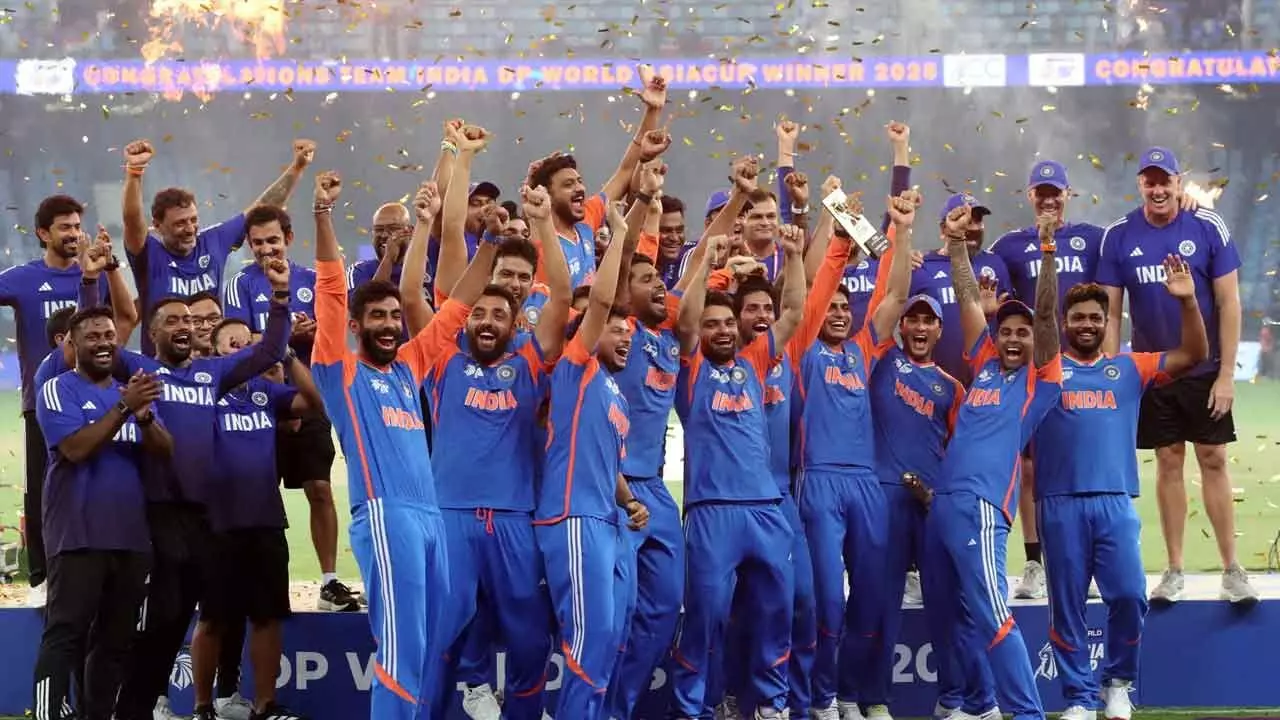
As a final, there could have been nothing better. Firstly, the Indo-Pak cricket matches have been top draws for decades, wherever and whenever they have been held. Secondly, the Indian cricket supporters were convinced that having beaten the neighbouring team twice in succession, it was a mere formality for the World No one team to do it one more time. That too in a highly anticipated showdown featuring the arch-rivals 41 years after the Asia Cup was launched.
After a set of self-inflicted pressure points as they began their innings, Indians did go on to win the final and retain their supremacy over their competitor, setting off waves of joy and celebrations among the die-hard fans across the world. Viewed from the sporting point of view, the Indian cricket team, which was under enormous pressure trying to justify their participation in the Asia Cup after Operation Sindoor, was not seen playing the game in the way the ‘gentleman’s game’ was supposed to have been played. Especially, the ever-hyper social media was not very happy despite the Indians doing the politically correct things by not getting too ‘friendly’ with their opponents, at least in public.
Pakistan captain, Salman Agha, who said that his Indian counterpart Surya Kumar Yadav shook hands with him in private and interacted normally but refused to do so in public lends credence to the view. After the match was over, another dimension to this show of real rivalry between the two nations showed up. As neutral observers of the game, opinions by a few readers in the media raised this point pertinently. As one game lover wrote: ‘India’s refusal to accept the winner’s trophy from the Asian Cricket Council Chairman Mohsin Naqvi became the latest trending topic.
The post-match presentation ceremony passed off without the trophy, in material form, received, lifted and showered with kisses by the winning team and it all verged on the farcical.’ One may agree or disagree, but the reader’s opinion hoped that there could have been a different ending to the post-match proceedings. ‘Those who booed and jeered Pakistanis after India’s win should have been satisfied with the national glory it brought and avoided jingoistic screams. While hailing the victory, Prime Minister Narendra Modi likened the final in Dubai to Operation Sindoor, obviously to whip up a surge of nationalist sentiment. One is not quite sure if an analogy can be drawn between a cricket match and military action. It was sad and disappointing to see cricket players doubling up as proxy soldiers. It halved the joy of watching some fine cricket.’
With India being the financial nerve centre of the game and the power centres hailing from this part of the world, the other cricketing nations have for years now nurtured the feeling that our country has been throwing its weight around and has conveniently moulded the sport to suit our interests. It might be true, but the game has never been without such controversies haunting it even when the non-Asian countries, especially England and Australia, were running the show. With politics being an undercurrent of sporting activities, be it any game, one may have to accept that sportsmanship has been under the scanner in this case. Yet, the caravan moves on till the next set of controversies raise uncomfortable questions, all over again.