Trump and Netanyahu are victors in the war against Iran, Islamic terror

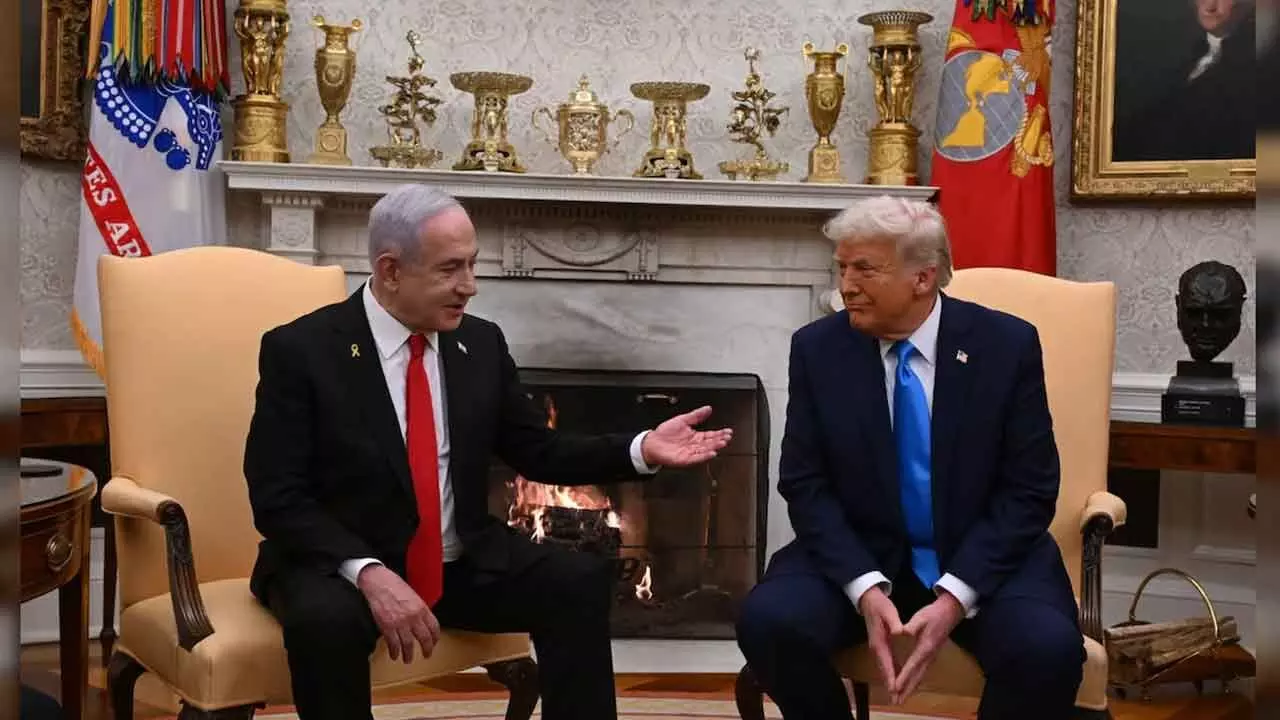
US President Donald Trump and Israel’s Prime Minister Benjamin Netanyahu have emerged as victors in the war in the Middle East, notwithstanding the mainstream media’s claims to the contrary. Both have neutralised—at least for a long time—the nuclear threat from Tehran. The latter’s resolute leadership has resulted in the serious degradation of terror outfits like Hamas and Hezbollah, the ouster of the Assad regime in Syria, and a considerable weakening of Iran, the head of the octopus of terror in the region. On his part, Trump has achieved the goal of bringing peace to the Middle East without entering into war; the strikes on Iran’s nuclear facilities a few days ago helped end the hostilities rather than make the US belligerent. This was in keeping with his promise to his MAGA (Make America Great Again) base, which is against Washington’s involvement in global wars. MAGA’s isolationist proclivity being against America’s direct involvement in global affairs, Trump also made it clear that his administration’s goal in the region was limited to stopping Iran from going nuclear; his goal was not to oust the present government.
“I’d like to see everything calm down as quickly as possible. Regime change is chaotic and ideally, we don’t want to see so much chaos,” he has clarified. After orchestrating a major strike on Iran and successfully persuading the US to target key Iranian nuclear facilities, Netanyahu finds himself in a significantly stronger position. With the immediate threat from Tehran weakened, Netanyahu can now turn his full attention to the conflict with Hamas in Gaza. His tough stance against Iran has generated a wave of popular support across Israel, bolstering his political standing. In fact, Netanyahu’s approval ratings are now among the highest they have been since the war in Gaza erupted after the barbaric attack on the Jewish state by Hamas on October 7, 2023. The shift in public sentiment has changed the political landscape. If his government were to collapse today, Netanyahu would stand a reasonable chance of securing re-election—a prospect that had seemed far less likely even a few months back. This surge in popularity has also fueled cautious optimism among some Israelis and political observers.
They hope that Netanyahu, now less dependent on the hardline factions of his coalition for political survival, might be more inclined to show flexibility regarding the Gaza war and go in for diplomatic avenues to end the prolonged fighting. The strengthened position could give him space to override the concerns of his coalition partners, who have previously resisted compromises of any sort. However, Netanyahu himself has shown no public indication of a shift in policy. For months, he has maintained an uncompromising position: the war in Gaza will not end until Hamas agrees to disarm, surrenders its authority in Gaza, and its leadership leaves the territory—terms Hamas has consistently rejected. When asked to clarify Israel’s stance, his office reiterated this hardline position. In a brief statement, his office said, “Hamas is the only obstacle to ending the war. It must release all the hostages, surrender, give up control of Gaza, and get out. The choice is theirs.” Netanyahu’s determination against the jihadist outfit will go a long way in the war against Islamic terror all over the world. This will undoubtedly help India.