Those who promoted myopically pro-EV policy must face consequences

Prime Minister Narendra Modi has rightly raised the issue of critical minerals’ supply chains. Without naming any country (though he meant China), Modi told a BRICS session that countries should “work together to make supply chains for critical minerals and technology secure and reliable.” He added that no country should use these resources “for its own selfish gain or as a weapon against others.” Ironically, this is precisely what China has started doing.
Beijing did it systematically. It tightened its control over the rare earth industry through consolidation and quotas, transforming it into a powerful diplomatic tool. “By consolidating miners and processors into two state-owned giants and restricting access to production quotas, Beijing has curbed environmental damage and gained greater oversight”, a report said. As Modi has raised this issue at the most appropriate forum, BRICS, it is incumbent upon the grouping, if it has any raison d’etre, to address it urgently and effectively. Otherwise, it will prove to be what many detractors accuse it of-a talking shop.
From the Indian perspective, BRICS membership will be worse than useless: we don’t derive any benefit from it, while earning the wrath of the United States with President Donald Trump threatening to impose an additional 10 per cent tariff on any country aligning itself with “the Anti-American policies of BRICS.” Further, Trump said in a Sunday night Truth Social post, “There will be no exceptions to this policy.” At present, the Indian automobile industry finds itself at a precarious crossroads, with a looming crisis driven by the strategic actions of China. By weaponising its control over critical minerals such as lithium, cobalt, and rare earth elements,
China has effectively gained leverage over the global electric vehicle (EV) supply chain.
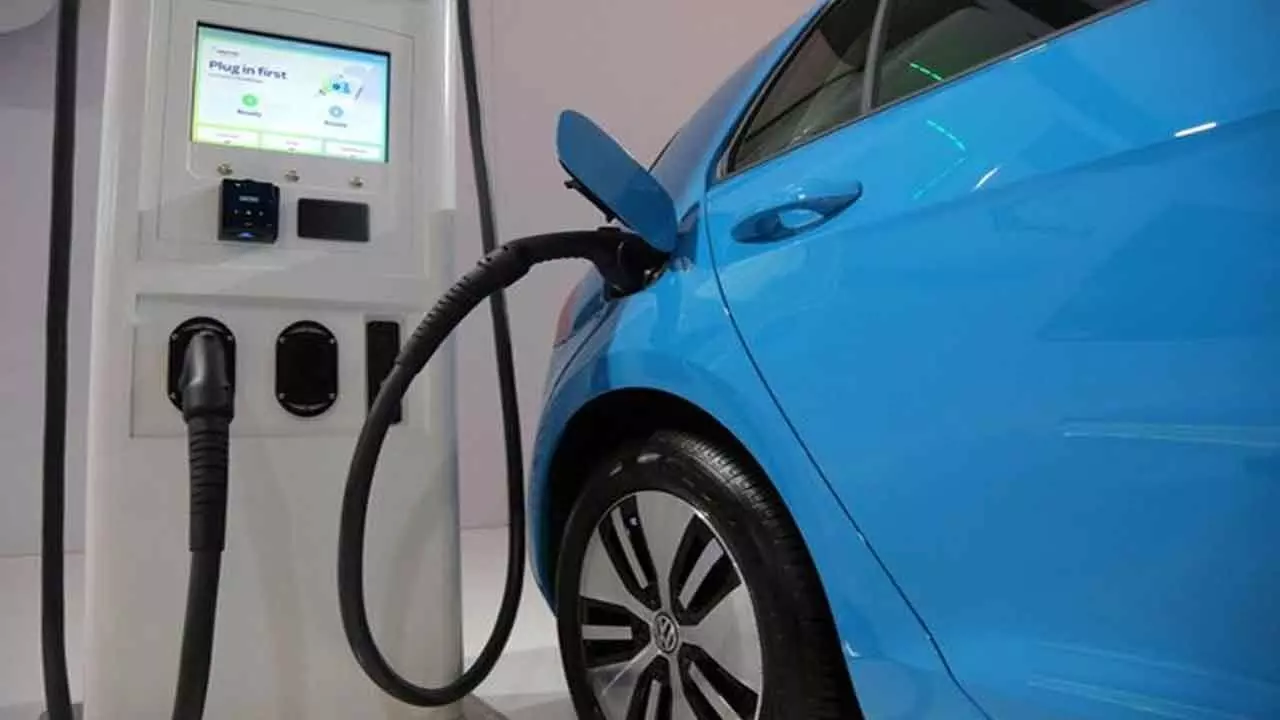
These minerals are essential for the batteries and motors that power EVs. India, like many other countries, had rushed headlong into the EV revolution, encouraged by the promise of green technology and reduced dependence on fossil fuels. But the reality of mineral dependency is now hitting hard. India’s policymakers, who zealously promoted EVs without first securing access to these strategic resources, are reportedly re-evaluating their approach. However, a mere rethink won’t suffice.
There must be accountability for the short-sightedness that has placed a vital sector of the economy at the mercy of an adversarial power.
When governments push sweeping policy changes without a robust supply chain strategy, they risk endangering national interests. The EV push, though well-intentioned, was implemented with insufficient consideration for the geopolitical implications of mineral dependence.
India does not currently possess large domestic reserves of critical minerals, nor has it built sufficient strategic partnerships abroad to ensure their steady import. Moreover, lack of adequate investment in research, alternative battery technologies, and domestic mineral processing capabilities has compounded the vulnerability. While China’s tactic of mineral weaponisation may be unethical, it was not unforeseeable. The warning signs were evident—from
China’s past restrictions on rare earth exports to its belt and road investments in the mineral-rich African and Latin American countries. Those who fail to anticipate such risks and preemptively secure alternative supply routes should face the consequences of their recklessness. The Modi government should fix accountability of individuals, who push in an uncritical adoption of policies without evaluating long-term national security and economic sustainability.