
Politicians wreaking havoc should be duly punished

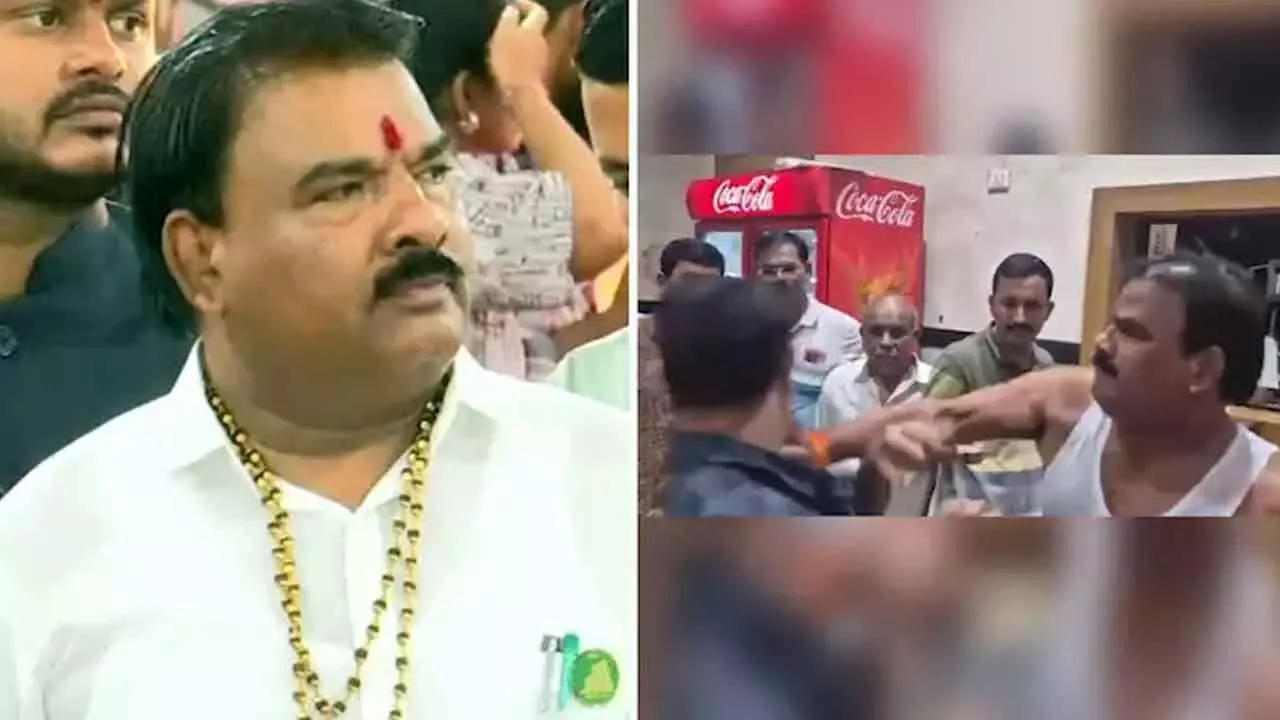
The viral video of Shiv Sena MLA Sanjay Gaikwad assaulting a canteen contractor over the quality of food served at the Akashwani MLA’s residence in Mumbai has once again highlighted a disturbing trend: the growing sense of entitlement and impunity among India’s political class. This is not merely the case of a bad-tempered politician reacting to a subpar meal. Rather, it is emblematic of a larger, systemic issue—our elected representatives increasingly behave as if they are above the law, accountable to no one, and exempt from basic norms of civil conduct. Incidents like this are not new or confined to Maharashtra. Across the country, similar instances of politicians, particularly lawmakers and local leaders, displaying high-handedness, using foul language, threatening public servants, or even resorting to physical violence, have become alarmingly frequent.
From manhandling government employees to obstructing official duties, such behaviour erodes public trust and undermines the very institutions that these politicians are supposed to uphold and strengthen. The real concern lies in the culture of impunity that emboldens such behavior. Why did Gaikwad not complain to the authorities or follow the protocol available to him as an elected representative? Why resort to violence when peaceful and procedural mechanisms exist to address such grievances?
The answer is simple and disturbing: because he could, because there are rarely any consequences when lawmakers act lawlessly. This sends a dangerous message—that elected office confers not just power, but the right to abuse it. When a legislator behaves in such a manner and faces no serious disciplinary action from his party or the legislature, it normalises abuse of authority and fosters a culture of fear and compliance among those who are supposed to serve the public, not politicians.
Moreover, such incidents have a demoralising effect on the civil services and ordinary citizens. They reinforce the belief that there is one set of laws for the public and another, a more lenient set, for those in power. This perception severely weakens the rule of law and democratic accountability. If the public begins to lose faith in the fairness of institutions, it will ultimately weaken the foundation of democracy itself. Therefore, it is imperative that political parties—across the spectrum—take such incidents seriously, and act decisively.
Leaders must stop shielding their own flock and instead begin holding their members to the same, if not higher, standards of conduct expected of any public servant. Disciplinary measures must be transparent, firm and timely. Parties must also inculcate in their cadre a culture of responsibility and accountability. Furthermore, legislative bodies and ethics committees must not remain mute spectators.
They should actively intervene when members behave inappropriately so as to set precedents that reinforce the principle of equality before the law. A few strong and exemplary actions can go a long way in curbing such tendencies. India’s democratic journey has been marked by hard-earned progress. But if its custodians begin to make a mockery of the very values they are supposed to uphold—decency, civility, and respect for law—then that progress is at risk.
Gaikwad’s conduct should not just be condemned in passing and forgotten. It should serve as a wake-up call for all political parties to introspect and act. Democracy cannot flourish in an environment where lawlessness is tolerated at the top. The time to act is now.


