Political leadership can make CEA’s prediction true

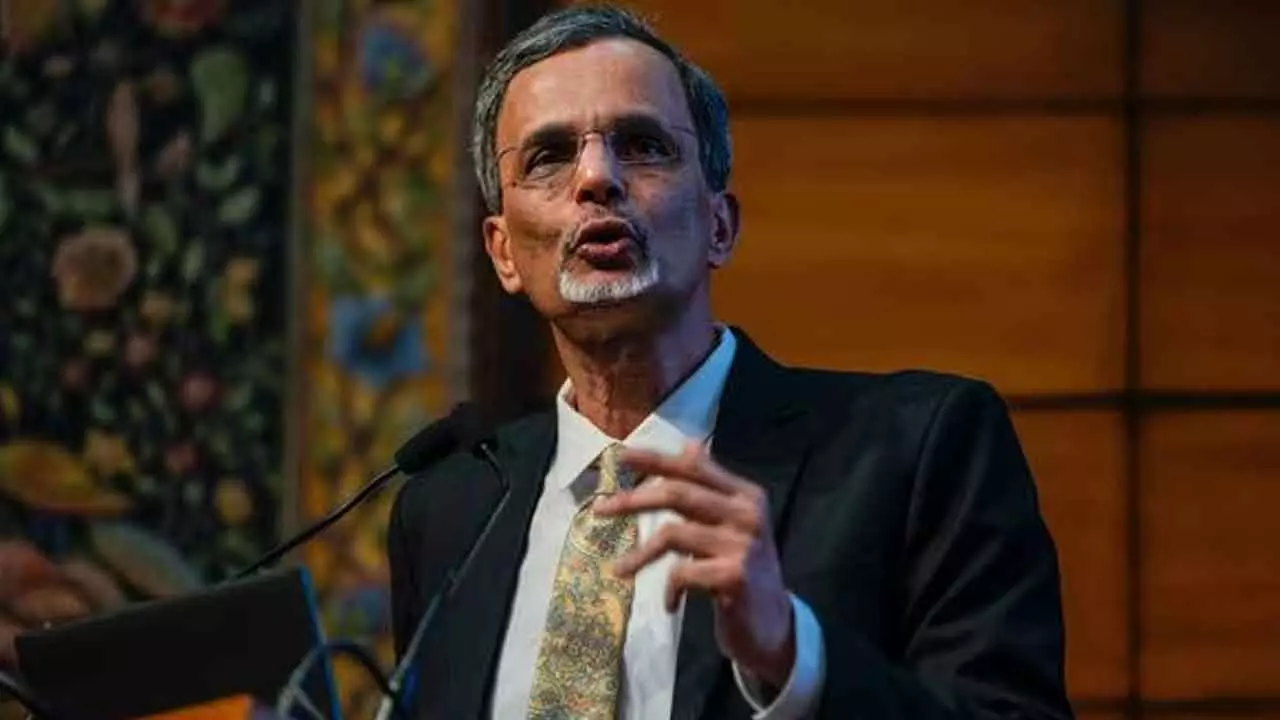
Chief Economic Adviser (CEA) V Anantha Nageswaran has struck a cautiously optimistic note on India’s growth trajectory, even as global uncertainties loom large. While not downplaying the adverse effects of US President Donald Trump’s tariffs and tightening of American visa norms, Nageswaran exuded confidence that the Indian economy will manage to grow closer to the upper end of the government’s projected range of 6.3-6.8 per cent in the current fiscal. This optimism, though carefully hedged with caveats, comes at a time when India must demonstrate resilience against both domestic and external pressures.
On the fiscal front, Nageswaran reaffirmed the government’s commitment to keeping the deficit contained at 4.4 per cent of GDP in 2025-26, even after substantial revenue sacrifices. These include the earlier round of personal income tax reductions and the recent revamp of the goods and services tax (GST)-decisions that, while politically and socially popular, have taken a significant toll on the exchequer. Yet, the CEA pointed to an encouraging outcome: the GST 2.0 package, he estimated, has generated net household tax savings of more than Rs one lakh crore. This injection of disposable income, in his view, is likely to boost consumption demand and partly neutralise the drag of external headwinds.
Nageswaran also expressed satisfaction with bond yields, noting that lower borrowing costs—down almost three percentage points over the last decade—have not only eased fiscal pressures but also made Indian sovereign debt attractive to the investors. Interestingly, he noted that the “China-plus-one” strategy being adopted by multinational corporations—a diversification away from exclusive dependence on Chinese supply chains—continues to favour India. Despite tariff frictions and ongoing trade tensions, multinational interest in India as a manufacturing base has not waned.
This presents an opportunity to the country to strengthen its industrial ecosystem, though the fact is that the benefits can be sustained only if the domestic policy environment remains stable and supportive. Looking ahead, he identified deregulation and structural reforms as the next policy frontier. The observation is timely. While macroeconomic stability is crucial, long-term growth depends on deepening human capital, modernising labour markets, and fostering innovation. Without a sharp focus on skilling and education, India risks squandering its demographic dividend. Two critical points arise from the CEA’s observations and must be addressed squarely.
First, why does India seem to embrace reforms only under duress and during moments of crisis? Historically, major economic reforms have often come as responses to pressing challenges—the liberalisation of 1991, born out of a balance-of-payments crisis, is the most obvious example. More recent changes, too, have often been triggered by immediate fiscal or political compulsions rather than a steady, proactive strategy. The question is whether Indian policymaking can shift from being reactive to being anticipatory—planning reforms not as emergency measures, but as part of a sustained vision for resilience and competitiveness.
Second, it’s very difficult for India to build a strong and resilient economy against the backdrop of a deeply polarised polity and rising regressive socio-religious practices. Economic growth cannot be separated from the social fabric that underpins it. Polarisation, if left unchecked, corrodes trust, discourages investment, and erodes the spirit of inclusiveness that is essential for sustainable development. The CEA can do little to improve the situation in this regard. Policy intervention must come from political leadership. Will it?