Our higher education system needs an urgent overhaul

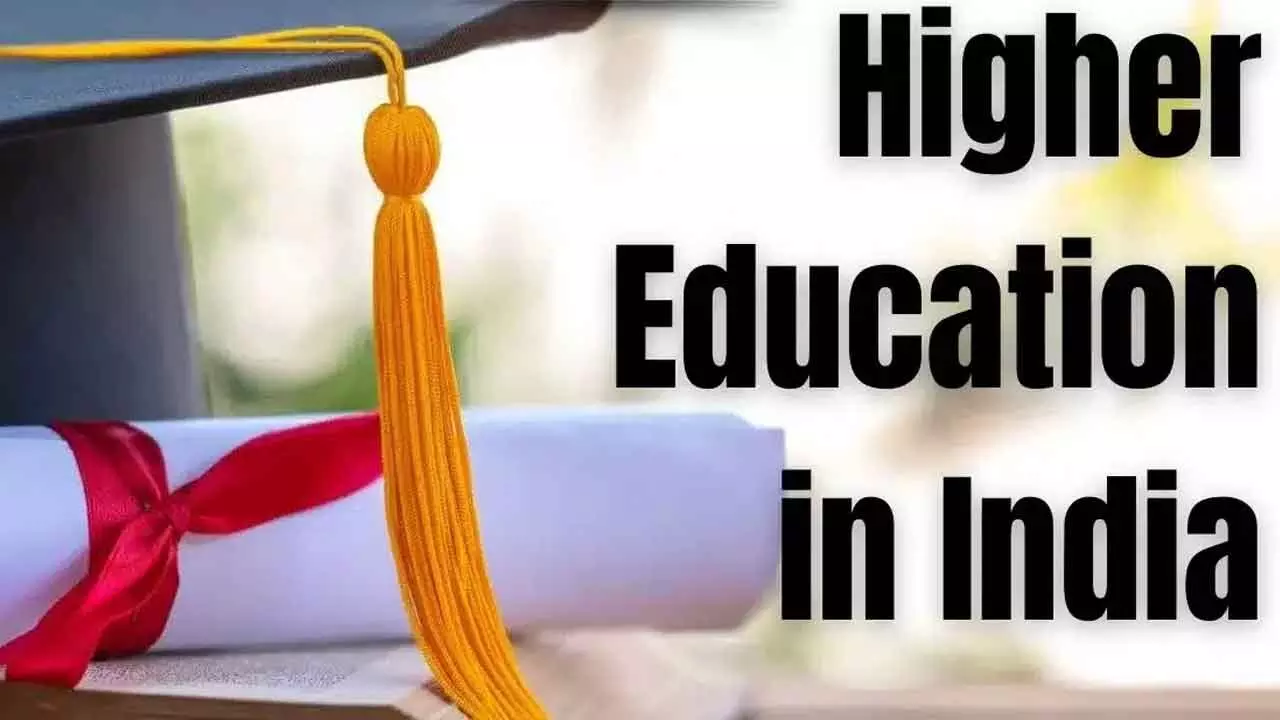
The right to get admitted into higher educational institutions after duly qualifying for it is given in this country. However, one may wonder about the implementation part as recent reports reveal that students who pass out of National Institute of Open Schooling (NIOS) are denied admissions into institutions of their choice because they are not considered to be qualified for it. The National Institute of Open Schooling (NIOS) was started to give a second chance to students who cannot afford regular schooling. It offers flexible learning for students who want to study at their own pace, from home or in the online mode.
However, the latest numbers show that the dream of “education for all” is facing serious challenges. As per an agency report, the All-India Council for Technical Education (AICTE) has warned institutions against denying admission to students holding NIOS certificates and asserted that such qualifications are fully valid for entry into higher and professional education. The technical education regulator has noted that such practices violate the National Education Policy directives and adversely affect students’ rights to higher education.
NIOS is an autonomous institution under the Union Ministry of Education and is recognised on par with other national and state boards such as CBSE, CISCE, and Boards of School Education. All higher education institutions have been directed to ensure that students who have successfully passed through NIOS and meet the eligibility criteria are considered equal to students emerging from other recognised boards. Reassuring, indeed. In a rather alarming revelation, related news about NIOS is that around 70 per cent of their Class 10 students have failed in the last four years. This shocking data has raised questions about the system meant to help struggling learners.
No regular classroom learning, lack of awareness, incomprehensible study material and language barriers, limited support from schools, lack of supervision at home and emotional and mental stress are cited to be key reasons. Students who fail in NIOS often face limited opportunities in higher education. Some schools also allow them to continue only in the Arts stream in Class 11, reducing their career choices in Science or Commerce. In the long run, this also affects their job prospects, especially when pitted against the regular board students.
The painful fact, however, is that the state of higher education in the country has been riddled with decreasing enrolments and increasing dropouts over the past few decades, owing to a series of reasons. And then comes the startling revelation that around 83 per cent of engineering graduates are without a job or internship offer. In 2025, as green shoots of hope on the employment front seem to be sprouting all over, it is also a shattering reality that only 10 per cent of the available engineering graduates this year may end up getting employed.
The elephant in the room is the yawning skills gap, where graduates’ academic knowledge doesn’t align with industry needs. Recruiters now prioritise skills over a degree from a prestigious institution. The obvious outcome of the crisis has been underemployment, where graduates take up jobs that don’t utilize their skills or take up freelance work and side hustles for additional income. Not a good sign at all, if we are to be a ‘Viksit Bharat’ by 2047.