NMP 2.0 is a bold step; it can unlock resources for reinvestment

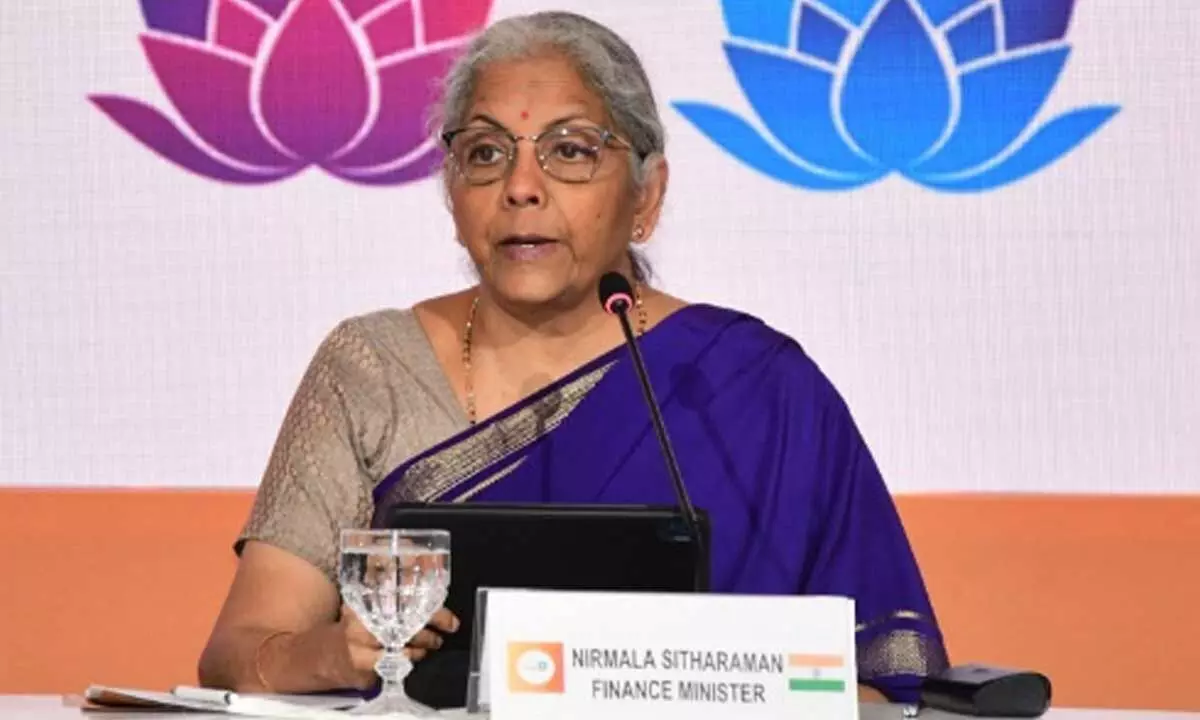
Finance Minister Nirmala Sitharaman
The government has done well to set a target of Rs 16.7 lakh crore for National Monetisation Pipeline (NMP) 2.0. The objective is to monetise assets of more than 2,000 projects in 12 sectors till 2029-30. The Prime Minister-headed NITI Aayog, after consultation with infrastructure ministries, has developed NMP 2.0, which Finance Minister Nirmala Sitharaman launched on Monday. A NITI Aayog paper said in 2021, “Asset monetisation, based on the philosophy of ‘Creation through Monetisation’, will tap institutional investment and long-term patient capital into stable mature assets, in turn generating financial resources for new infrastructure asset creation. This will enable economic growth, generating employment opportunities and better prospects for the country’s growth.” At the launch, the Finance Minister complimented all ministries and departments and NITI Aayog for meeting nearly 90 per cent of the target of Rs 6 lakh crore, which was set for four years in the implementation of NMP 1.0. On the face of it, praise for falling short of the target seems awkward. However, if the polarised political situation and the perverted public discourse (which equates processes like privatisation and asset monetisation as cheaply selling off national treasure) are considered, we find that her comments are not off the mark.
Highlighting the significance of asset monetisation, she rightly pointed out that NMP enables recycling of productive public assets, thereby unlocking resources for reinvestment in new projects and capital expenditure. She noted that this approach facilitates efficient mobilisation of funds for capex in public assets while minimising the budgetary outgo of the government. While the Centre has the courage to go ahead with the programme, it must ensure that it doesn’t result in corruption and monopolies. Six points need to be considered regarding this. First, the government must ensure transparency in valuation. Public assets must be priced realistically and competitively. Independent advisors, transparent bidding processes, and robust disclosure norms are essential. All contracts should be made public, barring commercially sensitive details, so that citizens and oversight bodies can scrutinise them. The credibility of NMP 2.0 will rest on the perception that assets are neither undervalued nor selectively awarded.
Second, competitive bidding must be genuine, not cosmetic. If a handful of large conglomerates dominate most sectors, the risk of concentration increases. This can lead to a situation where the state replaces a public monopoly with a private one. Third, the contract design must balance investor incentives with public interest safeguards. Concession agreements should include performance benchmarks, service quality standards, and penalty clauses for non-compliance. For instance, toll road operators must adhere to maintenance and safety norms; power transmission operators must ensure reliability; airport operators must maintain passenger service standards. Regulatory oversight cannot be lax once assets are monetised. The objective is efficiency, not abdication. Fourth, revenue-sharing and user charges need careful calibration. While private operators must earn a fair return, excessive user fees can generate public resentment and fuel political backlash. Transparent tariff-setting mechanisms, ideally overseen by independent regulators, can mitigate such risks. Fifth, strong audit and accountability mechanisms are indispensable. Institutions such as the Comptroller and Auditor General (CAG) and parliamentary committees should periodically review monetisation outcomes. And, finally, the government must effectively explain the difference between monetisation and privatisation, emphasising that ownership remains public and that funds raised are earmarked for new infrastructure.