Killing of Hidma a big feat of Andhra Pradesh cops, Centre

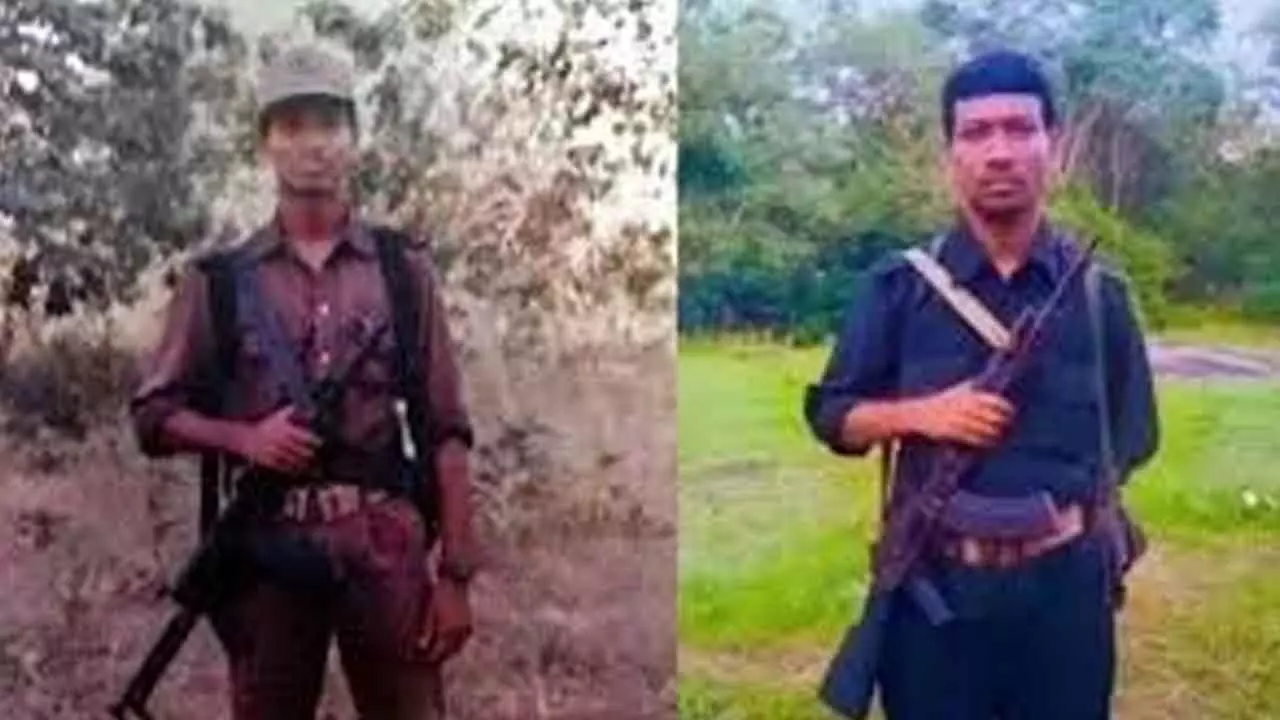
The killing of Madvi Hidma, the most-wanted Maoist commander, by the Andhra Pradesh police in the Maredumilli Mandal area is a major achievement not just of state cops but also the Union Home Ministry under Amit Shah. With a reward of Rs 1.8 crore on head, Hidma, a central committee member of the Communist Party of India (Maoist), was the solitary Chhattisgarhi - and a tribal to boot - to rise to such a high rank in the Telugu-dominated outfit. The police action - in which 12 other Maoists, including his wife, were killed in two days—is a big blow to Maoism.
Hidma lived and died as a Maoist, also called Naxal. Recruited as a child soldier for the cause of the Marxist revolution, he rose through the ranks, becoming an expert guerrilla fighter. He earned the sobriquet of ‘the ghost of Bastar’ for outliving many rumours of his death. He would belie every rumour by organising a deadly attack, the biggest of them being the one at Tadmetla in Chhattisgarh, in which 76 CRPF personnel perished.
For more than two decades, the forests of Bastar whispered one name with dread - Madvi Hidma. A phantom to security forces, a legend among Maoists, and the mastermind behind India’s deadliest Naxal attacks, Hidma’s story was a mix of brutality, brilliance, and near-mythical survival.
His death comes a month after a very senior Maoist leader Mallojula Venugopal Rao alias Sonu Bhupati surrendered at Gadchiroli in the presence of Maharashtra Chief Minister Devendra Fadnavis. Bhupati, a central committee member of the CPI (Maoist), surrendered along with his 60 comrades.
It looks like Home Minister Amit Shah will be able to redeem his promise, made less than three weeks ago, that of making India Maoist-free by March 31, 2026. Talking at an event, he remembered a time when over 130 districts across the country were suffering because of Maoist presence. But now, he said, “the backbone of this violent movement has been broken.”
He was correct. In fact, in 2009, as per government estimates at that time, Maoism held sway in vast swathes of 10 states in the country, involving about 180 districts. The Maoist threat had grown after September 2004 when the People’s War Group (PWG) merged with the Maoist Communist Centre (MCC), resulting in the formation of the CPI (Maoist).
Manmohan Singh said repeatedly when he was prime minister (2004-14) that Naxalism was the biggest challenge to our internal security. It was creditable for him to have said that, for there were several Naxal-friendly characters who were influential when the Congress-led United Progressive Alliance was in office. For instance, the civil rights activist Binayak Sen, who was convicted for sedition, was appointed as a steering committee member on health-related issues of the Planning Commission. He was widely accused of being a sympathizer of Maoists.
It is indeed a big feat of the government under the Bharatiya Janata Party-led National Democratic Alliance that the number of Maoist-affected districts has come down to 11 after Bhupati’s surrender. With the elimination of Hidma and his colleagues, the number will go further downwards.
The eradication of Maoism as a major threat will not only improve law and order in the areas affected but also prepare the ground for development.