Khamenei’s killing: Centre has chosen prudence over polemics

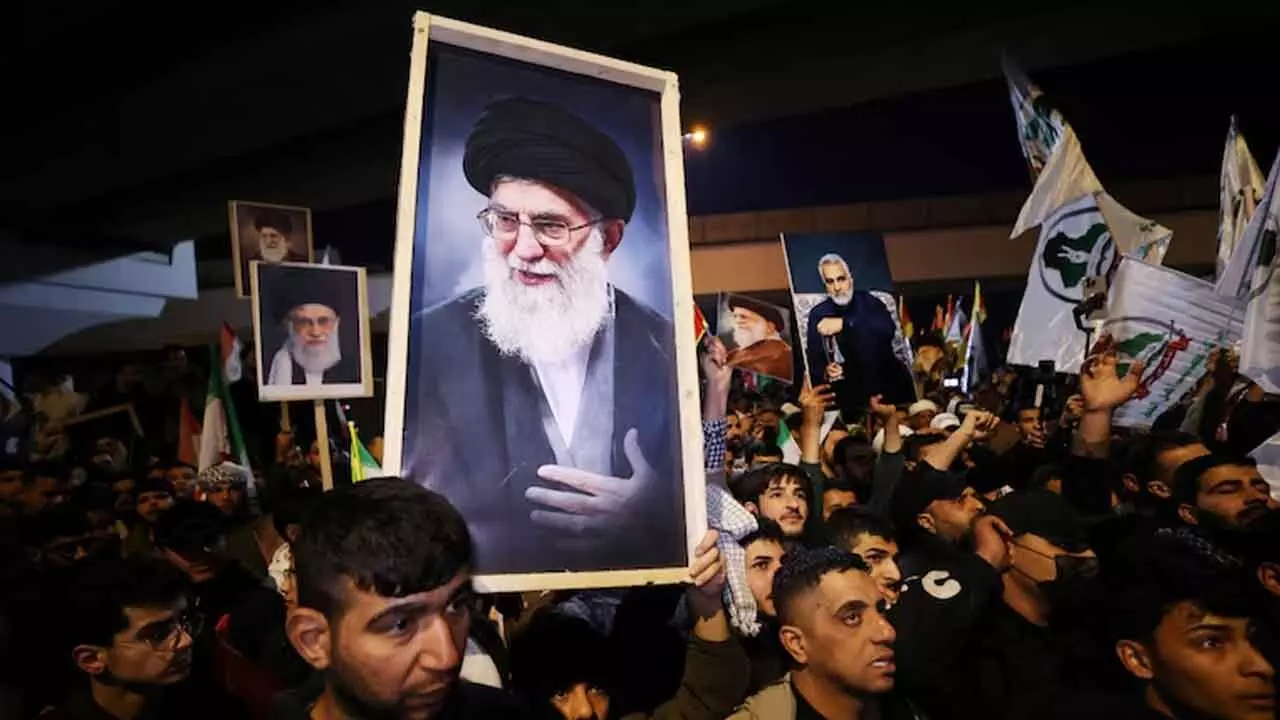
The Narendra Modi government has been bold and sensible in its reaction to the death of Iran’s Supreme Leader Ayatollah Ali Khamenei. Despite the Congress-led Opposition demanding a formal statement from the government, it has refused to take the bait and get mired in the swamp of anti-Americanism, with attendant consequences. The Opposition—indeed a vast section among the political and intellectual elites, including from the saffron dispensation—wanted unequivocal denunciation of Khamenei’ killing. Calling the killing “a grave rupture in contemporary international relations,” Sonia Gandhi wrote in an article that “what stands out equally starkly is New Delhi’s silence.”
She is angry that “ignoring the massive US-Israeli onslaught, the Prime Minister confined himself to condemning Iran’s retaliatory strike on the UAE, without addressing the sequence of events that preceded it. Later, he uttered platitudes about his ‘deep concern’ and talked of ‘dialogue and diplomacy’—which is precisely what was underway before the massive unprovoked attacks launched by Israel and the US.”
The article is the nth reiteration of the evilness of the US and Israel. This is the standard condemnation of America, Israel, and the West in general emanating from perverted Leftist thinking that most politicians and intellectuals of India have been peddling since Independence. This is so rampant and powerful that it even infects the supposedly rightwing regime under Modi. In May 2024, India criticised Israel’s military action against Hamas in Gaza. “The conflict in Gaza has been going on for over seven months, and the humanitarian crisis it has triggered has been increasing.
There is also the potential for growing instability in the region and beyond. In this context, we view the UNSC’s adoption of resolution 2728 as a positive step,” India’s permanent representative to the UN, Ruchira Kamboj, stated at the 10th UNGA emergency special session on Palestine. Thankfully, the Modi government has redeemed itself by siding with Israel. Just before the massive strikes on Iran, Modi visited Israel and said in a joint statement with his Israeli counterpart Benjamin Netanyahu that the two countries would work towards pursuing a free trade agreement. “We’ve taken a historic decision to elevate our time-tested partnership to a Special Strategic Partnership,” Modi said in a post on X.
Those who slam the Modi government for its friendship with Israel and accuse it of abandoning the Palestinians forget that it has favoured peace in Gaza and supported a two-state solution. The government must stay the course. Emotional or ideologically driven reactions may earn applause in pinkish circles, but they rarely serve long-term national interests. India’s foreign policy should be anchored in national interest, economic pragmatism, and regional stability, and not tethered to shibboleths and dogmas.
That means supporting peace in Gaza and backing a negotiated two-state solution, while deepening beneficial partnerships with Israel, sustaining energy and diaspora ties with the Gulf, and managing differences with major powers without unnecessary provocation. In an increasingly fragmented world, clarity and promotion of national interest is more important than rhetoric. By resisting pressure to issue sweeping condemnations and instead emphasising dialogue, diplomacy, and balance, the Modi government has chosen prudence over polemics. The stance and statements made by government functionaries reflect a foreign policy that is realistic and rational. It can safeguard the nation’s long-term interests in a turbulent world.