India’s spectacular self-goal in cricket

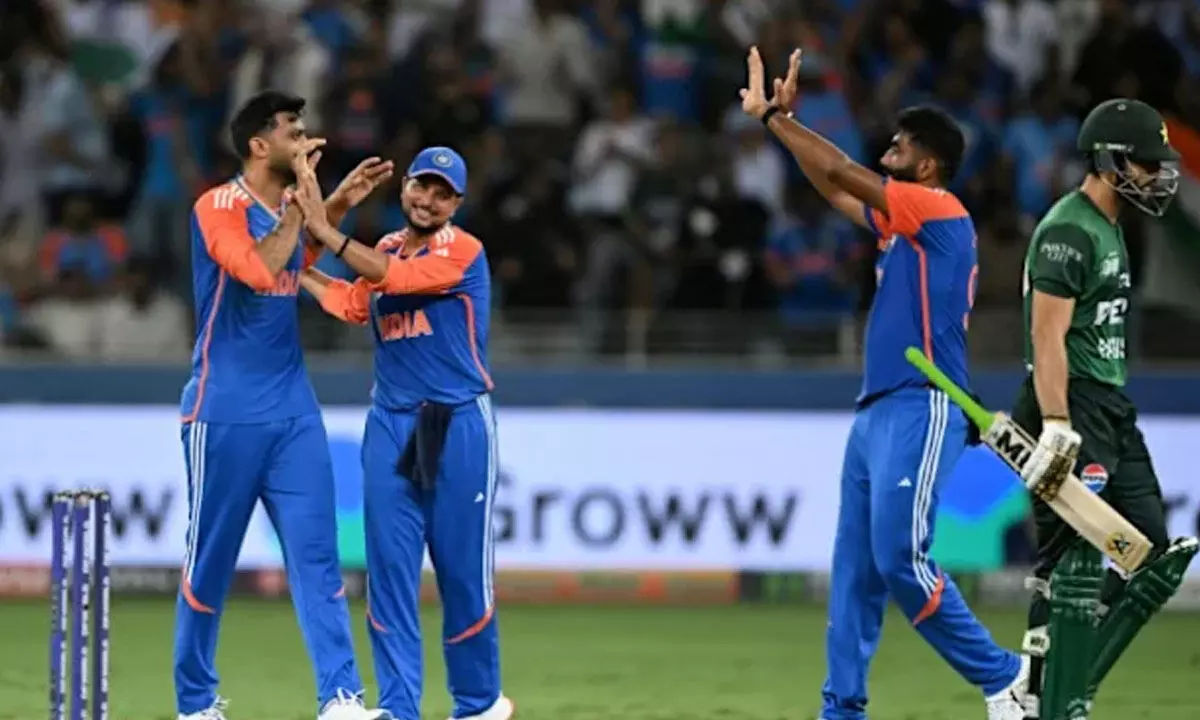
By the time you will be reading these lines, India and Pakistan will have played a cricket match in the Asia Cup. This is—to use a term from another sport—a self-goal by both the nation and the hyper-nationalist Bharatiya Janata Party (BJP) that dominates it. By playing against Pakistan, India normalises the terrorist state. The excuses offered by BJP leaders are pathetic. Former Union minister and the former president of Board of Control for Cricket in India (BCCI) Anurag Thakur said, “In a multilateral tournament organised by Asian Cricket Council (ACC) or the International Cricket Council (ICC), we must play as it is mandatory for all countries. If we do not take part, we will be eliminated from the tournament as the opposition will get the points.” At best, this sounds like a technical explanation—and one that is hugely unsatisfactory. So, what if India is eliminated from a cricket tournament? Is that a big price for national pride? The questions cut even deeper when one recalls the BJP’s own rhetoric. Time and again, its leaders have thundered that “terror and talks cannot go together.”
After the Uri and Pulwama attacks, they promised the nation that “blood and water cannot flow together,” referring to the Indus Waters Treaty. They suspended bilateral cricket ties with Pakistan years ago, citing terror as the reason. Where, then, is the consistency? Where is the muscular nationalism that was supposedly the hallmark of Prime Minister Narendra Modi’s India? The participation in the Asian Cup is especially hurtful because it is not some minnow in world cricket, forced to bow to tournament rules out of weakness (though even if that were the situation, non-participation would have been an honourable exit). India is the superpower of the cricketing world. The BCCI is the richest, most influential cricketing board on the planet. Without India’s participation, both the ICC and the ACC would collapse. Broadcasters, sponsors, and advertisers all know this. It is Indian eyeballs that drive revenues, the country’s fans who turn games into global spectacles, and our money that sustains the cricketing economy. If India had taken a principled stand, refused to play Pakistan and demanded that the world isolate the terrorist state, the cricketing establishment would have had no option but to listen. Instead, India meekly played along, proving once again that when commercial interests clash with national honour, it is the latter that gets sacrificed.
By participation in such tournaments, India lends Pakistan exactly what it craves for: legitimacy. Cricket is not just a sport in the subcontinent; it is a vehicle of soft power, a showcase of national identity. For Pakistan, whose image in the world is scarred by extremism, political instability, and economic collapse, a match against India is more than a game—it is a statement that they remain part of the club, that despite their sponsorship of terror, they can still sit across the table from India on the cricket field. Why should we grant them this legitimacy? Why should we, of all nations, provide them with the oxygen of relevance? The Indian government and the BJP had a chance to demonstrate that they stand firm against terrorism in every sphere, even the glamorous world of cricket. Instead, both chose the easy way out, exposing the gap between rhetoric and reality.