India should tweak trade and foreign policies to deal with Trump

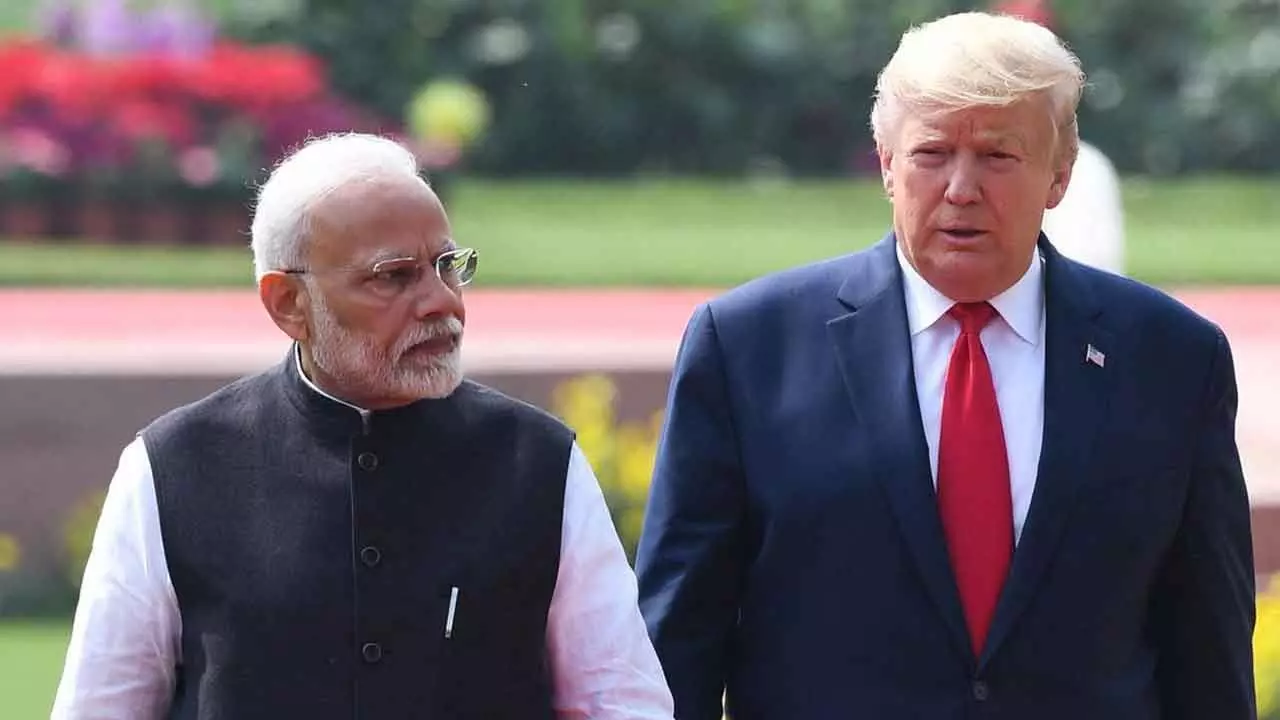
The US’ 25 per cent tariffs on goods imported from India, “plus an unspecified penalty” for buying Russian oil and weapons, has not come as a big shock to New Delhi as this was almost evident from the relatively lukewarm response of the stock market which, though in the red, was almost flat in the early hours of Thursday. This, however, does not mean that there will be, or has been, no adverse effect of US President Donald Trump’s decision on India. In April, he announced tariffs of up to 27 per cent on Indian goods, though these were later paused.
With the latest deadline approaching this Friday, India waited with bated breath. This was because Trump has frequently criticised India’s trade practices, labeling it a “tariff king” and a “big abuser” of trade ties. “But now I’m in charge, and you just can’t do that,” he said in a social media post. Delhi’s response came from the Narendra Modi regime’s pledge to attach “utmost importance to protecting and promoting the welfare of our farmers, entrepreneurs, and MSMEs.” Also, it “will take all steps necessary to secure our national interest.”
Since April, both sides have been engaged in intense trade negotiations, with tone and expectations shifting over time. US Trade Representative Jamieson Greer said discussions with Indian officials have been constructive but acknowledged India’s long-standing protectionist stance. Trump, he added, is determined to secure deals that significantly open foreign markets to US goods. Agriculture and dairy remain major sticking points. The US has long sought greater access to India’s farm sector, viewing it as a lucrative market. But, India has resisted such moves, citing food security, livelihood concerns, and the welfare of its millions of small farmers.
Union Commerce Minister Piyush Goyal reaffirmed India’s stance, calling agriculture a sensitive sector and pledging to protect farmers’ interests. Bilateral trade between the two nations stood at $190 billion in 2024, with Trump and Modi aiming to raise this to $500 billion. India has already lowered tariffs on products like Bourbon whiskey and motorcycles, yet the US still runs a $45 billion trade deficit with India. Trump’s recent announcement, however, must be seen in a broader perspective, one that includes geopolitics and diplomacy in general.
The US President’s annoyance with Delhi has more to do with its dalliance with nation groupings and policies he regards as inimical to Washington’s interests. For instance, he intensely dislikes BRICS; he also doesn’t seem to be fond of the rhetoric of the Global South. And, of course, he is not happy with India buying arms and oil from Russia. While India has long championed strategic autonomy in foreign affairs, some of its current geopolitical alignments warrant re-evaluation. Membership in BRICS, for example, has yielded no benefits on the critical issue of access to rare earth elements.
If participation in such groupings only provokes major partners like the US without delivering economic or strategic advantages, its continuation is worse than pointless; it is harmful. Similarly, India’s persistence in maintaining close ties with Moscow, despite significant shifts in the global order, has not resulted in meaningful gains. Russia is increasingly aligning with China, diminishing its value as a strategic counterweight for India. These realities suggest the need for a broader reassessment—not just of trade policy, but of foreign policy priorities as a whole.