India must shed global south myth for AI Summit’s success

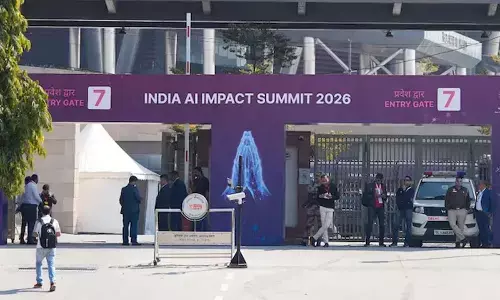
The India AI Impact Summit 2026, which begins in New Delhi on Monday, is not just a high-profile event with top global CEOs and international celebrities gracing the occasion but their deliberations during the meeting could shape future developments across spheres, including economy, geopolitics, technology and environment. India has defined the three sutras that should shape a sustainable AI future: people, planet and progress. The first is about AI serving humanity in all its diversity, preserving dignity and ensuring inclusivity. The second one is about AI innovation aligning with environmental stewardship and sustainability, while the third emphasises sharing of benefits equitably, advancing global development and prosperity. The Narendra Modi government has seven chakras, or themes, for global cooperation. “The seven chakras translate the guiding sutras into concrete areas of multilateral action. These themes—spanning human capital, inclusion, trust, resilience, science, resources, and social good—channel global collaboration towards measurable outcomes.” These are noble sentiments, which have succeeded in attracting French President Emmanuel Macron and his Brazilian counterpart Lula da Silva, Google’s Sundar Pichai, OpenAI’s Sam Altman, Nvidia’s Jensen Huang and Reliance’s Mukesh Ambani, among others. Around three dozen top CEOs will be attending the Summit. Prime Minister Modi will address the plenary on February 19.
India hopes to secure $100 billion in investment commitments during the five-day event. Of course, the potential is there, as India boasts of the second-largest AI workforce in the world and more than 700 million internet users. If China is the factory of the world, India is its back office. Besides, India, the fastest-growing major economy in the world, generates almost one-fifth of the world’s data. Some of the potential has also been realised. For instance, Andhra Pradesh has received a $15 billion commitment from Google to build its largest AI infrastructure hub outside the United States. Another $11 billion is being invested by a joint venture involving Reliance Industries, Brookfield, and Digital Realty to develop an AI-focused data centre in Visakhapatnam. Along with the potential is the danger of the Summit losing its purpose and salience from the assault of a shibboleth—that of the global south. This relic from the heyday of Nehruvian non-alignment has done tremendous harm to the nation. The reflexive invocation of the south as the organising principle of India’s AI diplomacy warrants careful scrutiny. The phrase carries historical resonance, evoking the era of post-colonial solidarity. In those days, it was a meaningless slogan; today, it is a drag.
Artificial intelligence is not structured along north-south binaries; it is organised around ecosystems of capital, talent, compute power and regulatory agility. All countries that will shape AI’s future are those able to mobilise investment, protect intellectual property, ensure data security, and cultivate cutting-edge research. While developmental cooperation remains important, India’s primary objective at a forum of this scale should be to embed itself in the most advanced global innovation networks. If Summit 2026 succeeds in aligning its lofty sutras and chakras with hard-headed economic strategy, it could mark a decisive step in India’s technological ascent. But to do so, it must resist the temptation to substitute symbolism and misplaced nostalgia for substance. In the age of AI, influence will accrue to those who invest in innovation and the future, not to those who rehearse old shibboleths.