India-EU FTA is a win-win proposition for both economies

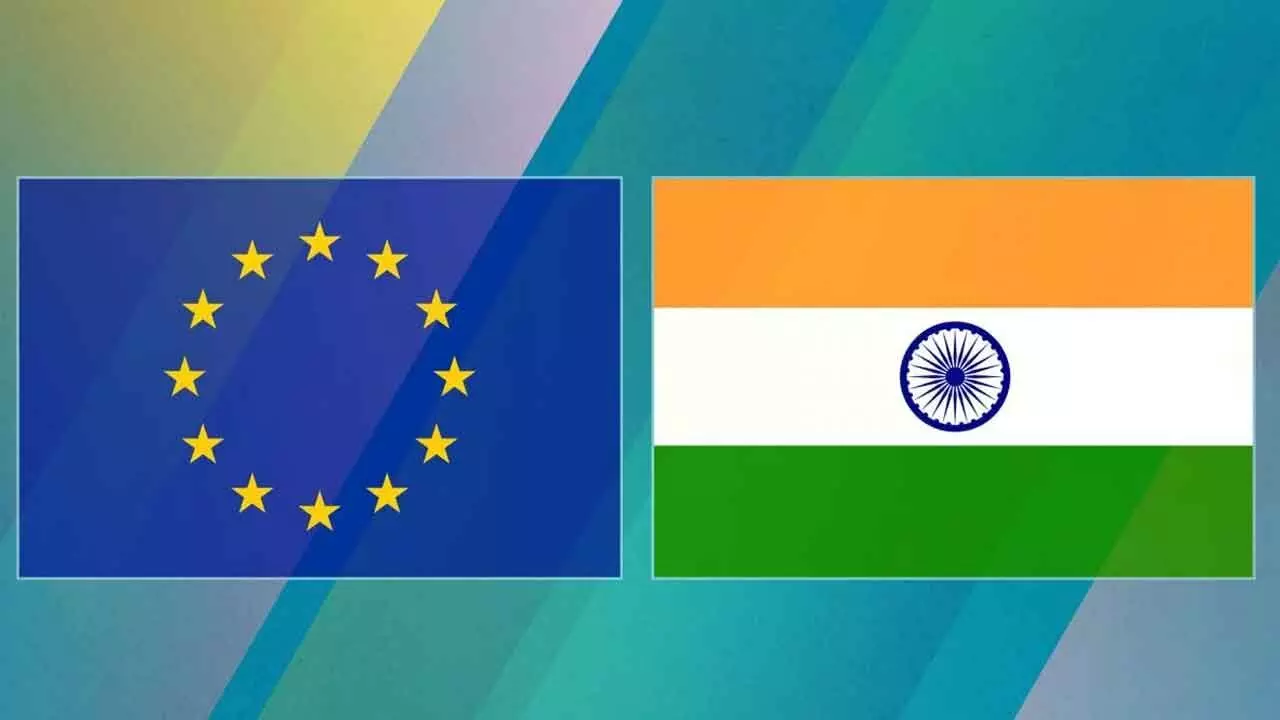
When global dignitaries meet, the statements they make often tilt towards hyperbole. So, Prime Minister Narendra Modi called the India-European Union Free Trade Agreement, which concluded on Tuesday, a “historic agreement,” while European Commission President Ursula von der Leyen saw it as the “mother of all deals.” However, overemphasis in this case is justified.
For it hugely enhances wide-ranging economic ties between the two economies, which together comprise 2 billion people and contribute over one-fourth to the global GDP. A trade deal that took almost two decades to make, and which involved numerous knotty issues, finally came up without much turmoil—at least in India. The headlines are about cars and alcohol from Europe getting cheaper, and our labour-intensive goods getting free access to a huge market. Unsurprising, the auto and liquor companies will feel the heat; they already are, as their stocks declined after the conclusion of the FTA. On the whole, however, the Sensex went up, reflecting a good mood in the market.
After the operationalisation of the FTA, we will get preferential access to the European markets across 97 per cent of tariff lines, covering 99.5 per cent of trade value. As many as 70.4 per cent tariff lines, comprising 90.7 per cent of India’s exports, will pay no duty right from the beginning. These include employment-generating sectors like textiles, leather and footwear, tea, coffee, spices, sports goods, toys, gems and jewellery, and some marine products. Other tariff lines will enjoy lower duties over a period of time.
India is offering 92.1 per cent of its tariff lines, covering 97.5 per cent of the EU exports. An Indian government press release said, “India has prudently safeguarded sensitive sectors, including dairy, cereals, poultry, soymeal, certain fruits and vegetables, etc., balancing export growth with domestic priorities.”
India hopes to enhance the ease of doing business by faster and compliances for its exporters. Also, it claims to have secured “broader and deeper commitments” from the EU across 144 services subsectors, including IT/ITeS, professional services, education, and other business services. Further, the mobility of professionals has been made easier. Non-trade barriers are expected to go down.
India and the EU also signed the India-EU Security and Defence Partnership. It is the “first such overarching defence and security framework between the two sides that will deepen ties in the domains of maritime security, defence industry and technology, cyber and hybrid threats, space, and counter terrorism, among others. They also welcomed the launch of negotiations on a Security of Information Agreement that will facilitate the exchange of classified information and pave the way for a stronger cooperation in areas related to security and defence,” the joint statement by both sides said.
In a nutshell, the India-EU FTA will go a long way in bringing the economies closer in every possible manner. This will help both sides as they share values and principles, including democracy, human rights, pluralism, rule of law, and the rules based international order. In an era when these principles are increasingly contested, translating them into concrete economic and strategic cooperation gives them renewed relevance.
Economically, the pact promises greater trade, investment, technology transfer, and job creation. Institutionally, it encourages regulatory alignment and predictability. Strategically, it embeds India more firmly within a network of like-minded partners at a time when the global order is under strain.