India Braces For Trump’s ‘Liberation Day’

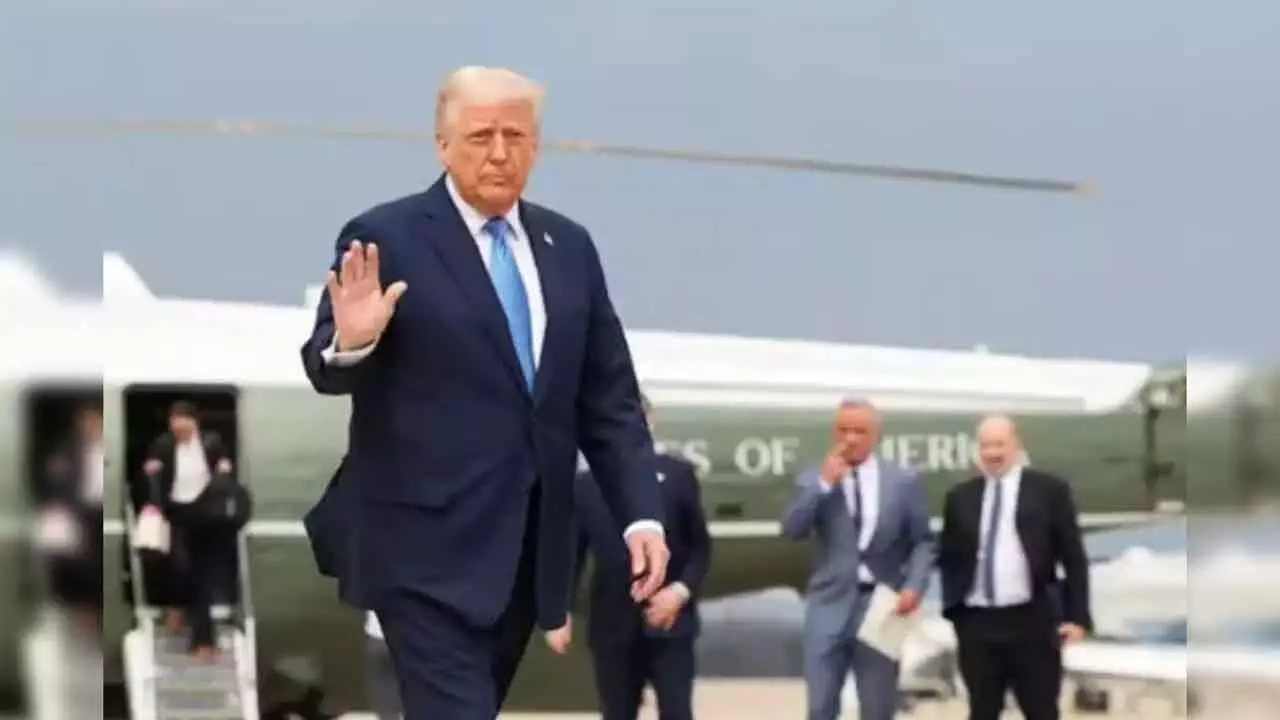
On the eve of the ‘Liberation Day’ when the US reciprocal tariffs are to kick in against India, if there are any hopes of President Donald Trump easing his stance on tariff proposals, they had better be put paid to. For, Trump just told NBC News on Saturday that he “couldn’t care less” if automakers raised prices because of new tariffs after he announced he would impose 25% tariffs on all foreign-made automobiles. We can glean his mindset, thus, as one of unwavering, and intransigent, too. So, India has cannot but double down on its efforts to protect its interests, and, at the same time, maintain good relations with the US, more so Trump. It is not easy.
Despite widespread concerns, the US President is reiterating the global rollout of ‘Liberation Day’ tariffs from April 2, sparking concern over trade wars. Trump believes, “We’re going to be much nicer than they were to us, but its substantial money for the country.” None can fault the President who is resolute on realising his MAGA (Making America Great Again) promise. He opted for reciprocal tariffs for rebalancing global trade, equalising the tariffs that other nations impose on the US, boosting domestic manufacturing, and generating tariff revenue to finance tax cuts and keep other electoral promises.
In the case of India, Trump repeatedly slammed its high import duties and dubbed the country as “tariff king”. His anger is borne out by the fact that India’s average tariff rate on imports from the US is around 17 per cent, whereas the US average is 3.3 per cent. The bilateral trade between the US and India stands at $129.2 billion in 2024, with US trade deficit with India at $45.7 billion. As US-India trade talks just concluded, India is rolling out some measures. It is moving to abolish the 6 per cent equalisation levy on online advertisements, which would benefit US companies such as Google, Meta, Amazon etc., from April 1. This tax applies to any payments exceeding Rs 1 lakh a year to a non-resident service provider for online advertisements. The Modi government is also said to be considering easing non-trade barriers. A silver lining is that a considerable share of India’s exports to the US are already not easily substitutable; even if it is done, it will pinch the US consumers. India mainly exports packaged medicaments, diamonds, and broadcasting equipment to the United States, while the US imports goods such as chemicals, plastics, rubber, and leather goods from India. Also, India is a strong domestic-focused economy. The fact that India’s exports of goods and services account for hardly 23% of its GDP adds some resilience to its economy to withstand the Trump tariffs. In this, the exports of goods share is at 12% of GDP.
Another avenue as a countermeasure that India should explore is ramping up bilateral trade with China. With its economic appearing to flatten out, the dragon country may be keen on narrowing its trade deficit, by upgrading the trade which reached $118.4 billion with India in 2023. China has surpassed the US as India’s largest trading partner. In the changed scenario, India can look to reduce its trade deficit with China which touched $83.36 billion in 2023.
Of late, both countries are taking steps to ease tensions and normalise relationship. India also must perform better under the US tariff pressure to push for unfinished reforms in economy and trade. It should hasten as large firms may be hit by Trump tariffs, and repercussions would be felt in manufacturing, and, consequently, on the jobs front.