Higher US tariff to have minimal impact on Indian IT industry

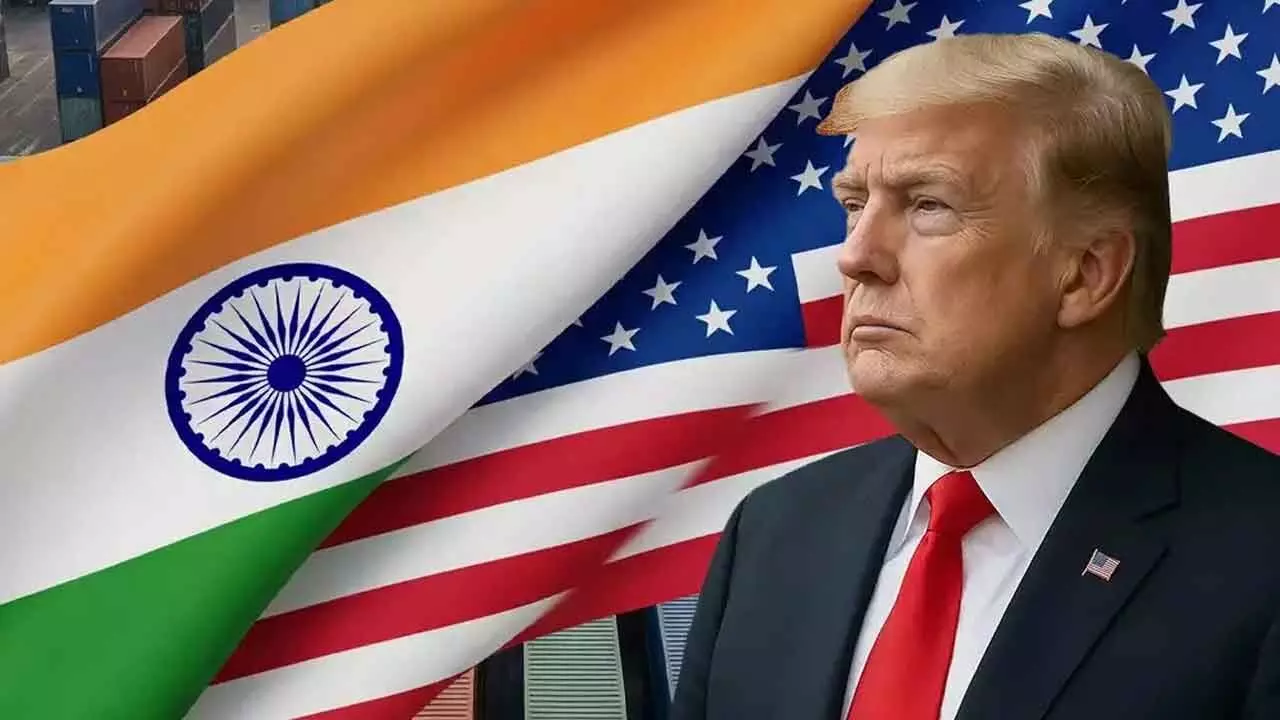
India-US relationship is showing no signs of improvement. In the very first week of 2026, several geopolitical events have pushed the relationship downhill. The US military mounted an attack on Venezuela and captured its President and his wife, while the US navy detained a commercial ship, which was voyaging under a Russian flag, taking the US and Russia on a collision course. Meanwhile, President Donald Trump has approved a new bipartisan bill aimed at putting pressure on countries like India, China, and Brazil, which continue to buy oil from Russia.
The bill is intended to reduce Russia’s income from oil sales. If it is passed into law, then the US can impose up to 500 per cent tariff on Indian goods. Currently, India is under a punitive 50 per cent tariff slab, imposed by the US administration. Owing to such rates, Indian shipments worth around $48 billion are facing significant headwinds. Though Indian exports have seen an overall rise due to diversification, exports to the US have taken a hit. Any further rise in tariff rates will render Indo-US trade completely unviable.
While many labour intensive and capital goods have been negatively impacted owing, overall services space remained unaffected. As services are not covered under the current tariff norms of the US, exports of IT services have seen little so far. However, the Trump administration has taken several steps to hit the IT exports from India. Firstly, it has introduced an entry fee of $100,000 for new applicants coming through the H1B visa route, following which many Indian IT firms have stopped applying for such visas altogether.
Additionally, Washington has scrapped the existing lottery system of visa approval. From February onwards, evaluation of H1B visa applications will be based on wage and experience, implying that experienced and highly skilled professionals can enter the US for jobs. These measures show that though tariffs are not impacting the IT industry directly, several non-tariff measures like H1B visa restriction are trying to derail growth. Surprisingly, the reverse has happened. As sending technology professionals to the US becomes difficult, many GCCs (Global Capability Centres) have ramped up hiring in India.
Against the prevailing bilateral relations, more non-tariff measures are likely to come in the way of the Indian
IT industry in 2026. All indications show that the US-India trade deal may not happen soon. Though trade deals will not have direct impact on the IT industry, clinching of the same will work as a sign of easing the friction. As a result, the Indian IT industry may have to brace for some impact this year.
Firstly, the subcontractor cost is likely to go up as they deploy more third-party vendors in the US for executing project works. Secondly, if the global environment deteriorates, then technology spending will remain tepid. However, there are also silver linings. Rupee is falling against dollar owing to the exit of FIIs from India in the absence of a trade deal. Such a fall will provide some margin cushion. Lastly, more American firms are likely to opt for setting up technology captives in India, given its technology talent base. Thus, Indian IT firms have to navigate a complex environment to keep pace with the demand dynamics.