Good to see Govt, Oppn agree to discuss air pollution in Parliament


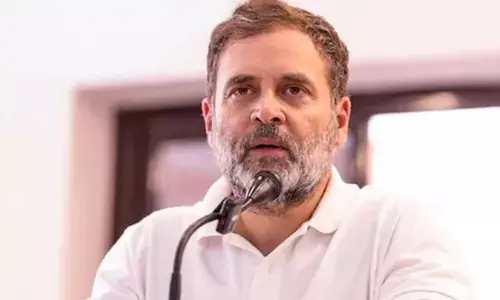
It’snot very often that our politicians focus on the real issues confronting the people. The leaders have a penchant for abstruse matters, catchy slogans, and cryptic buzzwords like Vishwaguru, one-nation one-election, and mohabbat ki dukan. While the ruling dispensation under the saffron family pushes its agenda of Hindu glorification (often accompanied with Muslim demonisation), the Opposition promotes equally, if not more, divisive issues like caste census. So, it was indeed heartening to know that, after a long time, they have agreed to get real: they agreed to discuss air pollution. Last week, Leader of the Opposition Rahul Gandhi talked about air pollution in the country’s major cities and sought a discussion on the issue in the Lok Sabha. He raised the matter during Zero Hour, suggesting that both the Opposition and the government work together to find a solution to the problem. “This is not an ideological issue. Everybody in this House would agree that air pollution and the damage it is causing to our people, is something that we would like to cooperate on,” Gandhi said. Thankfully, the treasury bench agreed to the Congress leader’s suggestion, with Parliamentary Affairs Minister Kiren Rijiju saying that the government was ready for a discussion on the issue and the Business Advisory Committee of the Lok Sabha could allot time for the same.
To be sure, it will be sanguine to expect a sudden solution to the vexed problem that has been plaguing not just the national capital and the surrounding areas but almostthe entire north India. But one can hope that the discussion will bring the focus of the administrations in the region to the severe air pollution issue. It will be futile to blame bureaucrats for having allowed the problem to turn deadly, for they can act only if their political bosses want them to; and our politicians are more concerned about scoring brownie points and promoting catchy slogans than addressing the real issues. But now there is the possibility of some sort of consensus emerging out of the impending parliamentary discussion.
The political class must ensure that the discussion doesn’t become an opportunity to trade allegations and counter-allegations. It must realise that the entire class has failed the nation on the issue of air pollution (apart from many other issues). It must also acknowledge the fact that there are problems that need urgent solutions, and the solutions generally are predicated upon sensible action, not political one-upmanship. The media and civil society also have a role to play towards this. Sustained public pressure can ensure that air pollution does not slip back into obscurity once the immediate crisis fades. Citizens must demand transparency in data, clarity in targets, and timelines for action. Clean air should not be seen as a luxury or an elite concern but as a basic right, integral to the constitutional promise of life and dignity. In a political climate saturated with slogans, rhetoric and symbolic battles, the decision to talk about air pollution feels almost radical. This tentative shift towards addressing a real, urgent problem offers a glimmer of hope. For once, our politicians may be compelled to confront an issue that cannot be deflected, rebranded, or communalised—because the air we (and they) breathe, or struggle to breathe, is somethingwe all share.