FIR on JNU protests: Confusing dissent with disloyalty

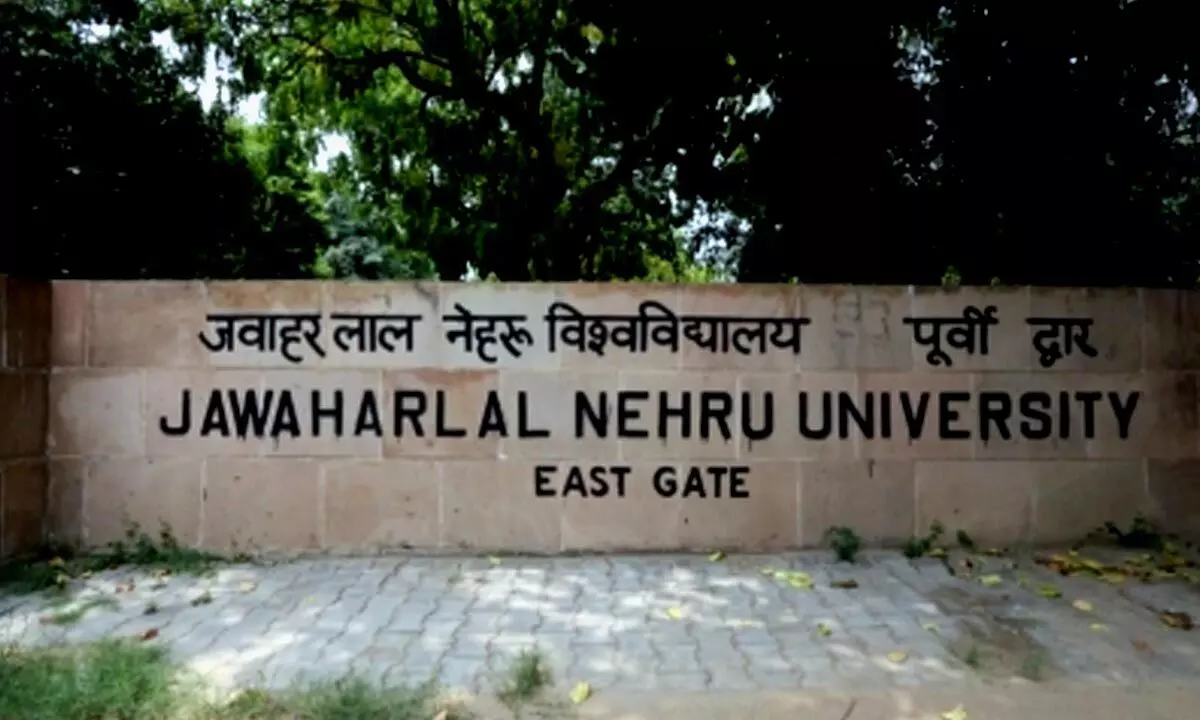
Jawaharlal Nehru University (Photo/IANS)
The authorities of Jawaharlal Nehru University (JNU) seem to have erred in their decision to expel, suspend, or debar students for raising controversial slogans that were allegedly raised against Prime Minister Narendra Modi and Home Minister Amit Shah. They said on X, “The Jawaharlal Nehru University administration has vowed the strictest action against students found raising objectionable slogans against Hon’ble Prime Minister and Hon’ble home minister. An FIR has already been lodged in the matter.”
It hasn’t mentioned what was “objectionable” about the slogans. If there was any hint of violence to be perpetrated against Modi and Shah, or some obscenities hurled at them, action against the protesting students would be justified. But penalising any slogan against the duo, or anyone else, is a gross abuse of authority by the officials concerned. Students and others have the democratic right to criticise and protest against politicians, however senior the latter may be. Seniority, rank, and station do not provide immunity to anyone from criticism.
In a statement, the JNU said, “Universities are centres for innovation and new ideas, and they cannot be permitted to be converted into laboratories of hate. Freedom of speech and expression is a fundamental right. But any form of violence, unlawful conduct or anti-national activity will not be tolerated under any circumstances. Students involved in this incident will also face disciplinary measures including immediate suspension, expulsion and permanent debarment from the university.”
But the JNU authorities have failed to provide any details to the media about the “form of violence, unlawful conduct or anti-national activity” that the protesting students indulged in. They have reportedly identified nine students, including the four office bearers of JNU Students Union, who organised an event “ostensibly to observe the sixth anniversary of the violence that occurred in JNU on 5 January 2020.” At the event, slogans relating to the “bail pleas of Umar Khalid and Sharjeel Imam” were also raised.
So what? Newspapers have written editorials against the denial of bail to Khalid and Imam. Should those newspapers also face action? It is troubling how the elastic and often politically loaded terms such as “anti-national” are used so cavalierly.
Perhaps, this is a case of more royalist than the king; the university officials may be trying to score brownie points with their political bosses. The top leadership—that is, Modi and Shah—must realise that such cheap stunts by sycophantic officials do no good to either them or to the nation’s reputation. The duo is too strong politically to need any support from the officials of a prestigious university.
University officials would do well to remember that their primary responsibility is to nurture learning, research, and critical thinking. Their job is not to police political opinion or act as guardians of the reputations of those in power. Nor should they confuse dissent with disloyalty. A confident nation does not fear slogans; it confronts them with arguments, evidence, and dialogue.
If JNU truly wishes to uphold its own stated ideals, it must transparently explain what rules were violated, how those violations meet the threshold of violence or illegality, and why the harshest punishments are warranted. Failing that, the disciplinary actions will rightly be seen as arbitrary and politically motivated. In a democracy, universities must stand as bastions of free inquiry, not as echo chambers of power.