Democratic dividend shouldn’t become democratic disaster

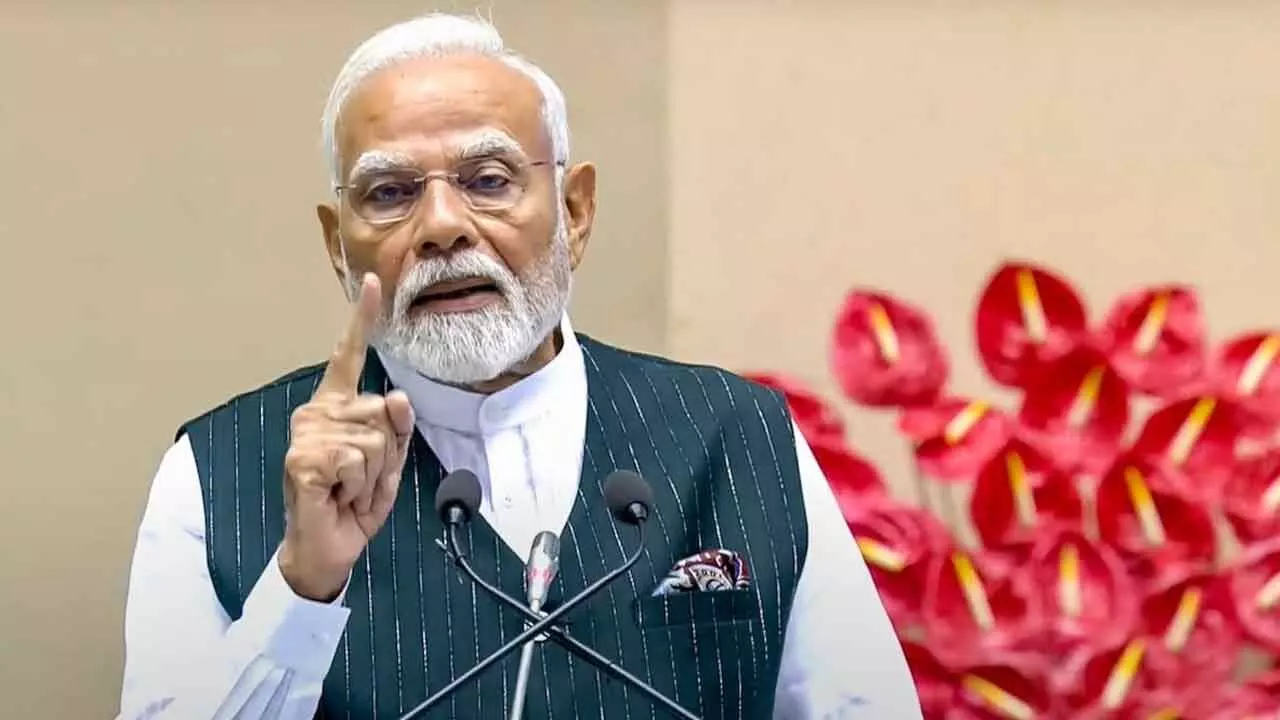
More than once, Prime Minister Narendra Modi has spoken about a ‘democratic dividend’ that our country can reap. There is, however, no inevitability for this eventuality; worse, there is also a distinct possibility of a demographic crisis, which can also become a calamity. While we are far away from a calamity, the crisis can be denied only by the government’s blind supporters. Consider this: in the past two decades, the share of graduates among unemployed youth (20-29 years of age) has more than doubled, even though the country’s growth rate has been impressive in this period, says a recent report released by Azim Premji University. In 2023, there were over two-thirds of unemployed youth, as against 32 per cent in 2004, the report titled ‘State of Working India 2026’ said. The share of graduates among youth increased to 28 per cent in 2023 (6.3 crore) from 10 per cent in 2004 (1.9 crore). In this period, about 50 lakh graduates were added every year. “Graduate employment, therefore, has not kept pace with graduate supply,” it said. Two points need to be made here. First, the report should not be trashed by the government and its supporters—as is their penchant. The report cannot be faulted, at least not on this count, for it also includes the entire period when the Congress-led United Progressive Alliance was in power (2004-14).
Besides, there are other documents and anecdotal evidence highlighting the major problem of unemployment. Second, what the government should do is well-known. Economic Surveys and other expert comments have made a zillion recommendations to improve the situation. Hence, the disease and its cure are both known; it is time to get cracking and go about proper treatment. The need of the hour is political will and administrative effectiveness. Expanding on this, the core of the employment challenge lies in the economy’s structure. Despite high GDP growth rates, job creation has not kept pace, particularly in sectors that can absorb large numbers of educated workers. Manufacturing, which has historically driven employment in many successful economies, has not expanded sufficiently in India. Meanwhile, the services sector, though dynamic, often demands specialised skills that many graduates do not possess. One critical area for intervention is education reform. The rapid expansion of higher education has not always been accompanied by improvements in quality. Many graduates lack the skills required by employers, leading to the paradox of a high unemployment rate coexisting with employers’ inability to get the right people for the jobs they offer.
Bridging this gap requires a stronger focus on vocational training, apprenticeships, and industry-academia collaboration. Universities must align curricula with market needs, while employers should be encouraged to invest in skill development. Another priority is labour-intensive manufacturing. Policies that promote sectors such as textiles, electronics assembly, food processing, and renewable energy can create large numbers of jobs. This requires not only financial incentives but also improvements in infrastructure, logistics, and ease of doing business. Labour market policies must also be modernised. Simplifying regulations, ensuring worker protections, and promoting formalisation can create a better employment environment. Finally, governance and accountability are crucial. Policies and programmes often fail not because they are poorly designed, but because they are poorly implemented. Strengthening institutions, improving data collection, and fostering transparency can help ensure that interventions achieve their intended outcomes.