




- Delhi Rains: Heavy Downpour Floods IGI Airport, Nine Flights Diverted Within An Hour
- Congress failed to implement women’s guarantees: Madhusudhanachari
- ‘Dharmasthala Niyojakavargam’ review: A meaningful political drama with a strong social message
- Navies of India and Thailand reaffirm commitment to capacity building, training
- Poco X8, X8 Power Launch in India with Big Batteries and Snapdragon Chips
- AP, Telangana to receive rains amid cyclonic circulation in Bay of Bengal
- Govt to make all efforts for better solution to Bhopal sealing issue: CM Mohan Yadav
- South Korean President Lee designates flood-hit Tongyeong as special disaster zone
CJP shows prudence by calling off agitation
In Short
A strong pressure group will be a restraint on the government, not just the central government but also in states, including those run by other parties.

Share :
CJP shows prudence by calling off agitation
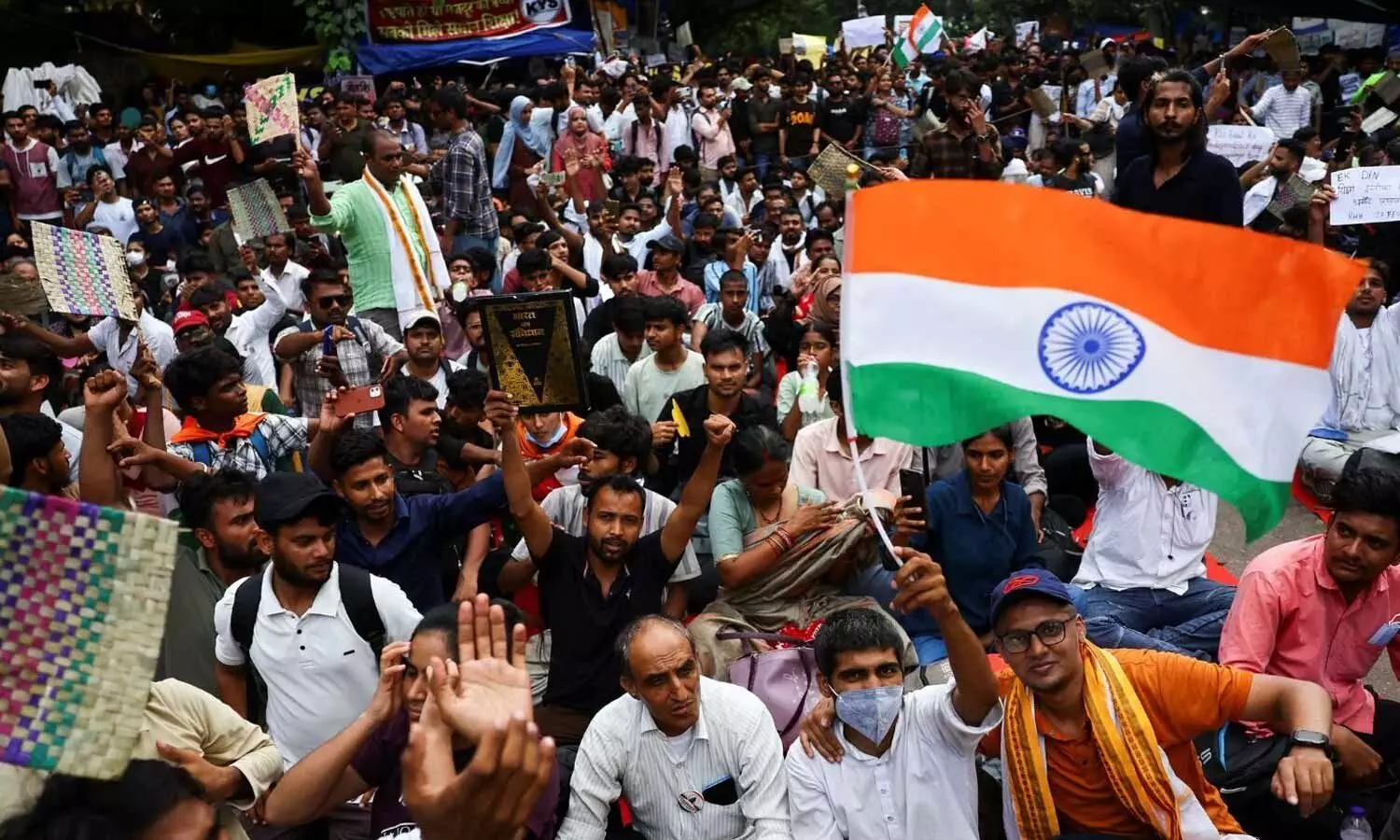
The Cockroach Janta Party (CJP) has shown maturity by calling off its proposed September 5 march in Delhi. It did so after the Supreme Court on Tuesday quashed all FIRs filed against the protesters between July 20 and 25, which led to the resignation of the education minister Dharmendra Pradhan. However, the FIRs against those with criminal antecedents have not been quashed, though. Informing the Supreme Court about calling off the proposed agitation, CJP spokesperson Saurav Das said that his party “looks forward to compliance with today’s order. I also thank the Court for this decision and the learned counsel on both sides.” In other words, the CJP has made it clear that it is not lowering its guard. It may be recalled that, in the meeting with its representatives, the government had agreed not to file police cases against the agitators. But there were reports of harassment of the protestors. Evidently, the CJP is making it clear to the government that, while it is not unnecessarily aggressive, it will ensure compliance of the promises that the government has made in the apex court.
Solicitor General Tushar Mehta had informed the court that the Central government and Bihar, Assam, West Bengal and Maharashtra have filed applications seeking to quash the FIRs linked to student protests, adding that no future FIRs would be registered in respect of the protest related events from July 20-25. Further, the CJP has also preferred magnanimity over petulance by thanking the top court. Ironically, the bench hearing the case was headed by Chief Justice Surya Kant, whose cockroach remarks had birthed the CJP in the first place. His refusal to see the video of the use of force by the security personnel was also criticised widely, especially by youngsters. In general, the CJP leaders have demonstrated sagacity and temperance so far; they don’t get rattled, nor do they become abusive and arrogant. They seem to have decided that they would continue to function as a pressure group—at least, for now. This is a wise decision because getting into politics means doing everything that politicians do; Arvind Kejriwal’s Aam Aadmi Party is a case in point.
A strong pressure group will be a restraint on the government, not just the central government but also in states, including those run by other parties. At any rate, in a democracy, political parties should not be the only vehicles through which citizens express their concerns and demand accountability; pressure groups, civil society organisations, and citizen movements are no less important than parties. The emergence of CJP, therefore, should be seen as a reminder to the political class that public patience has its limits. On its part, the political class must get its act together. The political masters must realise that people, especially Gen Z, are not willing to take any abomination lying low. The young are better informed, more vocal, and not very respectful to authority than previous generations. They are perfectly capable of mobilising quickly when needed. Instead of dismissing dissent as a nuisance or treating protesters with suspicion, politicians should engage with Gen Z and Gen Alpha seriously, respect their constitutional rights, and honour commitments made to them. A responsive government need not fear an assertive citizenry; it should recognise vigilance as an essential feature of democracy.
PV Sunitha Selected as Best Teacher in Hyderabad District
Kappan conviction reopens old Pala battle, Jose K. Mani calls verdict an insult to constituency
In Jharkhand's Jamtara, beneficiaries explain transformation in their lives under PMAY scheme
Sr Men Inter-Department Hockey: PSPB, RSPB, FCI, SAI win one-sided matches
PM Modi congratulates Giorgia Meloni on becoming Italy's longest-serving Prime Minister
ISRO launches EOS 05 satellite successfully from Sriharikota
Nepal Flood Rescue: 2 Workers Pulled Alive From Hydropower Tunnel After 9 Days
CM Chandrababu wishes Telugu People on Sri Krishna Janmashtami
IndiGo flight hits pole while parking at Srinagar airport; passengers, crew safe
PV Sunitha Selected as Best Teacher in Hyderabad District


