Dilli Dark: A bitingly funny, unapologetically messy portrait of outsider life in Delhi

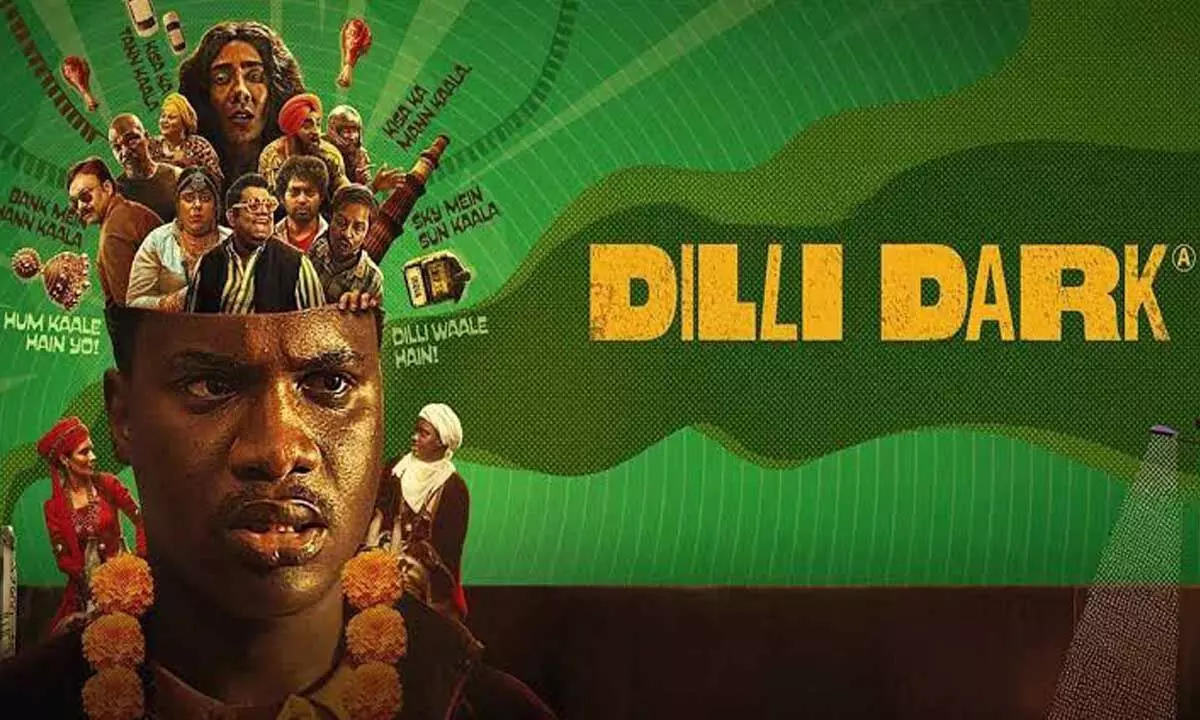
Set against the chaos and contradictions of modern-day New Delhi, Dilli Dark is a loud, unfiltered, and sometimes uneven satire that isn't afraid to swing wildly between sharp social critique and absurdist comedy.
Set against the chaos and contradictions of modern-day New Delhi, Dilli Dark is a loud, unfiltered, and sometimes uneven satire that isn't afraid to swing wildly between sharp social critique and absurdist comedy. It’s the kind of film that might make you wince one moment and laugh the next—often at the same thing.
At the heart of it all is Michael, a Nigerian student trying to find his footing in a city that both seduces and rejects him. By day, he presents the picture of academic ambition, earnestly recording hopeful video diaries about building a new life. By night, he sells cocaine to Delhi’s upper crust—people who happily snort his goods while treating him as a curiosity, a joke, or worse. Samuel Abiola Robinson plays him with a careful balance of vulnerability and wry detachment, capturing the fatigue of constantly performing different versions of himself just to survive.
Much of the film’s strength lies in how it portrays the double consciousness of being a Black man in a city that sees you as both invisible and hyper-visible. Michael is a character constantly walking a tightrope—exoticised, fetishised, feared, but rarely understood. His attempts to find peace lead him to an ashram, where he meets a spiritual guru (played with sly brilliance by Geetika Vidya Ohlyan) who promises enlightenment but seems more interested in his supply than his soul.
Ohlyan is easily the standout here. With razor-sharp timing and a wardrobe that oscillates between goddess and grifter, she skewers the self-help industry with deadpan charm. One scene, involving a televised spiritual brawl and a frantic hunt for cocaine, is so deliriously over-the-top it somehow circles back to being insightful.
Visually, the film veers between grim realism and comic surrealism. At times, it resembles a fever dream—smoggy streets, blaring neon signs, and the ever-present hum of Delhi traffic forming a claustrophobic backdrop to Michael’s existential drift. There’s little subtlety here, but that’s precisely the point. Dilli Dark prefers its metaphors painted with a broad brush: white powder, black bodies, murky morals. It’s not delicate, but it is deliberate.
The film also flirts with myth, drawing parallels between Michael’s story and that of Razia Sultan, a historic queen rumoured to have loved a Black man—only to see him killed by a prejudiced crowd. This recurring motif adds a layer of tragic romance, reinforcing the idea that history has always had room for desire but not for equality.
Dilli Dark isn’t perfect—it stumbles in places. But it’s bold, abrasive, and oddly moving in its own chaotic way. If nothing else, it’s a vital, defiant shout from the margins—one that deserves to be heard.
Rating: 2.75/5