
Telangana’s TDR reforms unlock affordable housing

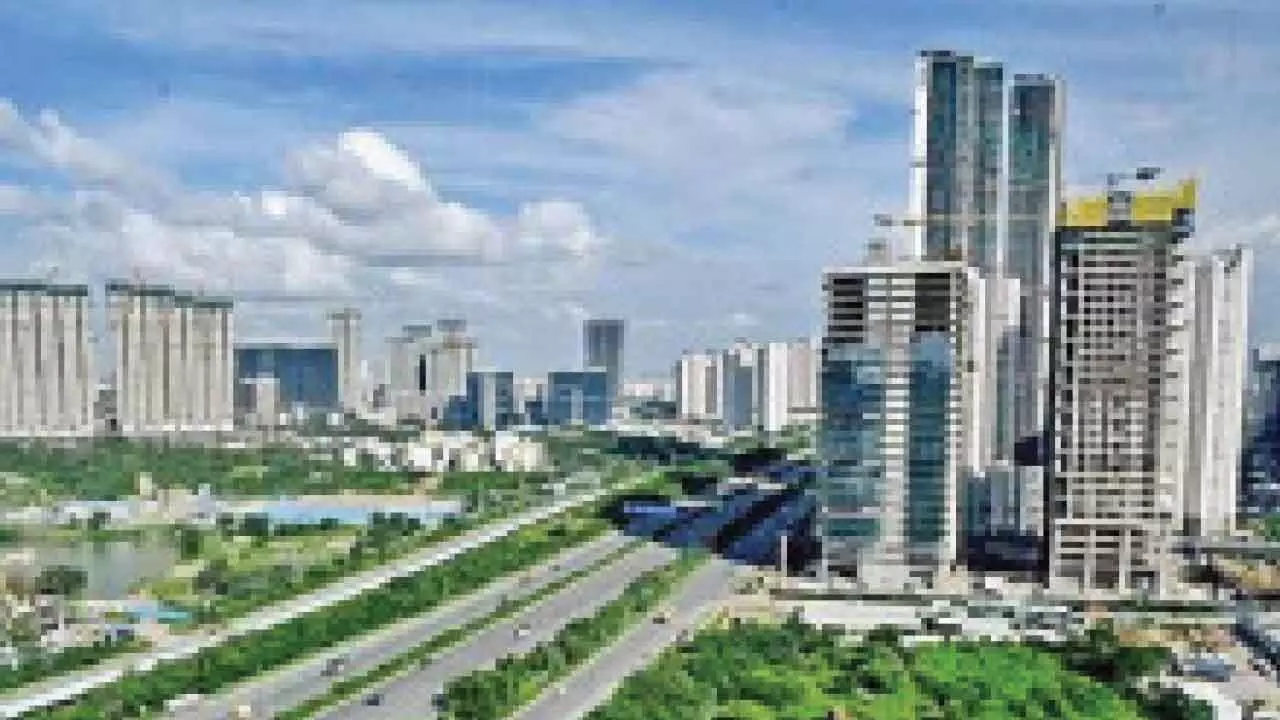
With setback relaxations now permitted through TDR, developers can optimise land use more efficiently, says Gummi Ram Reddy, national president-elect, Credai
Hyderabad: Hyderabad’s skyline has long told a story of ambition—but with the issuance of G.O.Ms. No. 95, that story is poised to enter a far more inclusive and intelligently designed chapter. In a city where land is finite but aspirations are not, the Telangana government’s latest reform of Transferable Development Rights (TDR) is being seen not merely as a policy tweak, but as a structural reset—one that aligns growth with equity, efficiency, and environmental sensitivity.
At its core, the reform reflects a subtle yet powerful shift in urban thinking. For years, real estate development in Hyderabad has grappled with the twin challenges of regulatory rigidity and rising land costs, often pushing quality housing further out of reach for the middle class. By rationalising TDR norms and embedding flexibility into building regulations, G.O.Ms. No. 95 attempts to bridge this gap—unlocking value not just for developers, but for homebuyers and landowners alike, said Naredco Telangana President Vijaysai Meka.
Industry bodies, including Naredco Telangana and Credai Hyderabad, have welcomed the move as both timely and transformative. Their endorsement is rooted in the practical clarity the reforms bring. The redefinition of high-rise buildings—now pegged at 21 metres and above—introduces a more realistic classification aligned with modern construction practices. More importantly, it opens up new possibilities for mid-rise developments, particularly on plots ranging from 750 sq.m to 2000 sq.m. This segment, often overlooked, is crucial for middle-income housing, and the ability to build up to 18–21 metres through TDR utilisation is expected to significantly expand supply in well-connected urban pockets.
Speaking to the Hans Realty, Gummi Ram Reddy, President Elect, Credai National said, “The implications for the average homebuyer are substantial. With setback relaxations now permitted through TDR—even in non-high-rise buildings—developers can optimise land use more efficiently. This translates into better-designed apartments, improved space utilisation, and potentially more competitive pricing.” In a market where every square foot counts, such regulatory flexibility can have a direct bearing on affordability.
Equally noteworthy is the government’s approach to liquidity and project viability. By allowing staggered TDR compliance—50 per cent at the approval stage and the remainder before occupancy—the policy reduces upfront financial pressure on developers. This easing of capital constraints is expected to improve project timelines, reduce risk, and ultimately stabilise property prices.
Yet, beyond economics, the reform signals a deeper commitment to sustainable urbanisation. Hyderabad’s core areas, which have witnessed both intense demand and planning constraints, stand to benefit from a more structured form of vertical growth. The introduction of a tiered TDR loading system—3 per cent for buildings between 10 and 20 floors, and 5 per cent beyond that—ensures that as buildings rise taller, they remain anchored to a compensatory mechanism that supports land acquisition for public purposes, including road widening and environmental buffers.
For larger land parcels exceeding 2000 sq.m, the incentive of additional floors—linked to road width and governed by safety norms—encourages the development of integrated residential communities. These are not just taller buildings, but potentially better-planned ecosystems with improved amenities, open spaces, and infrastructure support. What makes G.O.Ms. No. 95 particularly compelling is its attempt to harmonise competing priorities. It acknowledges the rights of landowners affected by infrastructure expansion by making TDR a more usable and marketable instrument. It supports developers by simplifying compliance and enhancing project feasibility. And most importantly, it places the middle-class homebuyer at the centre of the urban growth narrative.
Leaders from both Naredco Telangana and Credai Hyderabad have described the reform as a “win-win”—a rare convergence of public policy and private sector practicality. Their optimism also reflects a broader sentiment within the industry: that Hyderabad is steadily positioning itself as a model for progressive, consultative urban governance.
In the larger context of India’s urban transformation, policies like G.O.Ms. No. 95 underscore the importance of adaptive regulation—rules that evolve with the city rather than constrain it. Hyderabad’s growth story has always been driven by a blend of planning foresight and market dynamism. With this reform, the balance appears to have tilted further toward inclusivity and sustainability.
As the city prepares for its next phase of expansion, the success of this policy will ultimately be measured not just in taller buildings or faster approvals, but in the lived experience of its residents—more accessible homes, better infrastructure, and a city that grows without leaving its people behind.
In that sense, G.O.Ms. No. 95 is more than a government order. It is a blueprint for a more equitable urban future.


