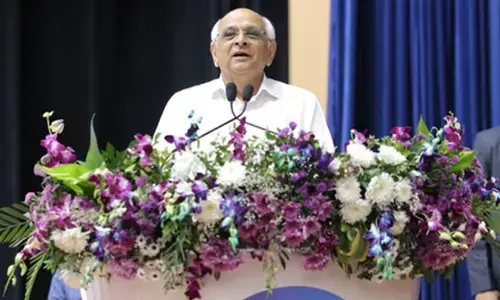
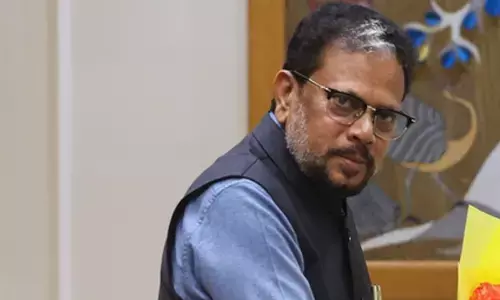
Seventh ICSE conference concludes with focus on green skills and education

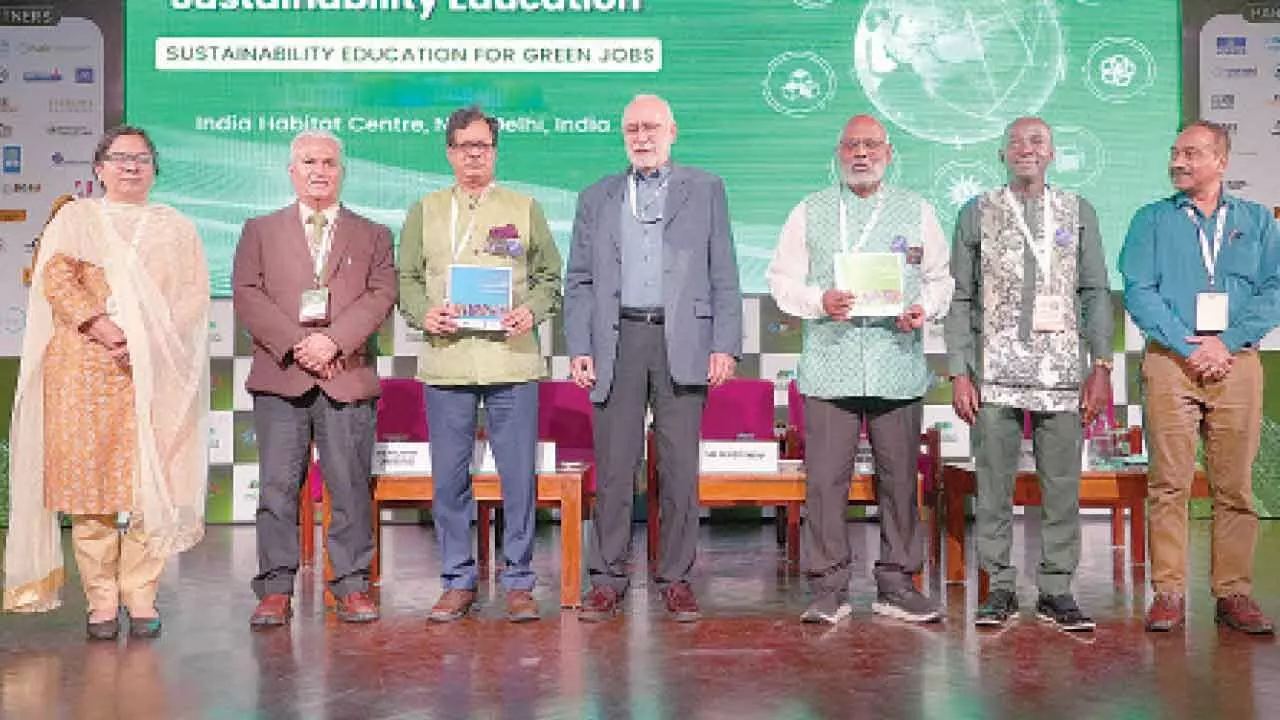
The 7th International Conference on Sustainability Education (ICSE), organized by the Mobius Foundation in partnership with UNESCO, NITI Aayog, and other collaborators, concluded at the India Habitat Centre, New Delhi. Over two days, the conference convened educators, policymakers, industry leaders, and youth delegates from across India and abroad to deliberate on the theme “Sustainability Education for Green Jobs.”
Sessions explored how sustainability-related jobs in renewable energy, agriculture, eco-tourism, biodiversity conservation, and the circular economy require a shift in teaching and training approaches. Discussions also extended to the blue economy, highlighting the need for skills and education that support sustainable use of ocean resources. Participants emphasized aligning education with India’s National Education Policy (NEP) 2020, as well as global priorities under the Sustainable Development Goals (SDGs), particularly SDG 4 on quality education and SDG 8 on decent work. Issues of inclusivity and equity were highlighted, stressing the importance of ensuring that green job opportunities are accessible to marginalized communities.
Speakers and panelists repeatedly underscored the importance of rethinking traditional classrooms, integrating experiential and problem-solving approaches, and fostering vocational and entrepreneurial pathways. Higher education leaders highlighted the responsibility of universities to produce graduates who are both employable and environmentally conscious. A key theme of the conference was collaboration—between governments, the private sector, academic institutions, and civil society—to design and scale programs that prepare a workforce equipped for the challenges and opportunities of a green economy.
The conference concluded with recommendations to:
• Integrate green skills into national curricula.
• Strengthen vocational training and innovation ecosystems.
• Foster entrepreneurship and multi-stakeholder partnerships.
Dr. Benno Boer, Chief, UNESCO South-Asia, stressed: “It’s crucial to foster strong collaboration between governments and the private sector to design and scale programs that unlock new employment pathways. Green jobs pave the way for a more just and resilient world.”
Pradip Kumar Das, CMD, IREDA Limited, noted: “India’s path to net zero by 2070 requires disciplined decarbonisation and stronger focus on green education. Empowering farmers and scaling green energy are critical to this transition.” Amit Verma, Director, Green Transition, Environment and Climate Change, NITI Aayog, observed: “Building a workforce ready for the green economy requires bridging the gap between innovation and implementation through education and vocational training.”
Prof. Prithvi Yadav, President & Vice Chancellor, Shri Padampat Singhania University, added: “Green jobs require not only technical expertise but also a mindset of stewardship. Universities must nurture responsible global citizens.” Kartikeya Sarabhai, Founder Director, CEE, said: “Classrooms need to be transformed into laboratories for sustainability. Experiential learning prepares young people for meaningful green careers.” Youth representatives, including sustainability influencers Anuj Ramatri and Aalekh Kapoor, engaged audiences with grassroots perspectives and climate action solutions.