Mkt turns red after Trump tariff threat

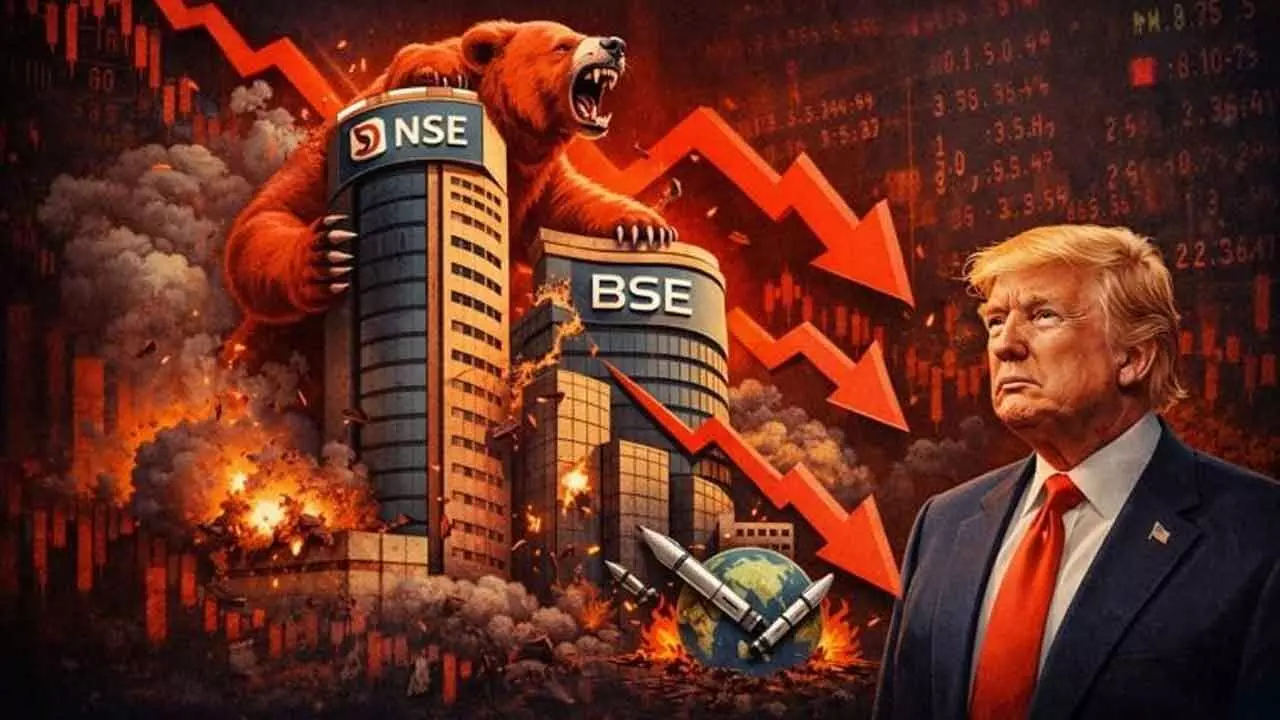
Sensex crashes over 1,000 points as geopolitical worries spook investors
Mumbai: Indian equities ended sharply lower on Tuesday, as a late-morning selloff dragged benchmark indices to their lowest levels in three months. At the end of the session, the BSE Sensex declined 1,065.7 points or 1.28% to close at 82,180.47, while the NSE Nifty 50 slipped lower by 353 points or 1.38%, settling at 25,232.50.
The decline marked a second straight session of losses, reflecting the fragility of sentiment amid mixed corporate earnings, persistent foreign fund outflows and lingering global trade uncertainty. The market capitalisation of all listed companies on the BSE fell by Rs 9.46 lakh crore to Rs 455.7 lakh crore. Information technology shares bore the brunt of the selloff, pushing Indian equity benchmarks to their lowest levels in over two months.
The Nifty IT index slid 2.1%, emerging as the worst-performing sector of the day, with all its constituents trading in the red. Wipro fell nearly 3%, extending Monday’s decline after the company flagged a weaker-than-expected outlook for the fourth quarter.
LTIMindtree tumbled 7% after reporting a drop in quarterly profit, citing a one-off impact from newly enacted labour codes. The tepid start to the earnings season has raised fresh concerns about the pace of corporate profit recovery, particularly within export-oriented sectors such as IT.
Global sentiment remained fragile, adding pressure on domestic equities, as renewed trade tensions rattled risk appetite across markets. MSCI’s broadest index of Asia-Pacific shares outside Japan fell 0.3% after US President Donald Trump threatened fresh tariffs on eight European Union member states, in a bid to assert greater US control over Greenland—a move investors see as reopening fault lines in transatlantic trade relations.
The unease spilled over into US markets, with Nasdaq and S&P 500 futures down about 1%. Meanwhile, the yield on the benchmark 10-year US Treasury rose to 4.265%, its highest level since early September, reflecting persistent concerns over higher-for-longer interest rates, even as the dollar continued to weaken.
Market volatility is likely to persist in the near term until greater clarity emerges on the US–Europe standoff over Greenland-linked tariffs.