How US tariffs impacting Indian exporters, fueling dark economy

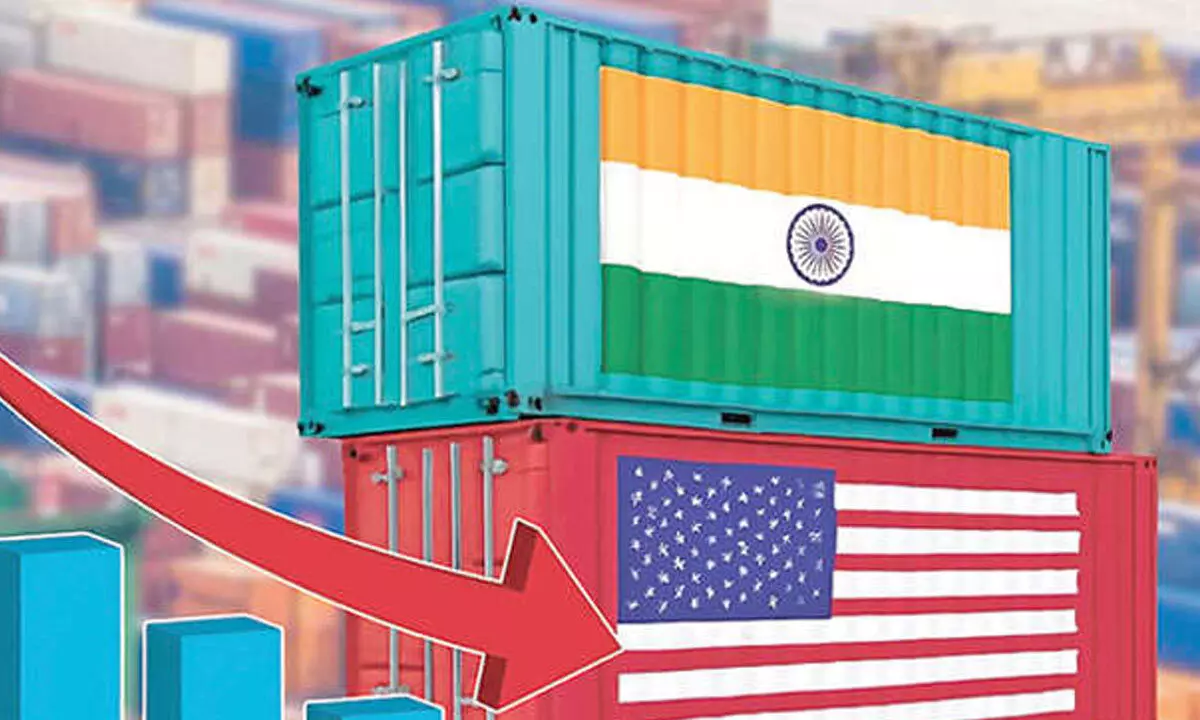
When Washington slaps a steep tariff on certain Indian goods, the ripples aren’t confined to trade policy debates in far-off capitals. They hit factory floors in Ludhiana, Surat, Tirupur, and Moradabad - where exporters have built livelihoods on stable US demand. These businesses aren’t faceless statistics; they’re often family-run enterprises, balancing wafer-thin margins and seasonal orders, now watching a major market shrink overnight.
For many, the tariff isn’t just a percentage increase on paper; it’s the difference between profit and loss, solvency and shutdown. Containers that were previously ready for shipment suddenly appear as liabilities. Long-standing contracts are re-negotiated or cancelled outright. Bank loan repayments loom, and workers fear layoffs.
When Pressure Meets Opportunity
And this is where the story takes a turn. For every honest exporter seeking a fair way to survive, there’s a professional money launderer; polished, well-connected, and fluent in the language of ‘solutions’. These actors don’t advertise in shady back alleys; they arrive wearing the mask of ‘logistics consultants’ or ‘international trade advisors’, offering routes around the tariff wall.
The pitch is simple: Route goods through a low-tariff third country; Change the paperwork to reflect a new country of origin; Re-invoice the shipment through an offshore entity, perhaps in a place like GIFT City, to handle payments “cleanly.”
For a struggling exporter staring at months of lost orders, this can sound like a lifeline. But it’s not charity; it’s recruitment. Once a legitimate business is nudged into falsifying origin or values, it’s already halfway into the machinery of trade-based money laundering (TBML).
The Structure of Exploitation
Professional launderers know the pain points:
Cash Flow Desperation: Offer upfront financing at attractive rates, then tie it to dubious routing schemes.
Market Retention Anxiety: Promise that US buyers will never know about the change of origin.
Compliance Blind Spots: Use multiple offshore layers to conceal the trade trail, allowing banks to see only fragments of the transaction.
The TBML playbook here includes:
Over- or under-invoicing to shift excess funds offshore or bring in undeclared funds. Phantom Shipments that never move but generate “legitimate” payment flows. Circular Trades, where goods are shipped between friendly jurisdictions to create complex but fake transaction histories.
GIFT City’s Intricate Role
India’s GIFT City, with its sophisticated banking ecosystem, was designed to be a clean, competitive international financial hub. For exporters legitimately restructuring their trade routes - say, targeting new markets or using GIFT City banks for hedging - it can be a genuine ally.
But in the wrong hands, its strengths - USD-denominated accounts, low taxes, and lighter restrictions - can be turned into tools for laundering. A shipment routed through a third country, re-invoiced via a newly incorporated GIFT City company, and paid for in layered transfers might look entirely above board unless someone connects the dots.
The cost to humanity when we look away
Every rupee laundered through TBML doesn’t just harm the economy in the abstract — it corrodes the environment in which honest exporters operate. If regulators begin to view certain trade corridors or hubs with suspicion, legitimate shipments are delayed, financing costs rise, and banks become more reluctant to back small exporters. The very people trying to keep their heads above water after a tariff shock end up in choppier seas.
A dual imperative
Indian policymakers, banks, and GIFT City regulators face a difficult balancing act:
1) Support exporters under stress by providing clean, compliant tools to restructure their trade and financing.
2) Shut the door on professional launderers who prey on the same distress, pushing businesses into schemes that could one day ruin them.
For exporters, the temptation to ‘just fix the paperwork’ can feel like a matter of survival. For money launderers, it’s a business model. The difference lies in who steps in first - the predatory fixer or the responsible financial partner.
Once the line is crossed, it’s not just the shipment that’s at risk - it’s the company’s reputation, its access to finance, and the integrity of the wider economy. Supporting distressed exporters through clean, compliant trade restructuring isn’t just good economics - it’s the best defence against TBML’s quiet infiltration of legitimate business.
(The author is a research scholar at National Forensic Sciences University, Gandhinagar)