
How AI Tools Empower Smallholder Farmers

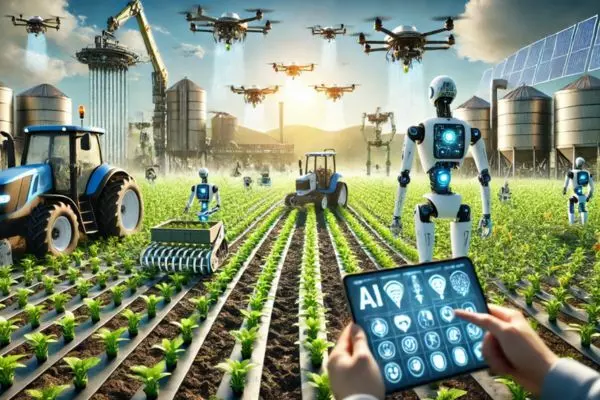
Discover how AI is changing the dynamics of the agriculture industry while empowering smallholder farmers in India, especially women and low-literate users.
In an exclusive interview with The Hans India, Nidhi Bhasin, CEO of Digital Green India, shares insights on how the organization is revolutionizing agriculture for smallholder farmers through AI-powered tools like FarmerChat, climate-smart practices, data-driven decisions, strategic partnerships, and emerging innovations. Explore her responses to key questions on efficiency, sustainability, and farmer empowerment below.
1. How is Digital Green leveraging technology to make agriculture more efficient and accessible for smallholder farmers?
Digital Green began as a spin-off from a Microsoft Research India program that recognized a core challenge facing smallholder farmers: the lack of timely, contextual, and trusted information. Our journey began with a simple idea: using technology to empower farmers. We started with community-produced, video-based advisory, which proved far more effective than conventional extension methods. As digital access grew, we experimented with WhatsApp and Telegram chatbots to explore how conversational tools could deliver advisory more interactively and at scale. This learning path ultimately led to our multilingual, voice- and image-enabled AI platform designed to provide real-time, locally relevant guidance—especially for low-literate users, women, and remote communities who continue to face the greatest barriers to information.
FarmerChat has reached 350,000+ farmers in India and has handled over 3 million queries, reflecting strong demand for accessible, on-demand advisory services. About 35% of its users are women, who often rely on the voice-first interface to overcome literacy and mobility constraints.
Beyond advisory, FarmerChat is gradually becoming a unified channel where farmers can access government schemes, connect with service providers, and engage more directly with markets. Similarly, FarmerChat Partners is the companion platform designed for enterprises such as FPOs. It includes both an app and a dashboard, enabling organisations to communicate with farmers at scale, understand real-time demand, list and promote input and output catalogs, coordinate procurement, and plan service delivery. This dual interface helps FPOs operate more efficiently and positions them to evolve into local digital hubs that facilitate market linkages and service access for their members.
FarmerChat integrates feedback loops, allowing farmers to rate the usefulness of advice, which helps improve content and strengthens trust.
Through these design choices, Digital Green is building a digital ecosystem that goes beyond advisory. The aim is to connect farmers to the full range of services they rely on—government schemes, markets, local service providers, and institutions such as FPOs. By collaborating with government systems, community networks, and sector partners, Digital Green is working toward a single, accessible pathway through which farmers can receive guidance, access services, and engage more confidently with markets and social protection mechanisms. This ecosystem approach makes agricultural knowledge and essential services more immediate, affordable, and accessible, particularly for women and low-literate users.
2. Can you share examples of how tools like FarmerChat have transformed farmer decision-making?
FarmerChat has measurably strengthened how farmers make decisions by improving access, relevance, and confidence in advisory information. Across users— as per a third-party study conducted by 60 Decibels—83% say information is much easier to access, and nearly three in four rate the advice as highly relevant. Many rely on it as their primary channel: 34% use it as their only source, and 57% treat it as their main one, citing convenience and reliability.
These shifts translate into action. 60% of active users have taken decisions based on our advisories, especially on pest and disease management, fertilizer use, organic inputs, livestock care, and responses to weather-related risks, and 67% of active farmers find the app useful. (Third Party Assessment/ID Insight)
The 60 Decibels’ study also reflected upon the sharply growing user confidence and satisfaction. Net Promoter Score has risen from 21 to 72 in 14 months, with women reporting significantly higher satisfaction (NPS 87 vs 66 for men) and stronger confidence gains.
A clear example is Kothapalli Jyothi, a farmer from Andhra Pradesh, who used our platform to diagnose a root disease in her brinjal crop and apply Trichoderma, improving yields. She later used the tool to plan heat-resilient cropping, assess soil suitability, and strengthen market linkages. This enabled her to expand from one acre to six acres under a diversified model. Her experience has encouraged other farmers in her village to adopt the tool.
These patterns show how accessible, context-specific guidance can reshape everyday decision-making for smallholder farmers. Farmers are able to make timely choices without having to wait for an extension worker, and women—who often face additional barriers to information—can make decisions with greater confidence rather than depending on male family members for guidance.
3. How does Digital Green integrate climate-smart and sustainable farming practices into its programs?
Digital Green integrates climate-smart and regenerative practices by embedding them directly into advisory systems and by supporting community-led adoption on the ground. FarmerChat delivers seasonal and weather-informed guidance, hyperlocal pest and disease alerts, and recommendations that encourage soil health improvement, efficient water use, and a shift toward bio-inputs. These approaches help farmers respond to unpredictable rainfall, new pest pressures, and shifting crop windows.
Across its regenerative agriculture work, Digital Green has seen farmers move toward mixed or biological inputs and adopt practices that reduce losses and improve resilience. In Odisha (according to a third-party assessment conducted by Impact PSD), our work with FPOs increased awareness of regenerative practices to 71%, with clear perceived benefits such as reduced input costs and improved productivity. Farmers’ input patterns are changing as well: 51% now use a mix of chemical and biological pesticides, 16% have shifted entirely to biological inputs, and 11% intend to move further toward biological options in the next season.
A notable example comes from the Keonjhar district, where women farmers from the Saharapada FPO applied regenerative principles by starting a climate-resilient sapling enterprise. After learning the value of polyhouse-grown saplings—which are less disease-prone and reduce the need for chemical inputs—they began producing higher-quality planting material. Using digital tools like FarmerChat Partners for demand planning, the group expanded sapling production fiftyfold, preventing losses and strengthening income stability.
Women constitute a significant share of FarmerChat users and often engage more frequently, reflecting the platform’s accessibility and relevance.
Through this combination of climate-informed digital guidance, regenerative practice promotion, and community-based facilitation, Digital Green supports farmers in adopting sustainable methods that strengthen productivity, income, and long-term resilience.
4. How is farmer-generated data being used to improve crop productivity, market access, and policy planning?
Digital Green uses farmer-generated data to make advisories more responsive, strengthen FPO operations, and support systems that inform broader planning. When farmers register on our platform they share basic details such as location, preferred language, and crops grown, which helps tailor guidance to crop stage, weather patterns, and pest risks. Farmer interactions—queries, feedback, and ratings—play an equally important role. They surface emerging issues like pest outbreaks or input shortages, guide content refinement, and help improve model accuracy. These continuous feedback loops also help reduce AI hallucinations by grounding the system in real, recurring farmer needs and verified knowledge, ensuring that recommendations remain relevant and aligned with on-the-ground realities.
For FPOs, aggregated demand signals help plan procurement, manage inventories, and coordinate logistics. Through the platform, FPOs can understand member needs, communicate at scale, and better match supply with demand—strengthening their role as local market facilitators.
At a systems level, anonymized patterns in farmer queries highlight recurring challenges around pests, fertilizer decisions, weather uncertainty, and regenerative practices. These insights help partners identify advisory gaps and understand where farmers face climate-related stresses. They also support more inclusive planning by surfacing the needs of women and low-literate users, who form a substantial share of FarmerChat’s base.
Together, these data flows strengthen productivity-focused decisions, improve market linkages through FPOs, and generate actionable insights that can inform program and policy design.
5. How do partnerships with government, NGOs, and private players enhance your technology offerings and scale impact?
Partnerships have shaped Digital Green’s work from the beginning, and our plans for scale are built on this foundation. We work closely with governments, civil society, and private sector actors to co-create locally rooted, widely shareable solutions that strengthen FarmerChat and the broader digital ecosystem we are building.
Our partnerships with government actors—including SRLMs, KVKs, and horticulture departments—form a core pillar of our work. At the policy level, we align with India’s broader AI agenda, including the IndiaAI Mission, the AI Centres of Excellence for Agriculture, and the Digital Agriculture Mission. These alignments help embed responsible, inclusive AI into public systems and support a shared commitment to a more resilient agricultural sector in line with the vision of Viksit Bharat 2047.
Our collaborations with NGOs and community institutions, especially SHGs, FPOs, and frontline workers, ensure that technology reaches women and low-literate farmers. Their role in onboarding, trust-building, and last-mile delivery keeps tools grounded in local realities and strengthens adoption.
We also partner with service providers to expand the types of services farmers can access through FarmerChat. Partnerships with research institutions strengthen the quality and applicability of the advisory. As the platform evolves, these collaborations will allow us to function as a digital agriculture ecosystem, offering farmers a single pathway to advisory, inputs, services, markets, and social protection schemes.
Philanthropic partners support long-term, mission-driven work that prioritizes inclusion and responsible scale.
Together, these collaborations allow us to bundle services, develop co-branded content, and explore sustainable revenue pathways—while ensuring core advisory remains free for smallholder farmers. Most importantly, the partnerships ensure we are not building parallel systems but strengthening existing public and community infrastructure, advancing shared goals, and contributing to a unified effort toward a more resilient and sustainable food system as part of India’s broader development story.
6. What emerging technologies or innovations is Digital Green exploring to further empower farmers and build resilient communities?
Digital Green is advancing several technology innovations aimed at strengthening farmer agency, improving continuity of services, and supporting climate-resilient decision-making. FarmerChat remains the core platform, and new features under development focus on making it more actionable, accessible, and responsive to farmers’ full range of needs.
One area of innovation is caching the most frequently asked questions within the app, which reduces the time required to generate responses. Faster access is especially important for farmers who need quick guidance during pest outbreaks, weather shifts, or time-sensitive crop operations. Digital Green is also developing AI-generated personalized crop calendars to provide season-specific guidance tailored to a farmer’s crops, location, and conditions.
The organization is exploring ways to make the platform more engaging. Planned features include leaderboards and a light gamification model, where farmers who refer others can receive incentives—an approach meant to strengthen peer learning and expand reach through trusted social networks.
Our platform is also evolving into a more unified, actionable solution. Future updates will support tasks beyond advisory, such as purchasing implements or livestock, accessing investment information, or registering for government schemes, strengthening its role as a single window for decision-making across the farmer’s journey.
Another key innovation is AI-powered intelligent cataloguing, which will help structure and classify FPO product lists, improve discovery of inputs and services, and support better market visibility.
We’re also advancing AgMCP—the Agricultural Model Context Protocol, our open-source technical infrastructure designed to make agricultural knowledge a shared resource rather than a competitive advantage. AgMCP supports interoperability across tools and institutions, allowing different actors in the ecosystem to access vetted, hyper-local insights in a consistent and transparent way. By complementing FarmerChat, it helps create a more open, collaborative digital environment where farmers, FPOs, governments, and service providers can all work from the same reliable foundation. This strengthens the broader ecosystem we are building with partners and ensures that high-quality, localized knowledge remains accessible to everyone who needs it.
Across these efforts, the goal is consistent: build tools that are hyperlocal, inclusive, and practical, ensuring that farmers—especially women and low-literate users—can access timely information and services that strengthen resilience and economic agency.


