The Importance of Hospital Wayfinding in 2025

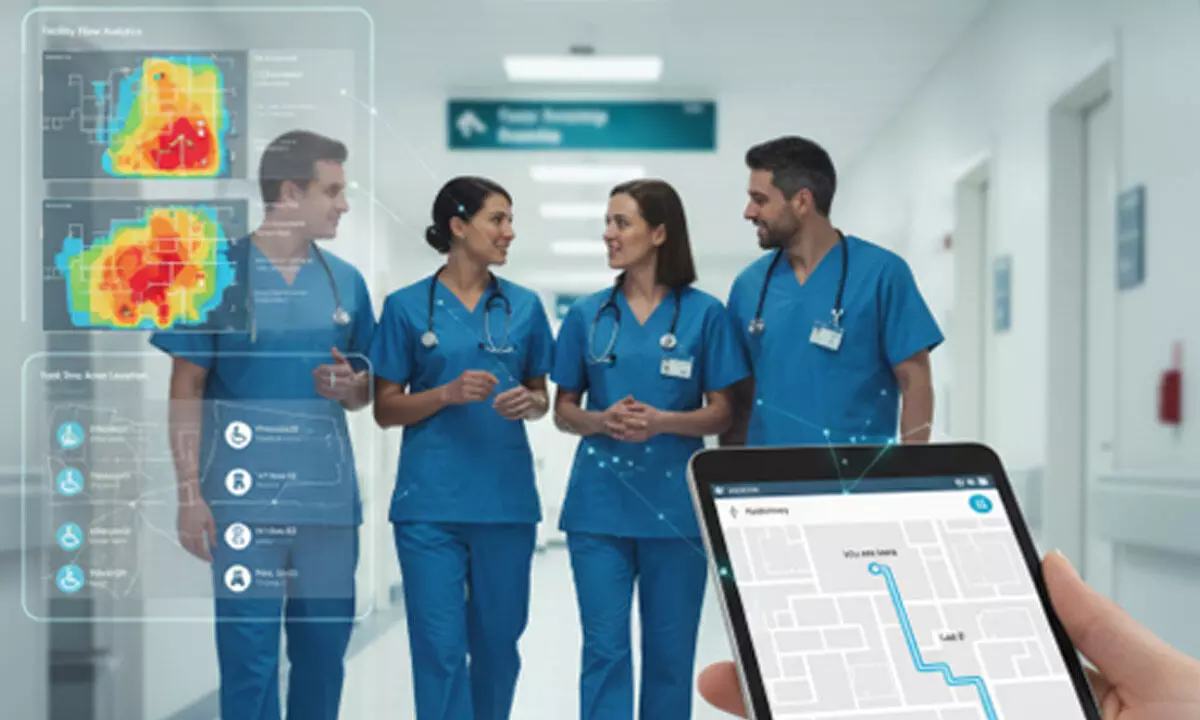
For most patients, the hospital experience should begin with care and compassion. Instead, it often begins with confusion. Large medical campuses resemble airports, with long corridors, multiple towers, and departments spread across vast spaces. Visitors arrive anxious, only to find themselves lost before they even reach their appointment.
This is more than a nuisance. In the United States alone, studies estimate that missed appointments cost healthcare providers over $150 billion every year. A significant portion of those no-shows are linked to patients arriving late or getting lost on the way. Staff lose valuable time giving directions. Patient satisfaction scores fall, and with them, Medicare reimbursements tied to HCAHPS surveys.
By 2025, hospital wayfinding can no longer be an afterthought. It has become a strategic priority.
Why Traditional Hospital Wayfinding Systems Fail in 2025
Hospitals have long relied on signs, wall maps, paper handouts, and colour-coded lines to guide patients. But static tools like these cannot keep pace with modern healthcare campuses:
- Departments shift regularly with renovations and expansions.
- Construction closures make old signs immediately outdated.
- Staff and volunteers cannot realistically cover every entrance and corridor.
The result? Patients wander, staff are interrupted, and clinical efficiency drops. A large hospital might invest millions in physical signage over a decade, only to find that the experience still feels like a maze.
In 2025, when patients are accustomed to seamless navigation in airports, shopping malls, and even theme parks, healthcare can no longer afford to remain the exception.
How Real Time Location Systems Are Transforming Hospital Navigation
The solution now gaining momentum is Real Time Location Systems (RTLS) — sometimes described as “GPS for indoors.”
RTLS uses a combination of networks and sensors to deliver live, turn-by-turn directions on a smartphone. A visitor parking in Garage B can be guided directly to the cardiology department, even if it’s three buildings away and two floors up.
But RTLS does more than help patients. The same system can track equipment, streamline patient transfers, and improve staff coordination. In short, wayfinding becomes part of a larger digital nervous system for the hospital.
The 2025 Imperative: Why Hospitals Can’t Wait
Elevating the Patient Experience
- Reduces stress for patients and families navigating complex facilities.
- Cuts down late arrivals and missed appointments, protecting hospital revenue.
- Improves patient satisfaction ratings, which are central to NABH accreditation and vital for India’s growing medical tourism sector. In feedback surveys, navigation consistently appears as a source of frustration for patients and families.
- Frees up staff from constantly giving directions, letting them focus on care.
- Locates critical assets like wheelchairs, IV pumps, or diagnostic equipment in seconds — saving nurses up to an hour per shift.
- Smooths patient flow, from admissions to discharge, reducing delays that ripple across departments.
- Foot traffic data reveals where bottlenecks occur.
- Dwell time analytics show where patients spend the most time waiting.
- Heatmaps guide better placement of information desks, kiosks, or equipment storage.
Boosting Operational Efficiency
Unlocking Data-Driven Decisions
This combination — better experience, greater efficiency, and usable data — explains why hospital leaders increasingly see RTLS not as a luxury but as core infrastructure for the future.
Service Providers Leading the Change
Not all RTLS systems are the same. Many rely on beacon hardware, requiring thousands of battery-powered devices to be installed and maintained across a hospital. The cost of maintenance alone can make such projects unsustainable.
A newer generation of providers is taking a different approach. Companies like Mapsted Technologies deliver hardware-free RTLS platforms, using existing Wi-Fi and advanced algorithms to achieve accuracy within one to three metres.
For hospitals, this means:
- Lower total cost of ownership, with no beacons or batteries to replace.
- Faster deployment, often without major disruptions.
- Scalability, as the same system can handle wayfinding, asset tracking, and analytics together.
This model is particularly attractive in 2025, when healthcare budgets are under pressure and every investment must deliver multi-layered returns.
It’s a proven model trusted by hospitals of every scale, from regional community centres to world-class academic institutions. That’s why Mapsted’s technology is already in use at major hospitals across the United States, Europe, Canada, and Asia.
Lessons from Hospitals Worldwide
The shift isn’t theoretical. Hospitals across the world are already moving towards smarter navigation. Here are some major hospitals that are using Mapsted’s hardware-free wayfinding solutions today.
- Hôpitaux Universitaires Genève (Switzerland): As one of Europe’s largest academic hospitals, HUG serves tens of thousands of patients across a multi-building campus. Digital wayfinding is being used to reduce stress for international patients unfamiliar with the language or layout.
- Children’s Healthcare of Atlanta (U.S.): With families visiting daily for specialist care, wayfinding is a critical part of ensuring that children arrive at the right clinic on time. The hospital has invested in real-time guidance as part of its broader patient experience strategy.
- Providence (Washington) and Piedmont Healthcare (Georgia): Both systems are integrating location technology not only for patients but also to improve staff workflows and reduce asset loss.
- Green Hills (Iowa), Augusta Health (Virginia), and Lexington Medical Center (South Carolina): These community-focused hospitals show that wayfinding isn’t just for giant urban campuses. Even regional hospitals benefit when patients feel confident moving through their facilities.
Together, these examples highlight a common truth: better navigation pays off, whether the hospital serves 200 beds or 2,000.
Conclusion: Navigating Towards a Smarter Future
The days when a hospital could rely on a paper map and a volunteer at the front desk are ending. In 2025, wayfinding is more than a convenience — it is a measure of how much a hospital values patient experience and operational efficiency.
Hospitals that embrace Real Time Location Systems today are already seeing gains in punctuality, satisfaction, and staff productivity. Those that delay risk being remembered as the last generation of facilities where patients still got lost in the hallways.
For healthcare leaders planning their next phase of digital transformation, the direction is clear: invest in intelligent wayfinding now, and set the benchmark for a smarter, more patient-centred future.