Decoding Groundwater Stress: The Role of Unchecked Borewell Expansion

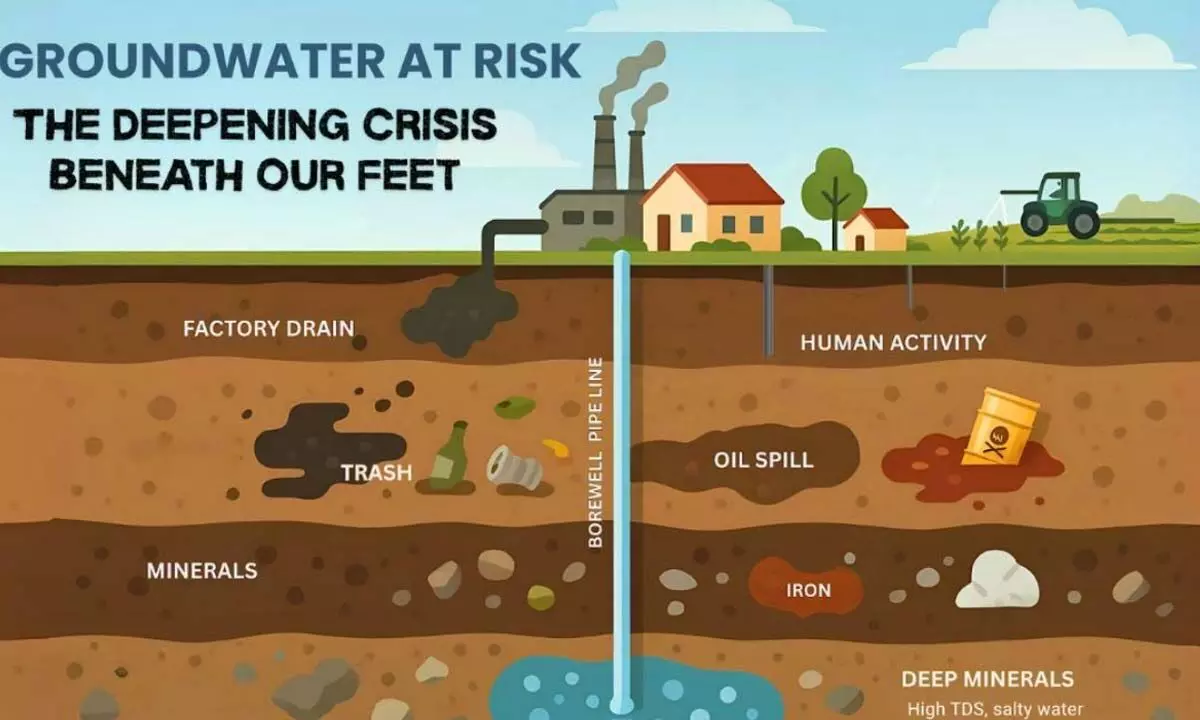
Indian metro cities—especially Chennai—are facing severe groundwater stress due to rising borewell density in both residential and commercial areas. In Chennai, unregulated drilling has led to aquifer depletion, pushing borewells deeper into hard-rock zones.
Indian metro cities—especially Chennai—are facing severe groundwater stress due to rising borewell density in both residential and commercial areas. In Chennai, unregulated drilling has led to aquifer depletion, pushing borewells deeper into hard-rock zones. As drilling goes beyond 800–1,000 feet, water often comes from iron-rich soil layers, resulting in reddish, metallic-tasting water and rust stains. This has driven a high rise in demand for residential water treatment systems, such as iron removal filters and whole-house RO plants, to ensure safe water for daily use.
Water Table Decline
In Chennai suburbs like Guindy, Velachery, Valasaravakkam, and Porur, groundwater tables often drop below 20–30 meters, even after the monsoon. Unlike sandy coastal areas, these hard-rock zones have poor recharge potential due to impermeable soil and widespread concrete surfaces. Rapid urban growth has also reduced lakes and ponds, limiting natural recharge. Consequently, people are compelled to dig deeper borewells, frequently striking lower quality water sources. In most instances, the water is rich in iron and other minerals, giving a reddish tint and a metallic taste. This has made home filtration systems more sought after, particularly iron removal filters and whole-house treatment systems.
Drilling Deeper, Iron Rising
Local borewell drillers and hydrogeologists report a consistent trend: deeper wells often bring high levels of dissolved iron, rather than cleaner water. In Valasaravakkam, residents say borewells at 10–30 meters begin yielding iron-rich water, which causes reddish stains on sinks, clothes, and storage tanks. At depths beyond 30 meters, the water often turns salty, making it unsuitable for drinking or cooking. In contrast, nearby Porur offers fresher water even at similar depths, reflecting subsurface geological differences within Chennai. This patchwork nature of groundwater quality makes it harder for homeowners to predict outcomes when drilling, leading many to install custom water treatment systems tailored to local conditions.
A 2020 peer reviewed study of North Chennai—including industrial and suburban areas—measured heavy metals like iron, manganese, copper, and lead in groundwater. Using a Heavy Metal Pollution Index, the study found iron to be the dominant contributor to water being deemed unsafe for drinking. The contamination was traced to both natural geological sources and industrial runoff, showing how deep drilling and surface pollution together worsen water quality in the region.
Evidence from Research: Iron and Health Risks
A 2021 study revealed that in 88% of analysed groundwater samples from urban areas—such as Chennai—ferric iron content was above WHO's safe threshold of 0.3 mg/L, posing severe health issues. Elevated iron content was often followed by increased manganese, further degrading water quality. The iron hazard quotient in children was nearly 2.0, indicating a high non carcinogenic risk, especially for developing bodies. Chronic use of this water can cause gastrointestinal problems, organ stress, and neurological effects in susceptible populations. This highlights the increasing demand for efficient household water filtration units in borewell-reliant urban communities.
Another regional analysis along the Adyar River basin—representative of Chennai’s geology—found that borewell water often exceeded IS 10500:2012 limits for iron, nitrite, chloride, and hardness. Researchers stressed that this water requires proper treatment before domestic use. Left untreated, such contamination can stain fixtures, corrode plumbing, and pose long-term health risks for residents.
Forums & Local Concerns: Iron Stains & Smells
Local Chennai discussion forums and water quality chatboards (e.g., Earthquake India forums, IndiaWaterPortal message boards) feature recurring complaints: metallic taste, reddish stains in taps and utensils, and rust coloured deposits—all symptoms of high iron content in borewell water. Several posts mention that deeper wells (~30 m+) frequently produce such effects, prompting immediate installation of iron removal filters.
In many cases, households initially mistake the issue for rusting pipes or tank problems—only later realizing it's groundwater related. These shared experiences have helped build awareness around the need for proper filtration in high-iron zones.
Borewell Depth vs Water Quality: Chennai Case Study
Hydrogeologists studying Chennai's lithological zones have found that drilling beyond ~10 m often changes groundwater quality. Water up to 10 m is usually usable, but iron levels rise between 10–30 m, and salinity becomes common beyond 30 m, especially in coastal and flat areas. This trend is reflected in field reports from Valasaravakkam, Pallavaram, and Ambattur, where deeper borewells often yield reddish or brackish water. Such depth-based changes highlight the importance of site-specific water testing before selecting treatment systems.
Other Metros: Similar Patterns Elsewhere
While Chennai’s geology makes iron contamination particularly pronounced, cities like Hyderabad and Pune also report similar trends: as borewell depth increases, so do TDS, hardness, and iron levels. In Hyderabad, the groundwater level has dropped over 4 m post monsoon in 2025, with deeper drilling often yielding poor quality water—mirroring Chennai’s pattern. In Pune, even with adequate rainfall, borewells fail to recharge due to concrete surfaces reducing infiltration, forcing reliance on tanker water and treatment systems.
Chennai as a Microcosm of Borewell Water Challenges
Chennai epitomises how urban borewell density, geological layers, and declining water tables combine to lower groundwater quality. Key points:
Deep drilling often leads to iron-rich or saline water, which does not result in better yields.
Research confirms that heavy metals—exceptionally iron—exceed safe limits in vast boroughs of Chennai’s aquifers.
Local discussion forums and user feedback support reports of bad taste, staining, and a metallic smell in lower-borehole water.
This situation has translated domestic water treatment from luxury to necessity for Chennai citizens.
Rainwater harvesting and municipal piped supply (e.g., Chembarambakkam feed) provide longer-term relief, but residents need to treat borewell water for use. In Chennai’s context, iron removal filters and RO systems are increasingly indispensable.
Residential Treatment Demand: Why Chennai Residents Turn to RO & Iron Filters
Water treatment has become essential in Chennai homes due to rising levels of iron, hardness, salinity, and TDS—especially in areas dependent on borewell water.Water Sparks has been consistently providing targeted water treatment solutions in cities like Chennai, Hyderabad, Bangalore, and Coimbatore, where borewell-related water issues are most severe. Water Sparks helps residents overcome long-standing water quality problems with reliable, whole-home protection.
Whole house Iron removal plant (greensand filters, aeration units, or chemical dosing systems) are commonly used to tackle:
Rust stains on tiles and taps
Metallic taste in drinking water
Reddish or brown sediment in stored water
Water softeners forthe whole house (using ion exchange resins or salt-based systems) are commonly used to tackle:
White stains on tiles, taps, and bathroom fittings
Dry and frizzy hair after showering
Scale buildup in geysers, washing machines, and dishwashers
Dull or stiff clothes after washing
Whole house RO plants are installed when TDS exceeds 500 mg/L, helping to:
Remove dissolved salts and heavy metals
Improve taste and clarity
Make water suitable for cooking and drinking
Bad smell water treatment, with UV, UF, is popular in:
Apartment complexes
Gated communities
High-iron or saline borewell water-using houses
They are in great demand in Avadi, Perambur, Tambaram, Porur, Velachery, and Valasaravakkam, where deep borewells tend to yield iron-bearing or salty water.
Water Sparks provides expert solutions for all these needs—from an advanced whole-house iron removal plant to a customised whole-house RO Plant, a Water Softener for whole-house and bad-smell water treatment setups tailored to each locality’s groundwater profile.