Bringing 24/7 Potable Water to 350,000 Lives: A Breakthrough in Urban Water Management

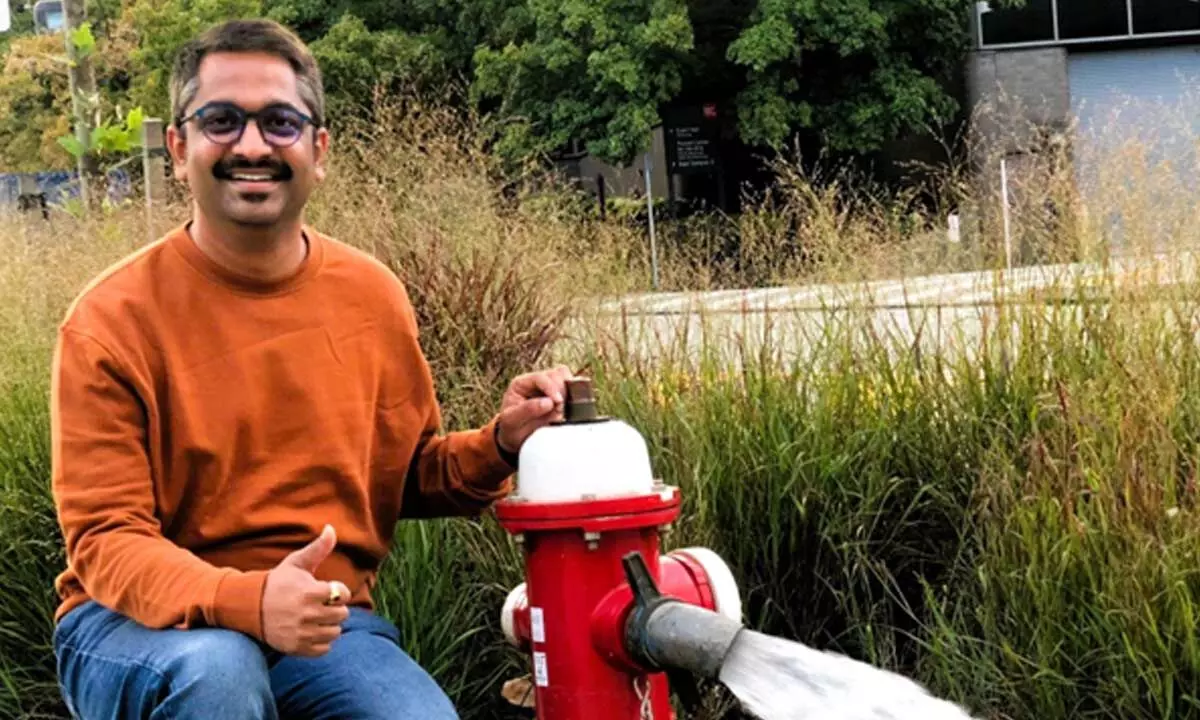
Tanay Kulkarni shared insights on how innovation in water infrastructure and hydraulic modeling is setting new industry benchmarks. An expert in hydraulic modeling and sustainable water distribution, Kulkarni has dedicated his career to optimizing large- and medium-scale water utilities, enhancing efficiency, sustainability, and cost-effectiveness. His work is not only pioneering but has also garnered international recognition
In the realm of water infrastructure systems and hydraulic modeling, innovation is reshaping industry standards, and at the forefront of this transformation is Tanay Kulkarni. An expert in hydraulic modeling and sustainable water distribution, Kulkarni has dedicated his career to optimizing large- and medium-scale water utilities, enhancing efficiency, sustainability, and cost-effectiveness. His work is not only pioneering but has also garnered international recognition.
Kulkarni’s impact is evident in projects such as the Ambikapur Water Supply Network, where he played a pivotal role in the hydraulic modeling and design process. “Water infrastructure is the backbone of urban development. Optimizing it for sustainability and efficiency is key to long-term success,” he emphasizes. As the founder of DTK Hydronet Solutions, his contributions to critical water infrastructure projects have left a lasting mark on the industry. His innovative efforts earned him a nomination for The Year in Infrastructure Awards in 2018, a testament to his groundbreaking approach to water supply network rehabilitation.
A major achievement in his career has been the development of unified hydraulic models—sophisticated simulations that allow for hundreds of ‘what-if’ scenarios to be evaluated within a single model. “By integrating multiple variables within one comprehensive model, we can make better predictions, optimize operations, and significantly cut down on time and costs,” Kulkarni explains. His optimization efforts led to the completion of a large-scale hydraulic model in half the projected timeline, reinforcing confidence among stakeholders handling complex projects.
His work has also had measurable results in terms of project efficiency. “Through model optimization and strategic planning, we reduced project completion time from 60 man-days to just 28-30 days,” Kulkarni shares. This efficiency translates into significant cost savings and faster project delivery. His expertise was further demonstrated in the design of a 360-km water distribution network, seamlessly incorporating both existing and new pipelines to ensure long-term sustainability and resilience.
A key aspect of his work has been reducing Non-Revenue Water (NRW), a critical issue in urban water management. “By implementing District Metering Areas (DMAs) and ensuring 100% metering, we successfully reduced NRW from 55% to 20%,” he states. This approach not only improved water conservation but also allowed for over 70% of the existing pipelines to be retained, leading to substantial cost savings.
Looking ahead, Kulkarni envisions a future where digitalization and smart technologies drive urban water management. “Integrating SCADA systems with hydraulic models will revolutionize water distribution by enhancing efficiency and enabling data-driven decision-making,” he asserts. He believes that AI and machine learning will play a crucial role in predictive analysis, proactive leak detection, and minimizing water losses. “A structured DMA-based approach should be standardized across urban networks. Rather than replacing pipelines entirely, a hybrid infrastructure strategy—like the one we adopted in Ambikapur—ensures cost-effectiveness and reliability.”
His commitment to sustainability extends beyond technical solutions to public awareness and responsible consumption. “Metering enforcement and educating communities on water conservation are essential for long-term sustainability,” he affirms. His work in securing a reliable water supply for 350,000 people until 2050 and ensuring a minimum pressure of 12 meters H₂O at all nodes stands as a testament to his dedication.
Tanay Kulkarni’s contributions to water engineering have redefined industry standards, proving that innovation, efficiency, and sustainability can work in harmony. Through research, technical excellence, and forward-thinking strategies, he continues to be a driving force in creating robust and future-ready water distribution networks.