
AI can never replace humans’ absolute intelligence

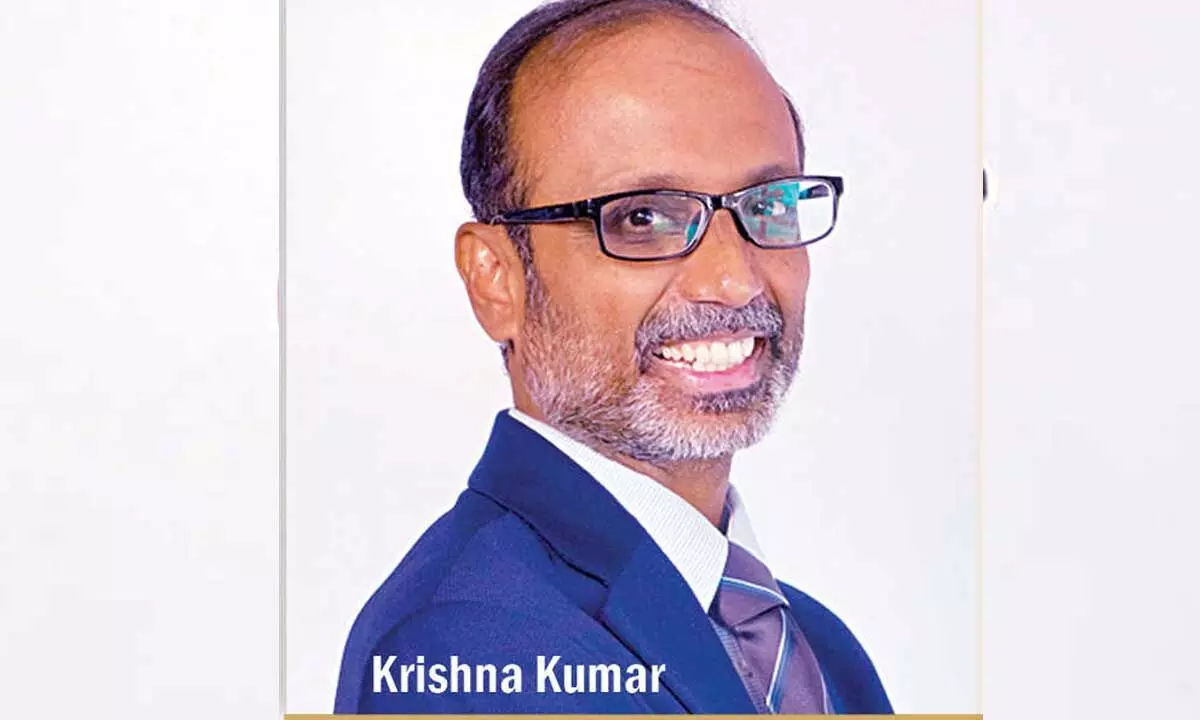
Do you believe AI is a transformational technology? If yes, how can AI be leveraged to make lives better for mankind?
Yes, AI is profoundly transformational, but its true power lies in augmentation, not replacement. AI excels at processing the ‘known’ - identifying patterns in vast datasets - while human intelligence provides the innovation and originality that AI cannot replicate.
We can leverage this by using AI to handle the data-heavy lifting in fields like medicine and science, allowing experts to focus on complex, ethical decision-making. Similarly, in education and the arts, AI acts as a catalyst by automating the routine, freeing up our cognitive resources to focus on vision, mentorship, and exploring the unknown.
AI has attracted billions of dollars of investment. However, a recent MIT study suggests that only 5 per cent of all projects are successful. Why so many failures in AI space?
The high failure rate isn’t because AI technology itself doesn’t work. It’s most likely because of “Human and Strategic Challenges”. The investment is pouring in, but the foundation to use it effectively is not there. For example: data centers, optimizing chips, identifying the right uses. Everyone is talking about Large Language Models (LLMs), but in my opinion, LLMs will not solve the problem. It’s similar to any other system’s “Garbage In, Garbage Out”. AI models are entirely dependent on the data they are trained on. Many projects are failing because of the Siloed data, messy data, data inconsistencies, and insufficient datasets. In addition to this, there is hype by the companies about AI and its unrealistic expectations. Most of the companies are looking for massive headcount reduction, but in reality, AI is about building new capabilities. There is a big people gap that needs to be addressed. You can’t hand a new AI tool to a team and expect it to be adopted. There needs to be proper training and creating trust on AI, and we need to overcome the fear of employees that AI is there to assist them and not replace them.
Recently, there have been several global challenges in terms of policies implemented in the USA. Do you think this will hinder innovation in the US?
The United States has been the undisputed leader in the global hub for innovation for centuries, and that leadership position is built on a foundation far deeper than any single policy or administration. The USA has a deeply interconnected ecosystem which includes venture capital, research universities and corporate R&D. The sheer scale of risk-tolerant capital is available which is filled by a dense network of world class universities which acts as a relentless R&D engine, spinning out new ideas, talent and startups and fueled by a massive private sector R&D infrastructure where large tech, life science companies invest billions to compete.
Innovation in the USA is not just an economic activity; it’s a cultural value. Failure is seen as a learning experience, not a permanent end, in this country. The USA has navigated far greater challenges-world wars, the Great Depression, the Cold War, the 2008 financial crisis, and every time it bounced back with vigor and surged ahead in terms of its innovative capacity.
Top talent of India goes to the US Universities for higher studies and usually gets absorbed by technology companies there. Such a transition has always helped the US to innovate fast and lead the world in the technology space. What’s your view on this?
The migration of talent to US universities and companies validates the fact that the USA remains the global epicenter of innovation. They have created an environment where high-potential individuals feel supported.
However, this isn’t just about one country. It is a universal economic principle: Any country that identifies, encourages, and nurtures innovative talent will always be the topmost economy. The US is currently leading because it is executing that principle better than anyone else.
This is the opportunity for India. We possess a huge pool of talent. For us to replicate that success, India must actively encourage this talent and provide them with the platform to innovate right here. When we build an ecosystem that supports our own innovators, we set the stage for India to rise as a top global economy.
Does the US have enough technology talent to man high-end technology work in the country?
The US doesn’t just have talent; it manufactures and magnetizes it better than any other nation. The ‘greatness’ of this workforce isn’t about population numbers - it is about a unique, merit-based ecosystem that operates on three levels:
1. Universities as Innovation Hubs: Our schools don’t just teach theory; they partner with industry to solve real-world problems, producing graduates who are market-ready.
2.A Risk-Reward Culture: We destigmatize failure. In the US, a brilliant engineer isn’t held back by hierarchy; they can launch a startup and disrupt an industry in two years, not twenty.
3.Global Magnetism: Top enterprises like Google or Tesla hire based on ability, not pedigree. This attracts the world’s best minds who know their output matters more than their last name.
My own journey is living proof of this difference. I spent 20 years in the Indian public sector with Indian Railways & IRCTC, where my professional growth was dictated by the calendar- seniority often ruled over skill. When I moved to the US, the ceiling disappeared. The ecosystem didn’t care about my tenure; it cared about my innovation. This meritocratic culture allowed me to build a successful startup, WeVoo, and unlocked leadership roles for me at HP and HPE.
That is the American competitive advantage: here, you rise based on what you can do, not how long you have served.
India-US are deeply engaged in the technology domain. Where do you think this will go in the future?
I view the future of the India-US technology partnership as a fundamental shift from a transactional client-vendor relationship to a strategic alliance of co-creation. Driven by frameworks like the Initiative on Critical and Emerging Technology, we are moving beyond traditional IT services into deep-tech collaboration in semiconductors, space, and AI. This evolution is anchored in a ‘supply chain of trust,’ where shared democratic values and a commitment to meritocracy bind the two nations together. As India continues to nurture its vast talent pool and aligns deeper with the US ecosystem of innovation, this partnership will not only secure resilient global supply chains but effectively become the primary engine driving the global digital economy for the next century.
Technology-heavy PE & VC firms have deployed huge capital in the Indian startup ecosystem. Do you see any restrictions on capital flows from the US to India going ahead?
I don’t see restrictions; I see a realignment. The capital that was previously spread across Asia is now concentrating on India as the only large-scale, democratic technology partner.
AI has raised serious ethical concerns with regard to copyrights, AI avatars, and related developments. What is your opinion about regulating AI as a technology?
The ethical challenges regarding copyright and AI avatars are urgent and global, meaning we cannot solve them with fragmented, national regulations. It is high time we establish a Global AI Governing Body comprised not of bureaucrats, but of technology representatives from all countries—the experts who actually understand the code behind the consequences. This coalition needs to draft a unified Global AI Framework that standardizes rules for digital identity, attribution, and royalty rights across borders. We need a synchronized ‘Constitution for AI’ that protects human creativity and identity without stifling the technological progress that benefits us all.
Any other insights on this matter?
We often get carried away by the hype, but we must remember a fundamental truth: AI cannot be Absolute Intelligence. It is, by definition, artificial - it processes data, not wisdom; it calculates probabilities, not purpose. It lacks the empathy and consciousness that define the human experience. Therefore, we should not look to it to lead us. Instead, we need to use Artificial Intelligence strictly as a supporting mechanism to enhance our lives - automating the mundane and the analytical tasks, so that we are free to focus on the creative and the meaningful. AI is a powerful engine, but the steering wheel must always remain in human hands.


