A Guide to Understanding and Comparing Savings Account Interest Rates

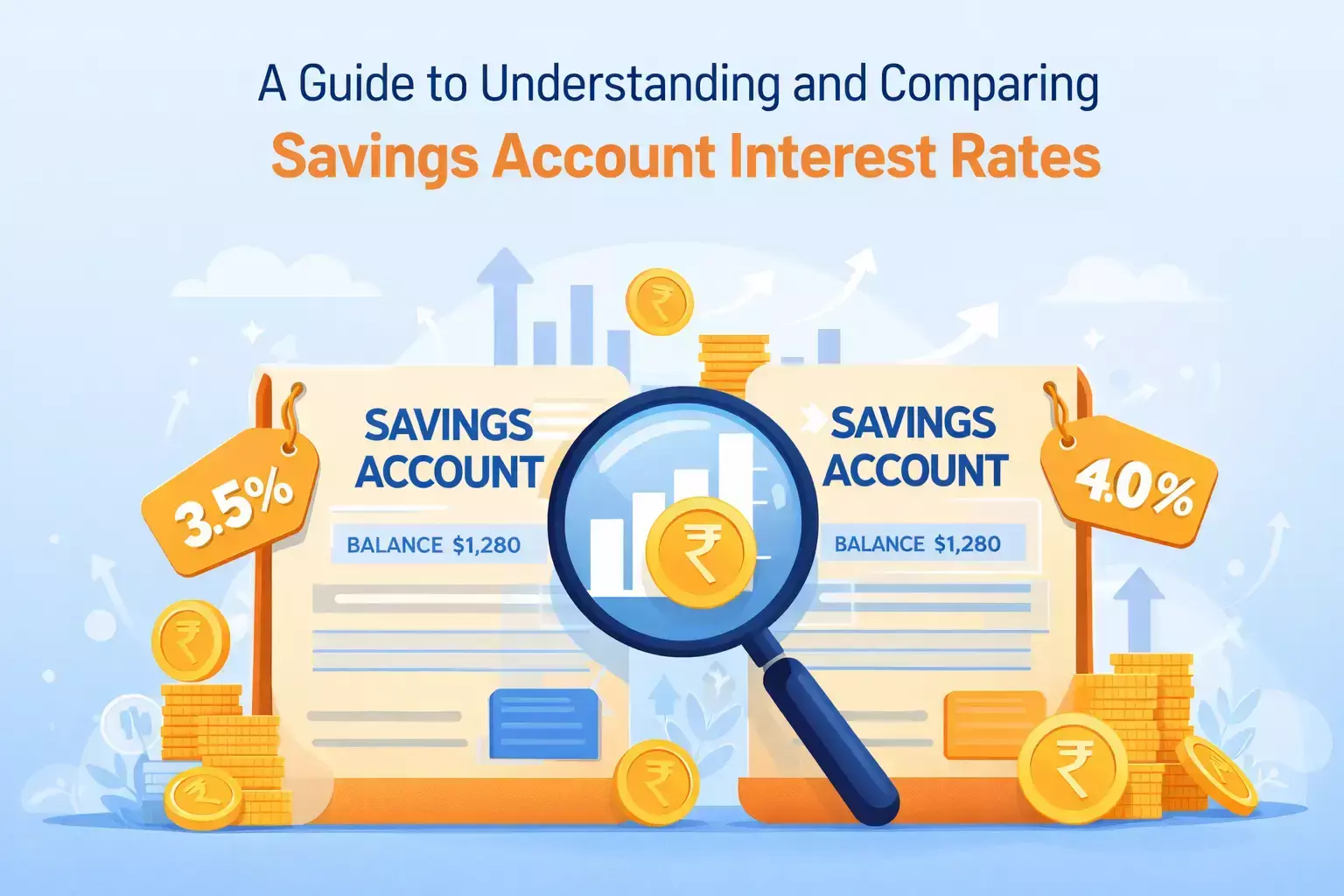
Learn how savings account interest rates work and compare different banks to find the best rates for maximizing your savings and returns.
Opening a savings account is a key first step when starting a personal finance management journey. Every bank offers this vital financial tool, which works as a secure haven for your money and makes it simple to keep, move, and withdraw. A savings account's ability to make earnings through a saving account interest rate, which delivers a tiny but regular return on your deposited capital, is a substantial benefit that extends beyond simply safekeeping. To maximize your financial growth, you must know how this interest acts and how to analyze alternative options.
What Exactly is a Savings Account?
Fundamentally, a savings account is a bank-provided secure deposit account meant to aid consumers in generating wealth. It achieves a balance between allowing you immediate access to your money for everyday activities and expenses and letting your balance rise as interest accrues. It is a crucial aspect of any personal financial strategy because of its combination of growth and liquidity. Numerous financial institutions, including well-known banks, give a wide choice of savings account alternatives, each with distinct features and advantages to improve the banking experience.
Unpacking the Savings Account Interest Rate
Your bank account's interest is determined dynamically rather than as a fixed sum. Savings account interest is normally calculated on a daily basis using your account's closing balance. Depending on the particular type of savings account and the bank's set policy, this daily computed interest subsequently builds up and is generally credited to your account either semi-annually or quarterly. In general, the law of simple interest serves as the foundation for this computation. Applying the yearly interest rate to your daily balance and dividing the result by the total number of days in the year yields the daily interest. This strategy guarantees that the precise quantity of money in your account each day is represented in your earnings.
Factors Influencing Your Interest Earnings
When you're picking out a savings account, keep in mind that those interest rates bounce around quite a bit between different banks, and even within the same bank depending on the account type. The general state of the economy, the specific policies of the bank, and occasionally even the tiered balance you carry can all alter these rates. Occasionally, accounts with bigger average balances may be eligible for slightly higher interest rates. Additionally, banks set themselves apart with features like minimum balance restrictions, transaction limits, and the sophistication of their online banking services in addition to their interest offerings. A meaningful comparison requires assessing the complete range of advantages and responsibilities, not merely the headline interest rate.
Navigating the Tax Landscape of Your Interest Earnings
Even though the extra interest helps your money grow, you've got to watch out for the tax hit. Banks don't usually cut TDS from savings account interest thanks to Section 194A rules. This does not indicate that the interest is totally tax-exempt, though. A savings account's total interest generated during a fiscal year that exceeds ₹10,000 is taxed at the applicable marginal tax rate. It is vital to remember that tax regulations treat interest paid from a savings account as a deduction rather than an exemption. In particular, Section 80TTA of the Income Tax Act offers a major relief: Hindu Undivided Families and those 60 years of age or younger are excused from paying taxes on interest earned up to ₹10,000 in a fiscal year. Interest from savings accounts kept with banks, cooperative organizations that perform banking operations, or post offices is deductible.
Strategies for Comparing Savings Accounts
It is advisable to properly research numerous choices in order to make an informed judgment regarding your funds. Examine the interest rate on your savings account first, but don't stop there. Take into mind the minimum balance requirements, any linked expenses, how straightforward it is to access your money, and the caliber of customer assistance. Examine the bank's online and mobile banking options, since they can considerably improve your banking experience. Other investing alternatives, such as an Axis Fixed Deposit, may offer higher rates for capital you may commit for a longer length of time, but they come with additional accessibility difficulties, whereas savings accounts encourage liquidity. You can choose a bank account that best suits your lifestyle and financial aspirations by examining all of these criteria.