TTD in 2025: A year of crisis, controls and course correction

Tirupati: Governancereforms, intensified scrutiny and cautious technological upgrades came to define 2025 for the Tirumala Tirupati Devasthanams (TTD), a year that tested the institution’s administrative resilience even as it sought to modernise pilgrim management and reinforce internal controls.
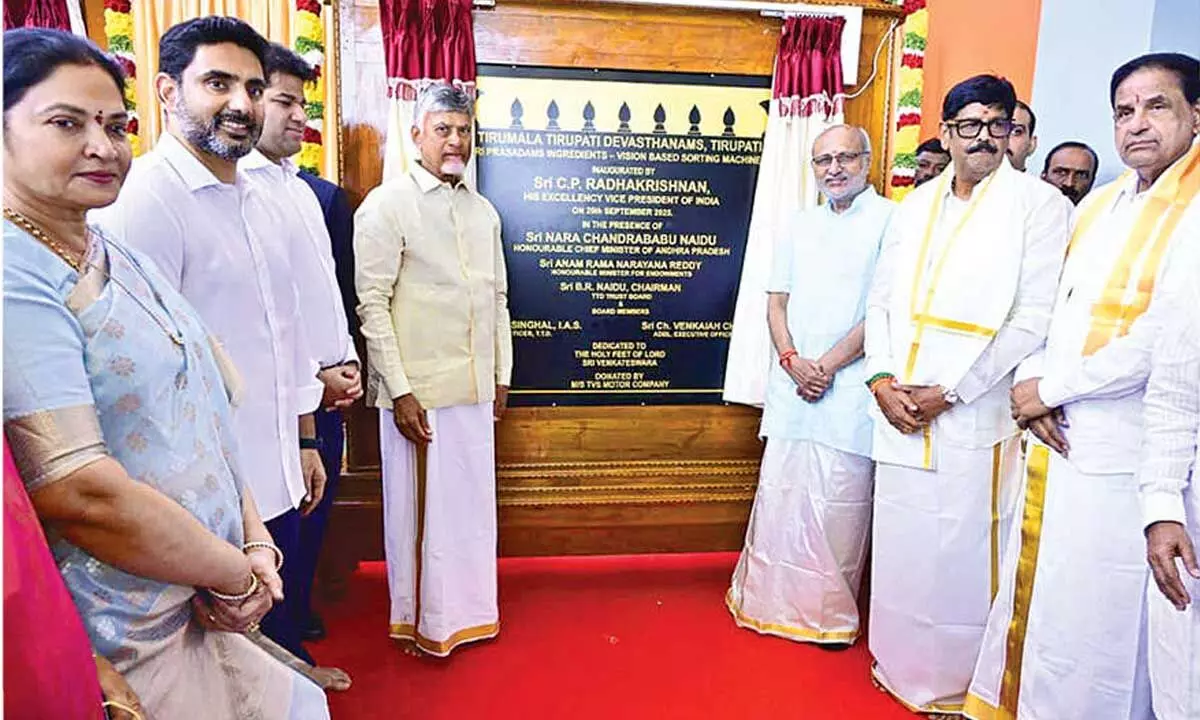
A major thrust during the year was technology-driven governance. The Rs 102-crore PAC-5 complex at Srivari Potu was commissioned with vision-based sorting systems to improve the handling of prasadam. Complementing this was the launch of an AI-enabled Integrated Command and Control Centre aimed at strengthening surveillance, crowd regulation and emergency response.
The TTD also announced plans to deploy artificial intelligence for real-time monitoring of darshan queues, marking a significant shift towards data-led decision-making. Pilgrim-facing services saw measured upgrades. The Anna Prasadam scheme was expanded with the inclusion of masala vada, while structured feedback systems were introduced to systematically capture devotees’ assessments of darshan experience, accommodation, sanitation and food quality.
Even amid heightened vigilance, long-term environmental and infrastructure initiatives progressed. Steps were intensified to clear the legacy waste in Tirumala. The TTD board also approved a Rs 400-crore greening programme to increase forest cover on the Tirumala hills to nearly 80 per cent, along with a 100-acre ‘divine plantation’ to cultivate traditional and Agama-approved tree species. However, much of the year was shaped by a series of investigations that brought institutional processes under unprecedented scrutiny. The long-pending Parakamani theft case resurfaced following judicial intervention, raising questions over its earlier closure. Several individuals were examined, and a detailed report was submitted to the High Court—an unusual moment of institutional acknowledgement of systemic shortcomings. Procurement practices also came under the scanner. Investigations gathered pace into an alleged dupatta procurement scam involving misrepresentation of materials and financial loss. Separately, allegations of adulteration in the ghee used for preparing Srivari laddus triggered a Special Investigation Team probe, later taken over by the CBI.
The inquiry widened to cover supplier selection, quality testing protocols and financial transactions, resulting in arrests and the questioning of several individuals, including former TTD chairmen and executive officers.
Investigative attention extended to other operational wings as well. A major racket was uncovered in the ‘Lost and Found Goods’ section, where valuables surrendered by pilgrims were allegedly diverted. This led to disciplinary action against staff, stricter inventory controls, expanded CCTV surveillance and a move towards digital documentation of recovered and returned items.
Staffing policy emerged as another sensitive area. Reaffirming its commitment to preserving the religious character of the institution, the TTD initiated action against a few non-Hindu employees and reiterated policies on redeployment and voluntary retirement—decisions that sparked debate both within and outside the organisation.
The year also saw cultural outreach initiatives continue, including the launch of the documentary series Miracles of Tirumala – Tirupati. Financially, the TTD closed the year on a robust note, recording donations totalling Rs918.6 crore to various trusts till October. A leadership transition marked the latter part of the year, with Anil Kumar Singhal assuming charge as Executive Officer.
All these developments unfolded against the backdrop of a tragedy that set the tone for the year. On January 8, during the Vaikunta Dwara Darshan token distribution in Tirupati, a stampede claimed six lives and left several others injured. The incident exposed serious deficiencies in crowd regulation and ticketing systems, triggering an overhaul of darshan management and safety protocols.