Tiger census in Seshachalam to unveil conservation milestones

- It will commence after March 20 for which all arrangements have been made
- Will also focus on the populations of leopards, deer, wild boars, etc.,
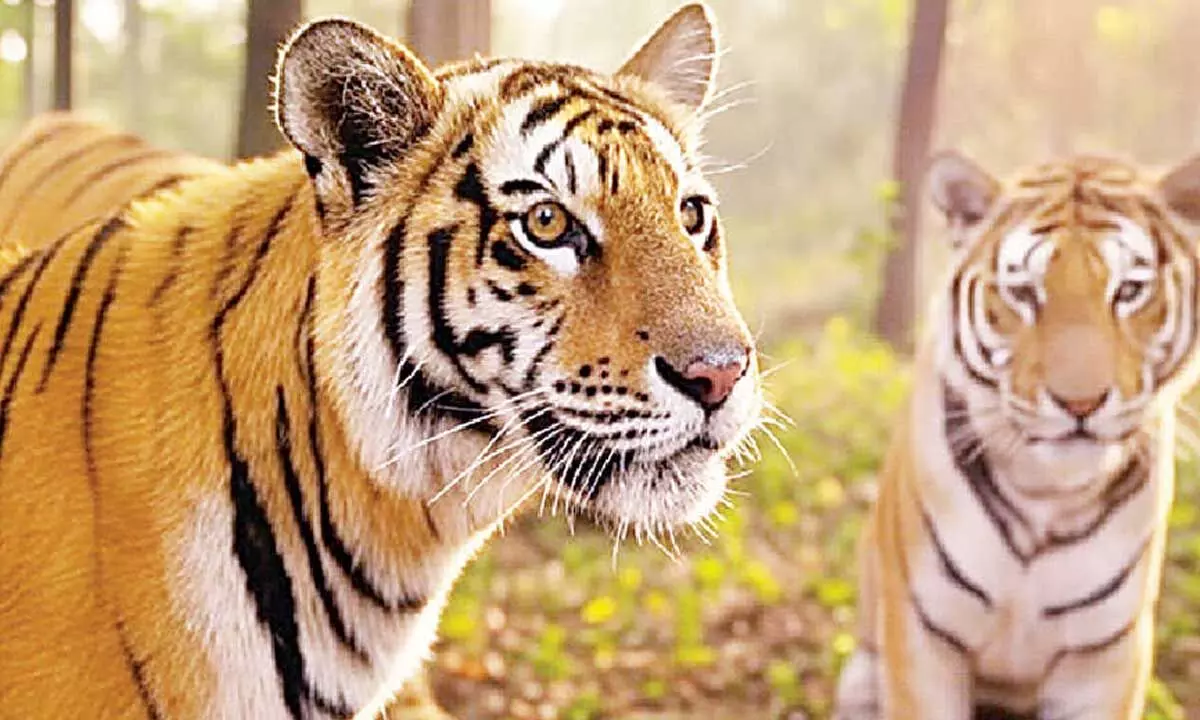
Tirupati: The forthcoming wildlife census in the Seshachalam forests is expected to shed light on the success of tiger conservation efforts in Andhra Pradesh. The key questions revolve around whether the forest department’s initiatives have led to the return of tigers to this habitat, whether they have begun migrating from Nallamala after nearly a century, and if the special corridor established three years ago has facilitated their movement.
Officials have noted a significant rise in the tiger population within the Nagarjunasagar Srisailam Tiger Reserve (NSTR) in Nallamala over the past four years. As per the data presented during the Tiger Day celebrations in June 2023, the number of tigers in NSTR increased from 47 in 2018 to 75 by 2022. However, this 60 percent growth within a confined space has raised concerns about genetic diversity, emphasizing the necessity of expanding their habitat.
To address this, the forest department initiated a special corridor linking Nallamala to Seshachalam via Badvel. This corridor is designed to facilitate natural tiger migration, thereby mitigating the risks of inbreeding by ensuring genetic exchange. A survey conducted in 2019 had already indicated tiger movement into Seshachalam, reinforcing the need for structured migration routes.
The upcoming census will not only assess tiger presence but also monitor the populations of leopards, deer, wild boars, bears, and rare wild cats. As part of the census in Seshachalam, preparations for the Devangapilli census are complete. Advanced technology will be used to track tigers and leopards, and the forest staff have undergone specialised training for the task.
According to C Selvam, conservator of forests, Tirupati, multiple methodologies will be employed for the census, including direct observation — where animals are physically counted — and indirect methods such as footprint analysis, pug mark tracking, and vegetation assessment. To further improve accuracy, camera traps will be deployed at 125 designated points to capture wildlife images. Additionally, population estimation will be conducted by monitoring animals at waterholes.
All collected data will be sent to the hemisphere laboratory for detailed analysis. The ideal window for the census is between March and April, with this year’s survey set to begin after March 20. While the fieldwork will be completed within eight days, analysing camera trap data will take longer. In preparation, transects will be cleared in advance. The forest department’s entire staff, along with wildlife enthusiasts and students, will actively participate in this large-scale conservation effort.
The results of the census will offer critical insights into whether the corridor has been effective in supporting tiger migration and how well the population is adapting to Seshachalam. This data will be instrumental in shaping future conservation strategies.