Beyond the Lab: The Robotics Engineer Making Autonomous Driving Work in Chaos and Traffic

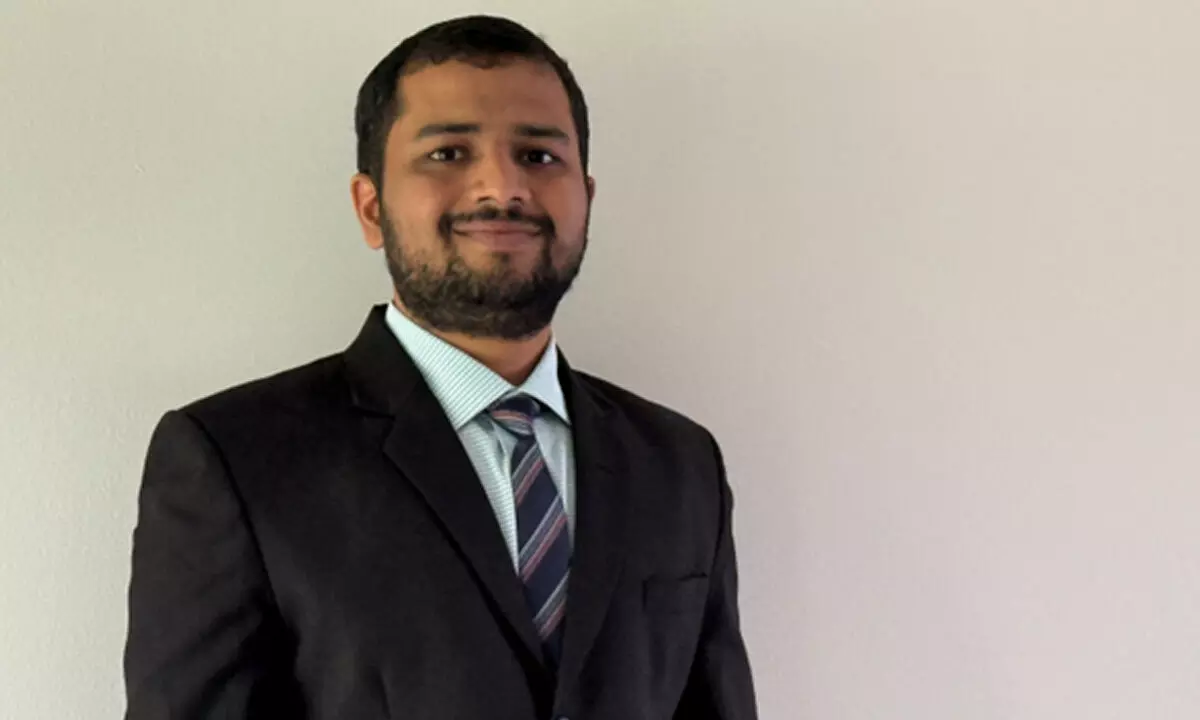
As autonomous features move from test tracks to real streets, the true challenge lies in making ADAS reliable amid everyday traffic chaos. Robotics engineer Gaurav Baban Pokharkar is at the forefront of this shift, turning complex sensing systems into trusted, real-world safety solutions.
Autonomy is no longer a distant ambition in the automotive world—it is a present-day challenge unfolding on crowded streets, chaotic intersections, and cramped parking lots. As vehicles evolve into intelligent machines, Advanced Driver Assistance Systems (ADAS) have become the backbone of safety, efficiency, and comfort. Yet, the real test for these systems isn’t a controlled test track; it’s the unpredictability of real-world traffic. Bridging that gap between laboratory precision and street-level chaos requires engineers who think beyond algorithms and deeply understand how systems behave in reality.
That is where Gaurav Baban Pokharkar has made his mark. A robotics engineer known for his systems-level thinking and hands-on execution, Gaurav began his ADAS journey at Ford, working on SAE Level 2 driver-assist features such as Highway Assist and Collision Mitigation. His ability to translate requirements into reliable vehicle behavior quickly set him apart. Within three years, his work earned him recognition under Ford’s High Technology High Demand (HTHD) talent category and a Senior Engineer role. “ADAS isn’t just about making features work,” Gaurav reflects. “It’s about making them work every single time, under conditions you can’t always predict.”
Today at Valeo, Gaurav serves as a Product Technical Leader, heading the development and delivery of camera- and ultrasonic sensor-based ADAS features for global OEMs. His work supports surround-view and parking assist systems—technologies that quietly guide millions of drivers through tight urban spaces and crowded parking environments. Under his technical leadership, Valeo successfully delivered calibration updates and engineering change requests for high-volume platforms like the Ford F-150, Explorer, and Mustang Mach-E, impacting vehicle programs valued at nearly a million dollars.
But Gaurav’s impact goes beyond delivery metrics. During one critical surround-view camera program, he uncovered a persistent misalignment issue that standard software debugging couldn’t explain. Instead of treating it as a calibration defect, he traced the root cause to late-stage mechanical changes in vehicle body structures that altered camera placement. His solution—a pre-calibration verification process to physically measure camera positions—proved transformative. “Sometimes the smartest fix isn’t more code,” he says. “It’s asking whether the system inputs themselves are still valid.” The intervention reduced validation cycles, prevented downstream rework, and eliminated what could have become a chronic production risk.
Safety remains central to Gaurav’s work. Research shows that ADAS features like parking assist and rearview cameras can reduce crash rates by over 40%. At Valeo, he ensured compliance with regulations such as FMVSS 111 by calibrating camera systems to meet mandated visibility zones. These systems, now installed in millions of vehicles, play a crucial role in preventing injuries and fatalities, particularly in low-speed environments like school zones and residential areas.
Taking on a customer-facing leadership role wasn’t without challenges. Managing global teams, production issues, and rapid engineering changes demanded fast learning and adaptability. Gaurav credits his mechanical engineering foundation and advanced training—including Udacity’s Sensor Fusion Nanodegree—for helping him scale quickly. A standout project from the course, implementing Kalman Filters for real-time vehicle localization, is now open-sourced on his GitHub. “Sharing knowledge accelerates the industry,” he notes. “That’s how autonomy truly advances.”
Looking ahead, Gaurav’s vision aligns with tightening global regulations. With the NHTSA planning to mandate Automatic Emergency Braking and Pedestrian AEB systems by 2029, he believes the future lies in robust sensor fusion—combining lidar, radar, cameras, and thermal imaging—validated relentlessly in real-world conditions. As he puts it, “Autonomy must work where it’s needed most—where chaos is the norm, not the exception.”
In the race toward smarter mobility, engineers like Gaurav Pokharkar are not just building ADAS features. They are building trust—quietly, methodically, and one carefully calibrated system at a time.