North Andhra farmers reap big with organic farming
A Sustainable Future
Natural farming is not just an agricultural practice; it is a move-ment towards sustainability, biodiversity, and health. With strong governmental support and increasing public awareness, North Andhra districts are setting an inspiring example of how tradition-al methods combined with modern insights can lead to prosper-ous and eco-friendly farming practices
Vizianagaram: Organic farming, promoted and sponsored by the Government of Andhra Pradesh, is gaining significant acceptance across North Andhra districts among farmers and consumers. Farmers in the region are adopting sustainable agricultural practices on a large scale and reaping bountiful results in terms of yield and income. Additionally, they are finding it easier to sell their produce, as the public is increasingly inclined to purchase food grown without chemical fertilizers and pesticides, as a healthy option. The state government has been actively encouraging these practices.
In natural farming, chemical fertilizers are replaced with organic inputs like cow dung and cow urine. Farmers prepare "Ghana Jeevamrutham" (a solid manure) and "Drava Jeevamrutham" (a liquid manure) by mixing cow dung and urine. These bio-fertilizers significantly improve soil health, increase soil carbon, and enhance biomass.
This method supports biodiversity, pro-moting the growth of earthworms and snails and contributing to soil fertility. Farmers use homemade bio-tonics instead of chemi-cal pesticides to combat pests and diseases reducing input costs. While yields in the initial years of natural farming may be lower, they stabilise within two to three years. Farmer Simhachalam from Kurupam Mandal stated, “The expenditure in this method is much lower than conventional farming. We can achieve man-ageable yields with significantly reduced costs.”
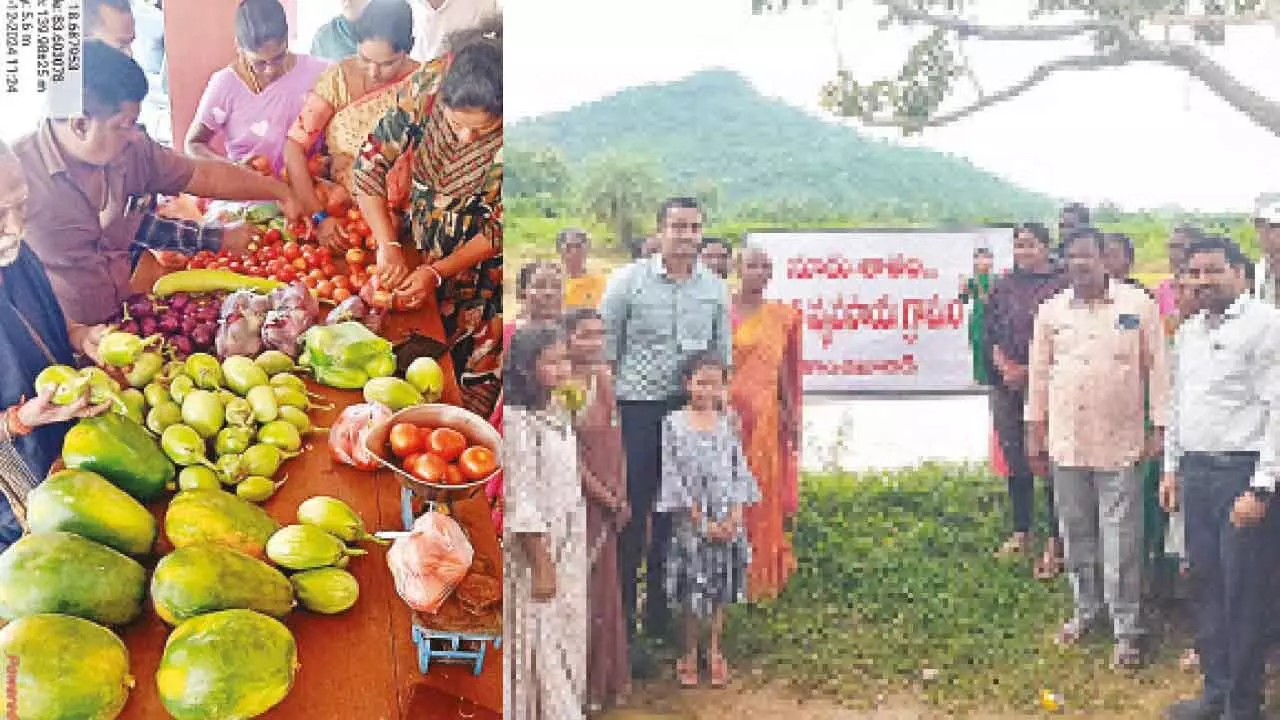
Farmers are cultivating paddy and millets like jowar, foxtail millet, ragi, and pearl millet using natural methods. These crops, partic-ularly prominent in the Parvathipuram Manyam and Alluri Seetha-rama Raju districts are in high demand due to their nutritional benefits. Millets, a mainstay crop for the tribal farmers in these areas, are being sold in towns to meet the growing urban de-mand from health-conscious consumers seeking to manage sugar levels. Vegetables such as tomatoes, brinjal, ridge gourd, lady’s fingers, and leafy greens are also being cultivated organically.
Farmers are earning substantial incomes from the sale of these vegeta-bles. One remarkable example is Kondabaridi, a tribal village in Kurupam Mandal of Parvathipuram district, which has been com-pletely transformed into an organic village. All farmers in Konda-baridi practice organic farming, producing paddy, vegetables, and millets. During a visit, District Collector Shyam Prasad partic-ipated in paddy transplantation activities and praised the farmers for practicing sustainable methods.