Need to setup VWDCs in courts

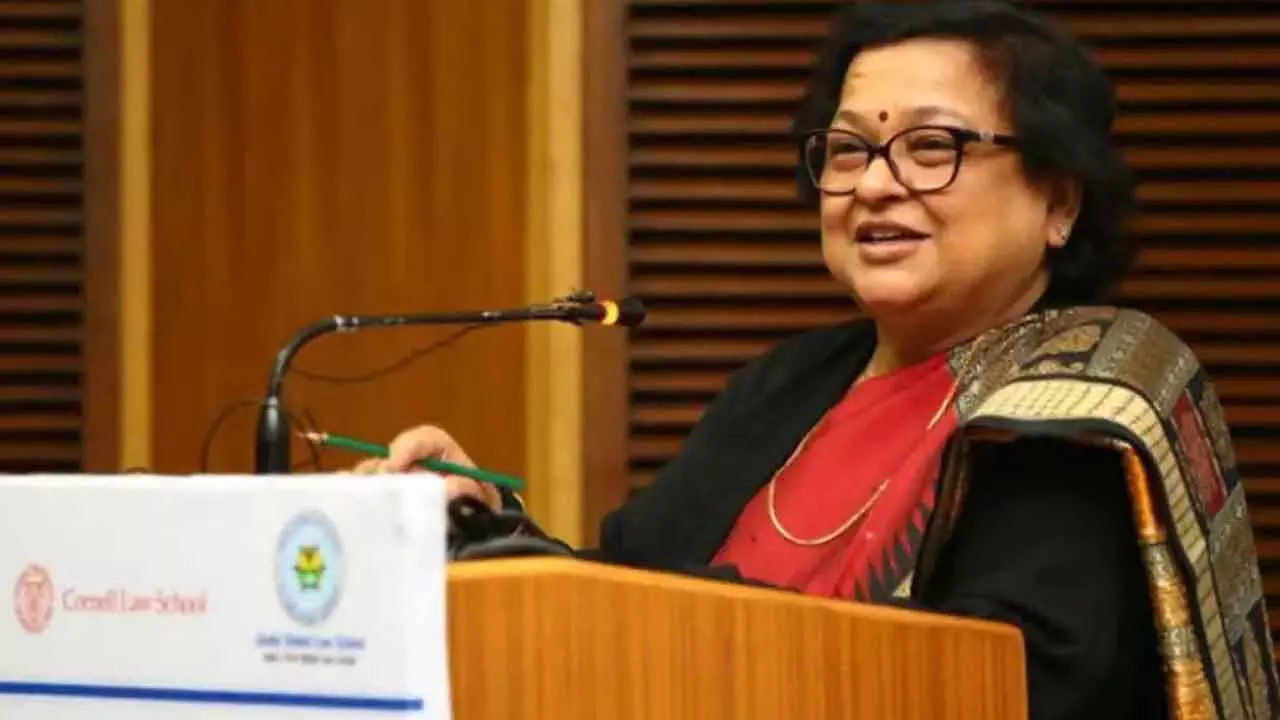
Justice Gita Mittal, Chairperson, Vulnerable Witness Committee appointed by the Supreme Court of India stressed up on the establishment of Vulnerable Witness Deposition Centres (VWDC) in all courts to provide a safe, secure, and child-friendly environment for recording testimony, preventing re-traumatization of victims of sexual offenses, child witnesses, or those under threat. Vulnerable Witness Committee appointed by the Supreme Court of India in association with the Vulnerable Witness Centres Committee of AP High Court has conducted a training programme to the judicial officers at S.R Sankaran Hall in the premises of District Collector office in Guntur on Sunday.
The Chairperson of VWDC attended the programme and inaugurated it by lighting the lamp. While speaking on the occasion, she said that the aim of the committee is to create a supportive court environment for those like children, persons with disabilities, or victims of abuse, using special measures - screens, interpreters, breaks, support persons, to ensure fair testimony without compromising the rights of the accused.
She said that separate waiting areas, non-intimidating video-conferencing rooms, the use of support persons, and strict measures to avoid face-to-face contact with the accused was needed. The rooms should be Child-friendly, equipped with toys, games, and books, separate from the main court area to avoid intimidation, she said. Dedicated, secure entry and exit points to ensure the safety of the witness should be established, she added.
A designated support person - parent, guardian, or counselor, can accompany the witness during the deposition, she added. She said that one must ensure strict prohibition of revealing the witness's name, address, school, or any identifying details in records. The staff, including judges and counselors, should be well trained to handle vulnerable individuals, specifically children and sexual assault victims, she said.
While investigating or judging, she said that, simple, comprehensible language; employ interpreters, sign language experts, or special educators as needed to ensure competency assessments focus on understanding questions, minimizing trauma, and providing continuity of support should be given. There should be a balance of the rights of the witness with the accused to a fair trial, she emphasized. She appealed to judicial officers to follow the spirit of the law to ensure everyone to equality and access to justice. She informed that a vulnerable witness could be in court - in a civil or criminal case, in a family matter, in a custody dispute, as a victim of sexual abuse, in a paternity action, before Juvenile Justice Boards, before Children's Courts.
The use of VWDCs should, in addition to criminal cases, be allowed for other jurisdictions, including, civil jurisdictions, family courts, juvenile justice boards and Childrens' courts. Permission should be granted for recording the evidence of vulnerable witnesses in cases across all jurisdictions. Children may be unable to give a full and proper account of their evidence because of multiple interviews, long wait before trial goes to court, court delays, confronting the accused, Questions framed in difficult language ("legal language" / "legalese" / "age inappropriate"), unnecessary questioning about irrelevant details by the defence lawyer, honest answers used to make the child appear to be unreliable, she added.
She said that issues such as inappropriate questioning about abstract concepts, interruptions by the lawyers, directions by adults about how they could answer, the use of cross-examination which is designed to "catch witnesses out", admissibility issue constraints and having to edit their stories, Trauma, making the process delay. Confrontation with the offender; recounting and repetition of violent and intrusive offensive experiences; facing aggressive and humiliating cross-examinations in court room resulting in secondary traumatization of the vulnerable witness, she said.
Guidelines for the several stages from investigation to adjudication have been laid down in several judicial pronouncements which are to be followed by police conducting investigations, doctors in medical examinations, magistrates recording pre-trial statements, she indicated. The Guidelines draw from legislations and guidelines from all over the world including the United Nations Guidelines, International instruments, legislations in India and judicial precedents from India, New Zealand, Australia, Canada, South Africa, UK, USA, Philippines should be followed to justify the victim, she said.
The Vulnerable Witness Court Room has been conceptualized and operationalized to overcome these several disadvantages and barriers, she said. Judicial leadership by actively engaging with the witness in pre-visit, court appearance and during testimony and cross-examination and must ensure that the vulnerable witness in the court room is treated with respect, questioning is fair, and developmentally appropriate, that the dignity and self respect of the witness is preserved throughout the court room appearance, she advocated.
Earlier Ashutosh Srivastava, Joint Collector welcomed the Chairperson.
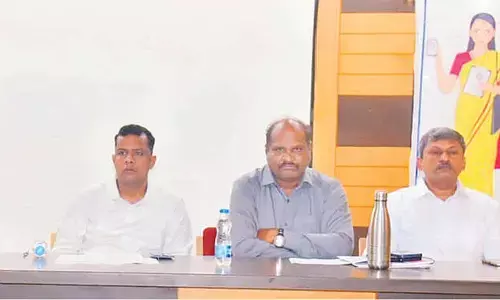
Justice G. Rama Krishna Prasad, Chairman, State VWDC Committee., Justice R.Raghunandan Rao, Justice V Sujatha, Justice S Samatha, Justice V Gopala Krishna Rao., B.Sai Kalyan Chakravarthy, Principal District Judge, Guntur etc attended.